



 Kingswood Capital Management to acquire Safran Passenger Innovations: Kingswood Capital Management announced it has entered into a definitive agreement to acquire Safran Passenger Innovations (SPI) from Safran. SPI is a provider of in-flight entertainment and connectivity solutions for airlines and airplane manufacturers worldwide. Matt Smith will continue to serve as SPI’s CEO, and the entire SPI leadership team will remain in place. The transaction is expected to close early next year, subject to customary legal and regulatory requirements. Headquartered in Brea, California, SPI created and designed an award-winning in-flight entertainment and connectivity platform known as RAVE, recognized for its intuitive design, reliability, and innovative approach. Kingswood’s acquisition of SPI is driven by a shared vision of positioning the company to deliver transformative, next-generation solutions that redefine industry standards while ensuring seamless business continuity and operational stability.
 Rotortrade completes deals for Air Mercy Service: Rotortrade announced the successful completion of two AW119 helicopter transactions supporting the South African Red Cross Air Mercy Service’s (AMS) ongoing modernisation program. AMS, a non-profit organisation celebrating nearly 60 years of lifesaving service in the emergency medical services (EMS) sector, continues to expand and upgrade its capabilities while reinforcing its long-standing partnership with Rotortrade. These latest achievements reflect a relationship built on trust, with AMS relying on Rotortrade for fleet renewal, technical project management, and remarketing support. The two AW119 transactions — involving one AW119 Ke and one AW119 KX — highlight Rotortrade’s ability to leverage its global network across Asia, Africa, and Latin America to support mission-critical operators. The first project involved the successful remarketing and placement of an AW119 Ke previously operated by AMS. The process was completed within a short timeframe thanks to seamless coordination between the AMS and Rotortrade teams. The second project focused on sourcing and preparing an AW119 Kx tailored to AMS’s operational requirements. The helicopter completed its technical works, including a hot section inspection with Pratt & Whitney, before being shipped to South Africa and is scheduled to enter EMS service in Q1 2026.
 Plaza Premium Group opens lounge at Leonardo da Vinci Rome Fiumicino Airport: Plaza Premium Group (PPG) announced the opening of its first Plaza Premium First Lounge in Europe located in the Leonardo da Vinci Rome Fiumicino Airport. The launch marks a major milestone in the Group’s European expansion and the elevated lounge brand of Plaza Premium First, bringing its signature seamless travel experience to one of the world’s most iconic cities. Located in Terminal 1, International Departures, the 700-square-metre lounge is designed to accommodate 115 guests. The new elevated lounge concept represents a transformative evolution in Plaza Premium Group’s mission to redefine travel and provide discerning travellers with the ultimate blend of personalized hospitality, bespoke dining offerings, curated cocktails, wines and spirits, luxurious spaces and immersive cultural experiences. At the heart of the new Plaza Premium First Rome is a commitment to setting new and exceptional standards in airport hospitality featuring indulgent amenities and uniquely Roman signature highlights designed for discerning travellers. Since debuting in Hong Kong in 2018, Plaza Premium First has grown into a distinguished global concept. Plaza Premium First Lounges are operating in the flagship locations of Hong Kong, Kuala Lumpur, Jakarta, Macau, Vancouver and most recently Phnom Penh.
 Avolon delivers 50th aircraft in JetSMART’s fleet: Avolon has delivered the 50th aircraft in South America’s low-cost carrier JetSMART’s fleet. The A321neo is the final delivery of four A320neo family aircraft from Avolon to JetSMART. The four aircraft on lease from Avolon will support the replacement and growth needs of JetSMART’s current narrowbody fleet. JetSMART flies to over 50 destinations from its hubs in Chile, Argentina, Peru and Colombia. Passenger demand in the Latin America and Caribbean region was up 7.2% year to date in October, according to IATA. The A320neo delivers 20% lower fuel burn and CO2 emissions compared to previous generation single-aisle aircraft, and 50% noise reduction. Avolon had 347 A320neo family aircraft on order as of 30 September 2025. Paul Geaney, President and Chief Commercial Officer of Avolon, commented: “We are excited to share this milestone with JetSmart and celebrate their phenomenal growth story since their launch in 2016. The four aircraft we are leasing will support JetSMART’s growth strategy to better connect Latin America, one of the world’s fastest growing aviation markets. With our large orderbook, we are well-placed to support our airline customers growth plans and refleeting needs into the next decade.”
 Star Alliance named world’s leading airline alliance: Star Alliance has once again been recognised as the World’s Leading Airline Alliance at the World Travel Awards 2025, continuing its six-year winning streak. This year’s recognition reflects the Alliance’s continued focus on shaping a more seamless experience across the customer journey — from booking and airport to connections and loyalty. The honour was announced at the Grand Final Gala Ceremony, held in Bahrain. Commenting on the achievement, Star Alliance CEO Theo Panagiotoulias said, “We are truly honoured to be named the World’s Leading Airline Alliance once again, especially knowing it reflects the trust of travellers and industry peers. Our focus has always been on making customer journeys feel effortless, and our lounges bring the experience to life. This recognition belongs to the teams across member airlines and the Alliance headquarters who make that possible every day, and we’re deeply grateful to our customers for their continued support.”
 Lufthansa Group launches new brand ID: The Lufthansa Group is presenting itself with a new design. The goal of the new brand identity is to make the strength of the Lufthansa Group more visible. For customers, service offerings will be bundled under the Group brand, making them even more clearly recognisable. Dieter Vranckx, Chief Commercial Officer Lufthansa Group, said: “The Lufthansa Group is evolving from a group of airlines into an integrated airline group. The new brand identity is therefore more than just a redesign; it is a strategic milestone. In a challenging environment, this step creates a visual anchor of trust for our customers. A visual identity in aviation must do much more than just create an eye-catching appearance. It will reflect our strategic brand values and a promise we want to make to our passengers across all our brands. The new brand identity enables a holistic brand experience, provides orientation, and strengthens identification with the Lufthansa Group.” The new brand identity is recognisable by the iconic crane logo, which will be used for the Group in the future without the surrounding circle. In addition, there is a new font and a colour palette expanded by six new tones. The latter represents different heights from the ground to the sky to reflect the diversity of the Lufthansa Group. The airlines of the Lufthansa Group will keep their own brands under the umbrella of the strengthened group brand. The endorsement of “Member of Lufthansa Group,” which will appear on all aircraft belonging to the Group’s airlines, signals the unity of the individual airlines that operate under a brand name other than Lufthansa. The addition was already introduced this year on digital boarding passes, websites, and 160 aircraft of various Lufthansa Group airlines. Next year, the Lufthansa Group brand will also be visible at lounge entrances worldwide, as is already the case in Rome, Milan, and Brussels. The “Member of Lufthansa Group” label will also be visible on materials at airports, such as baggage tags, and on board of aircraft.
 Dnata scales up in Milan with cargo expansion: Dnata has announced an investment of over €25 million to develop a cutting-edge cargo facility at Milano Malpensa Airport (MXP) through its wholly-owned local subsidiary, Airport Handling. The strategic project is part of dnata’s broader commitment to building high-performance cargo infrastructure in markets with strong long-term growth potential. Airport Handling’s expansion follows a competitive tender process by the SEA Group, the operator of Linate and Malpensa airports. The development will create 200 new local jobs, further strengthening the company’s position as Italy’s leading ground services provider. The new facility will be located in the Cargo City area of the airport and will span 10,000 square meters, with an annual handling capacity of over 100,000 tonnes. Designed to meet the highest industry standards, it will support the efficient and safe handling of all cargo types, including perishables, pharmaceuticals, dangerous goods, live animals, aircraft engines, and vehicles. Aligned with dnata’s global sustainability strategy, the facility will feature a range of energy-efficient solutions. These include photovoltaic panels for renewable energy, advanced thermal insulation, and high-efficiency LED lighting. Both the warehouse and office spaces are planned to maximise natural light and will be supported by low-consumption heating and cooling systems. The site will also be equipped with infrastructure to enable low-emission ground operations.
 Boeing and United Airlines test advanced digital comms: Boeing and United Airlines have conducted flight tests to evaluate a modernized data communication system designed to improve information flow between the flight deck, air traffic control and airline operation centres. With a United 737-8 jet serving as Boeing’s 2025 ecoDemonstrator Explorer, the airline’s pilots conducted test flights to assess Internet Protocol Suite (IPS) standards. The internet-based communications aim to enhance operational efficiency and flight safety while reducing air traffic congestion, fuel use, cost and emissions. The 2025 Boeing ecoDemonstrator Explorer began flight testing in late October for about two weeks, with U.S. flights based in Houston and European flights based in Edinburgh, Scotland. Since 2012, the Boeing ecoDemonstrator programme has accelerated innovation by taking new technologies out of the lab and testing them in an operational environment to help solve real-world challenges for airlines and passengers. The ecoDemonstrator program has tested more than 250 technologies to enhance safety, reduce fuel use, emissions and noise and improve operational efficiency and the passenger experience. The latest ecoDemonstrator collaboration also included government agencies in the U.S. and Europe, Boeing suppliers, aircraft communications service providers and academia. The testing is the final step in a decade of development by Boeing and its partners to prepare this technology to enter operational service.
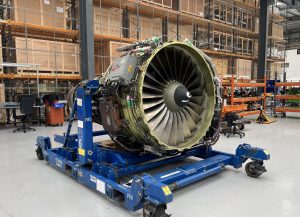 AerFin acquires and begins teardown of CFM56-5B PIP engines: AerFin has acquired a package CFM56-5B Performance Improvement Package (PIP) engines from a major European customer. The PIP engines, featuring the latest hardware configuration, represent an exciting pipeline of material for AerFin’s customers and further strengthen the company’s technical expertise in supporting new-generation configurations. With the teardown now well underway at AerFin’s expanded engine shop in South Wales, high-quality used serviceable material (USM) from these engines is becoming available to operators, lessors and MROs worldwide. Customers are encouraged to contact AerFin’s sales team to discuss availability. Simon Goodson, Chief Executive Officer at AerFin, said: “This acquisition highlights both the trust we have built with leading airlines and the confidence we have in our team’s ability to deliver. By bringing these newer-technology engines into our pipeline, we’re not only enhancing our capability but also reinforcing AerFin’s position as a global leader in the aviation aftermarket.” With some of the teardowns complete and others now well underway, a broad selection of USM from these engines is already available to purchase.
 Airbus and partners complete successful wake energy retrieval trials: Airbus in partnership with Air France, Delta Air Lines, French bee, and Virgin Atlantic, and operations partners, AirNav Ireland, DSNA, EUROCONTROL and NATS, has successfully completed a new phase of trials for Airbus’ fello’fly project. Fello’fly takes inspiration from migrating geese and showcases the power of collaboration by pairing flights to reduce fuel consumption. With this flying technique, the first aircraft creates an uplift that drives fuel efficiency for the following aircraft, called ‘wake energy retrieval’. Once operational, wake energy retrieval has the potential to make fuel savings of up to 5% on long-haul flights. These trials, eight flights over the North Atlantic Sea between September and October 2025, conducted in the frame of the SESAR Joint Undertaking GEESE project, aimed to show that the operational concept is a feasible and safe method to guide two aircraft to meet at a precise time and place (rendezvous process), while maintaining full vertical separation and remaining compliant with air traffic regulations. While the actual wake energy retrieval flights have not been tested yet on commercial flights, the successful completion of the rendezvous process is a crucial first step toward future efficiency gains. Each trial required close coordination between the two airlines’ ground operational control centers, four air traffic control centers, and two flight crews. The active participation of AirNav Ireland, Air France, Delta Air Lines, DSNA, EUROCONTROL Network Manager, French bee, NATS, and Virgin Atlantic, using the EUROCONTROL Innovation hub interface, was key to proving the concept’s safety and practicality in real-world conditions.
 Assaia raises $26.6 million in Series B funding: Assaia, the Zurich-based aviation technology company, has raised $26.6 million in an oversubscribed Series B funding round, led by European investment firm Armira Growth (“Armira”), alongside existing investors. The additional capital raised will enable Assaia to continue to scale its AI platform globally and launch new solutions to further improve airport, airline and ground handler efficiency. Assaia’s technology is designed to optimise the commercial aircraft turnaround process by providing real-time visibility and automation across apron operations. Its technology is already deployed at several major international hubs including New York JFK, London Heathrow, Dubai International and Toronto Pearson, helping reduce delays, improve on-time performance and enhance gate utilisation. Armira’s backing underpins growing demand for AI-driven operational infrastructure across the aviation sector. As traffic volume surpasses pre-pandemic levels, human resources remain limited and operational margins tighten, airports and airlines are prioritising intelligent automation to improve resilience and increase efficiency. Assaia’s AI platform addresses these challenges by shortening turnaround times and enabling better planning across airside operations. A portion of the new funding will support the launch of a next generation StandManager, a planning module that uses AI to optimise gate and stand assignments before aircraft land. This system enables more efficient gate usage and improves operational predictability within congested and high-volume environments.

For Editorial Inquiries Contact:
Editor Matt Driskill at matt.driskill@asianaviation.com
For Advertising Inquiries Contact:
Head of Sales Kay Rolland at kay.rolland@asianaviation.com