
Home › Industry News
VIEWPOINT: I love aviation, but…
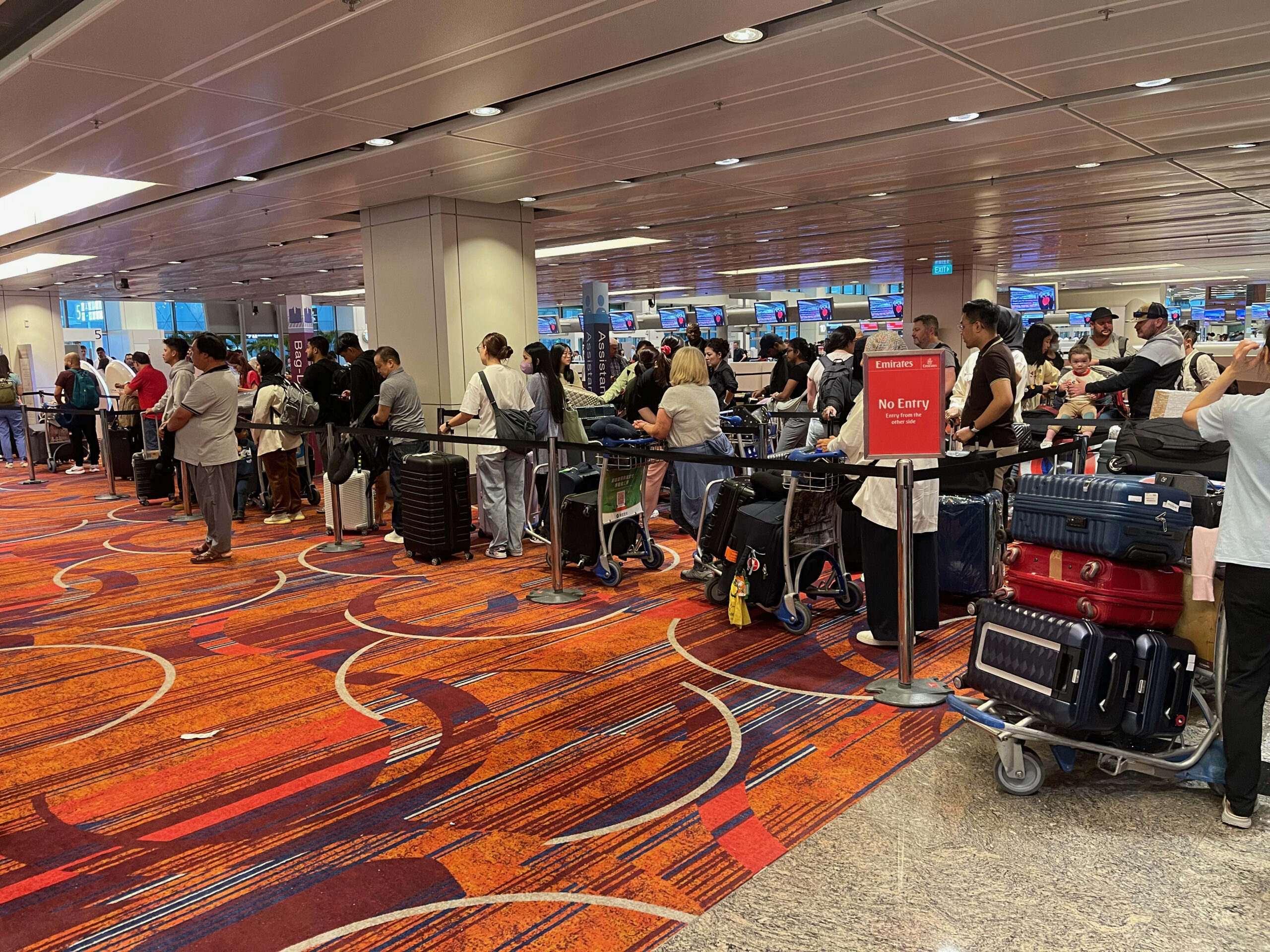
Matt Driskill And you knew there was a “but” coming after the headline, but I don’t like flying all the time. It’s not the actual flying part, it’s the pain points of getting to the airport, going through immigration and customs (especially in the US) and dealing with self-check-in machines that never seem to work for me (especially the bag tags). The one part of the actual flying that can be painful is dealing with my fellow passengers who, and I swear this has happened, decide a plane cabin is the right place to clip their toenails. Flying with people like that reminds me why I like animals more than my fellow humans at times. But the aviation industry as a whole is a great business for a journalist to write about. It’s got technology, interesting people, exotic locales that I’ve been privileged to visit and it’s a big-money business. The money part is interesting. Most airlines, someone once said at a conference I attended, “are a hamburger and a Coke away from making a profit on a per passenger per flight basis”. Everyone in the industry knows how tight the margins are. And then there’s the joke about “how to become a millionaire…you start with a billion and invest in an airline”. A bit of research shows that if you aggregate the net financial results from the dawn of commercial aviation up to 2026, total gains (profitable years) are US$257 billion with total losses (unprofitable years) equaling US$179 billion. This leaves an estimated cumulative net position of around US$78 billion. But, and here’s that pesky but again, while the absolute dollar amount sits in the positive, the math does not account for time-value inflation. If you adjust the capital losses of the 1970s, 1990s, and 2000s into today’s dollars, the commercial airline industry has failed to cover its aggregate cost of capital over its 100- plus years of commercial lifetime. As a vehicle for generating shareholder wealth from the Wright Brothers to 2026, it remains firmly in the red. The technology is also interesting for semi-geeks like myself. As much as I like computers, though, I’m always leery of too much technology in the cockpit. I personally would like a grey-haired veteran pilot (male or female) with tens of thousands of hours of experience flying the plane and less of George the autopilot. But, the tech seems to work in the air. It’s the tech on the ground I don’t like. With all due respect to my friend Sumesh Patel, the APAC president for tech company SITA, I really don’t like their machines. He and I have this discussion frequently when we meet at shows or conferences. I realise there are benefits to things like self-check-in kiosks, but those benefits accrue mainly to the airport/airline companies and not to the passengers and certainly not to the check-in staff that have been laid off from their jobs as automation takes over. Biometrics are another area that is interesting. I’ve written before that we are coming into the “Minority Report” age where a person can walk into an airport (or shopping mall in the movie) and an AI system scans their iris, pulls up their flying history, frequent flyer number, passport number and whatever else they need to board their flight. I’ve been impressed with the immigration scans at places like Changi Airport in Singapore and even Techo International in Phnom Penh. These actually work (unlike the baggage checks). The aviation sector has also sent me to places in Asia and elsewhere that most people dream about or have on their “bucket list”. Unfortunately, I don’t always get to see much of the locale outside of a hotel ballroom or cocktail party. Some of that is my fault for not building extra days into my trip to soak up a little local colour. I had never heard of Jeju Island in South Korea until I was able to attend an industry conference there. Another conference took me back to Mumbai and New Delhi years after I had originally visited. Hanoi, the Philippines (four times in one year), Seoul, Lisbon, Singapore, Kuala Lumpur and a few others round out the list. And then there’s the people. Aviation is chock full of interesting people, some famous, some not so famous. A couple of my favourites would include Tony Fernandes of AirAsia fame (or infamy, some might say) and John Leahy, the former sales head (or chief operating officer for customers) at Airbus. Fernandes is not everyone’s favourite, as some of my fellow hacks have written about and in many ways, he seems to want to be another Richard Branson of Virgin fame. Love him or loathe him, you can’t argue AirAsia has made a huge impact on the industry. Leahy, too tops the charts as one of the aviation industry’s most prolific aircraft salesmen and is credited with increasing the market share for Airbus from 18 percent in 1993 to 57 percent a decade later. He is credited with delivering more than US$1 trillion in sales. When I met him in person at an industry event, he reminded me of a used car salesman from Dallas. But aviation remains one of the most interesting industries around. It connects the world (for good – or bad as when it became a delivery vehicle for things like COVID), is a key enabler of modern technology, can get you from Singapore to the Sahara in a day, employs millions of people (until Rose the Robot takes over everything), and did I mention the money? Remember the money next time you fly – buy the hamburger and the Coke. Support your local airline. For Editorial Inquiries Contact: Editor Matt Driskill at [email protected] For Advertising Inquiries Contact: Head of Sales Sally Passey at [email protected]
TAGSMatt DriskillViewpoint
Previous article
China’s aviation industry looks to the next five years
Matt Driskillhttp://www.matt-driskill.com
Matt Driskill is the Editor of Asian Aviation. He has been an Asia-based journalist and content producer since 1990 for outlets including Reuters and the International Herald Tribune/New York Times and is a former president of the Foreign Correspondents Club of Hong Kong. He appears on international broadcast outlets like Al Jazeera, CNA and the BBC and has taught journalism at Hong Kong University and American University of Paris. In 2022 Driskill received the “Outstanding Achievement Award” from the Aerospace Media Awards Asia organisation for his editorials and in 2024 received a “Special Recognition for Editorial Perspectives” award from the same organisation. Driskill has received awards from the Associated Press for Investigative Reporting and Business Writing and in 1989 was named the John J. McCloy Fellow by the Graduate School of Journalism at Columbia University in New York where he earned his Master's Degree.
马特·德里斯基尔(Matt Driskill)是《亚洲航空》(Asian Aviation)的主编。他自1990年起,担任驻亚洲的记者和内容制作人,曾为路透社、国际先驱论坛报/纽约时报等媒体工作,并曾任香港外国记者协会会长。他也曾多次在半岛电视台、新加坡广播公司(CNA)和BBC等国际媒体担任嘉宾,并在香港大学和巴黎美国大学教授新闻学。2022年,德里斯基尔因其评论获得了航空媒体奖(Aerospace Media Awards Asia)颁发的“杰出成就奖”,2024年又因其编辑观点获得同一组织颁发的“特别表彰”。他曾获得美联社的调查报道和商务写作奖,并于1989年被纽约哥伦比亚大学研究生新闻学院授予约翰·J·麦克劳伊学者(John J. McCloy Fellow)称号,获得硕士学位。