
Singapore-based SATS posts full-year net profit of S$285.2 million
By Asian Aviation Staff
•May 26, 2026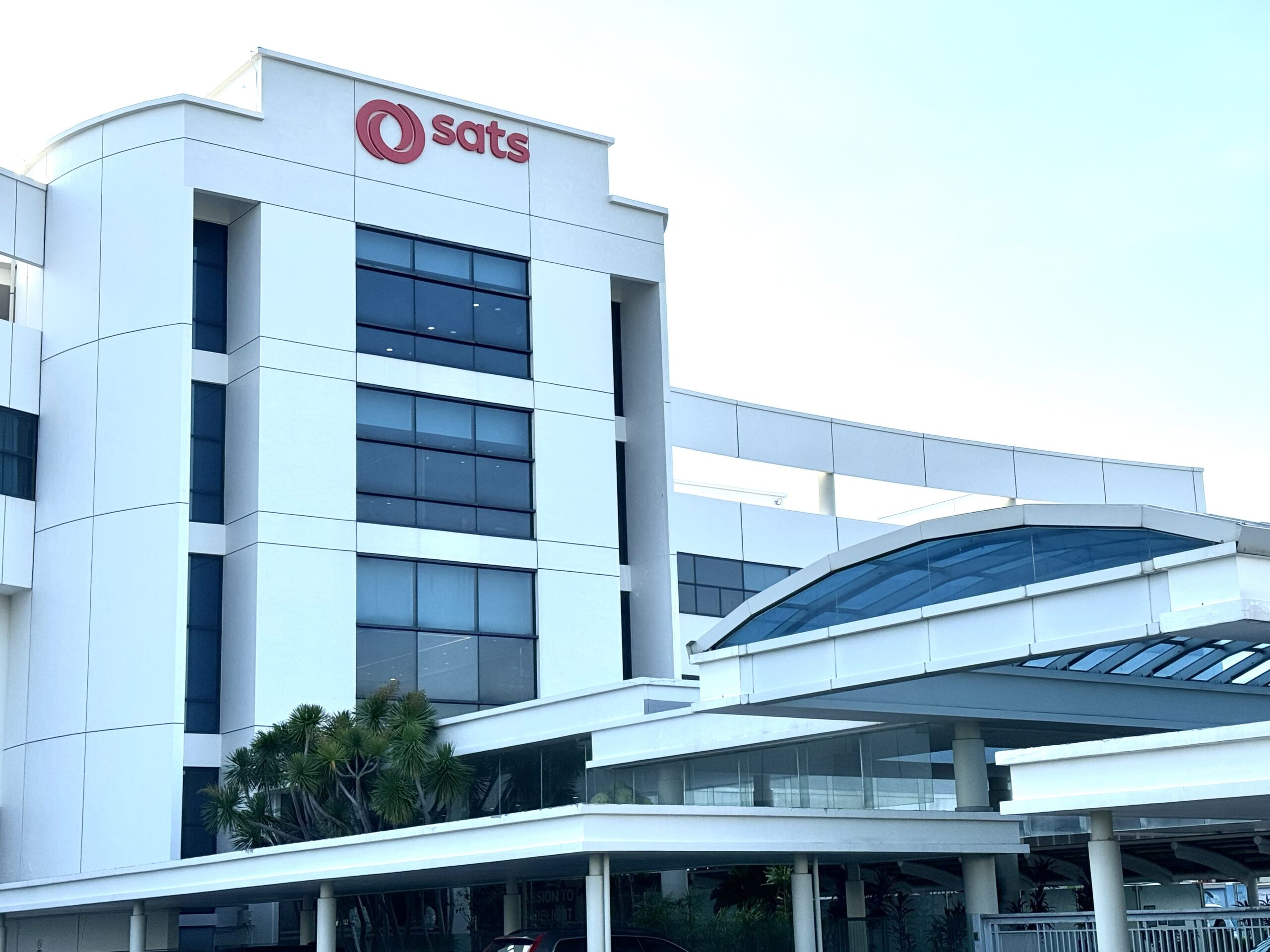
Singapore-based SATS reported a record-breaking full-year financial performance for the fiscal year ended March 31, 2026. The company successfully overcame severe late-quarter geopolitical headwinds in the Middle East and ongoing international trade conflicts to post a full-year revenue of S$6.35 billion. This represents a 9.0% expansion compared to the S$5.82 billion recorded in the prior fiscal year, driven by robust volume growth across all core business segments. (PHOTO: SATS) For the full financial year, which the company designates as FY26, profit attributable to owners of the Company, or net profit (PATMI), advanced 17.0% to S$285.2 million, up from S$243.8 million in fiscal year 2025. This bottom-line surge was mirrored by a 10.6% expansion in full-year earnings before interest, tax, depreciation, and amortization (EBITDA), which climbed to S$1.15 billion. The company’s full-year EBITDA margin widened from 17.8% to 18.1%, reflecting improved structural operating leverage and disciplined commercial integration following its transformational 2023 acquisition of Worldwide Flight Services (WFS). In the fourth quarter alone, representing the three-month window from January 1, 2026, to March 31, 2026, SATS generated revenue of S$1.62 billion, a year-on-year increase of 9.8% over the S$1.48 billion recorded in the fourth quarter of fiscal year 2025. Despite an escalation of the Middle East conflict in March 2026, which restricted traffic flows across major Gulf hubs and imposed severe operational realignments, fourth-quarter net profit climbed 31.0% to S$50.7 million, up from S$38.7 million in the corresponding period of the prior year. This late-quarter profitability boost was supported in part by lower tax expenses during the period, offsetting a sharp contraction in operating profit margins caused by regional disruptions and facility ramp-up costs. SATS CEO Kerry Mok. “We delivered record full-year revenue, underpinned by the strength of our platform and consistent execution across our network, despite a challenging year,” said Kerry Mok, SATS President and Chief Executive Officer. “The conflict in the Middle East has weighed on industry performance. We have been working closely with our customers to maintain their cargo flows as routes and lanes shift, drawing on the breadth of our network to serve them wherever they need us.” The final three months of the fiscal year provided a stark illustration of both the vulnerability and the inherent resilience of modern global supply chains. SATS reported fourth-quarter EBITDA of S$267.5 million, a modest 3.9% increase from the S$257.5 million posted in the fourth quarter of fiscal year 2025. This slower rate of EBITDA growth relative to top-line gains compressed the quarterly EBITDA margin by 0.9 percentage points, dropping from 17.4% in the prior year’s quarter to 16.5% in the period ended March 31, 2026. The margin compression was primarily driven by an 11.1% increase in quarterly operating expenditure (excluding depreciation and amortization), which climbed to S$1.35 billion from S$1.22 billion a year prior. Management attributed this cost acceleration to elevated input costs and substantial infrastructure outlays, specifically noting that the group incurred significant ramp-up costs linked to the commissioning of new food preparation and distribution facilities across its network. Operating profit (EBIT) for the fourth quarter finished effectively flat, rising just 1.0% to S$109.4 million from S$108.3 million in the fourth quarter of fiscal year 2025. Consequently, the fourth-quarter EBIT margin fell by 0.6 percentage points to 6.7%, down from 7.3% in the prior year’s period. Beyond operational costs, the group’s bottom line was impacted by S$13.3 million in non-operating expenses during the quarter, which corporate filings indicated were tied primarily to non-cash impairment charges for non-core business holdings that are being phased out or restructured. (PHOTO: SATS) Geopolitically, the final month of the fiscal year—March 2026—was defined by an escalation of hostilities in the Middle East. According to corporate statements, the conflict directly weighed on cargo and passenger volumes, elevated logistics expenses, squeezed localized operating margins, and depressed earnings from the group’s network of regional associates and joint ventures. The suspension of commercial flights and a broader reduction in structural aviation capacity across major Gulf hubs disrupted traditional air transit paths linking Asia, Europe, and the Americas, forcing immediate re-routing strategies. Despite these headwinds, the group’s share of earnings from associates and joint ventures (SoAJV) in the fourth quarter managed a 4.2% increase, closing at S$22.2 million compared to S$21.4 million in the fourth quarter of fiscal year 2025. This performance was sustained by very high underlying business volumes across Asia-Pacific during January and February, which provided a buffer before the regional shockwaves hit in March. Group Financial Results (4Q) 4Q FY26 (S$ million) 4Q FY25 (S$ million) YoY Change (S$ million) YoY Change (%) Revenue 1,621.9 1,476.7 145.2 9.8% Operating Expenditure (excl. D&A) (1,354.4) (1,219.2) (135.2) (11.1%) EBITDA 267.5 257.5 10.0 3.9% Operating Profit (EBIT) 109.4 108.3 1.1 1.0% Share of Associates & JVs (SoAJV) 22.2 21.4 0.8 4.2% Net Profit (PATMI) 50.7 38.7 12.0 31.0% Source: SATS Ltd. Unaudited Financial Disclosures for 4Q FY26 Looking at the full 12-month picture, SATS’s record revenue of S$6.35 billion reflects a substantial consolidation of its global market position. The primary driver of this top-line outperformance was the Gateway Services segment, which encompasses air cargo handling, passenger check-in, ramp operations, baggage handling, and aviation security across its international network. Gateway Services revenue surged 10.8% year-on-year to S$4.95 billion, fueled by sustained market share gains and international airfreight volumes that consistently outpaced global industry benchmarks established by the International Air Transport Association (IATA). Concurrently, the Food Solutions division, which produces aviation and institutional meals, operates high-capacity central kitchens, and manages large-scale supply chains, generated S$1.39 billion in full-year revenue. This represents a steady 2.9% expansion over the previous fiscal year, reflecting resilient commercial dining and catering demand linked to the progressive expansion of passenger aviation capacity across the Asia-Pacific region. Full-year corporate operating profit (EBIT) jumped 14.2% to S$543.3 million, up from S$475.7 million in fiscal year 2025. This operating expansion outpaced revenue growth, driving a full-year EBIT margin expansion of 0.4 percentage points to 8.6%. This margin improvement demonstrates the group’s ability to extract structural synergies from its enlarged global footprint, maximizing asset utilization across its diverse stations. For the full year, the group’s share of earnings from associates and joint ventures remained virtually unchanged at S$114.5 million, compared to S$114.3 million in the prior year. Strong underlying traffic volumes within these entities were balanced out by several non-recurring, one-off adjustments across joint venture partnerships. Group Financial Results (Full Year) FY26 (S$ million) FY25 (S$ million) YoY Change (S$ million) YoY Change (%) Revenue 6,345.5 5,821.1 524.4 9.0% Operating Expenditure (excl. D&A) (5,199.1) (4,784.9) (414.2) (8.7%) EBITDA 1,146.4 1,036.2 110.2 10.6% Operating Profit (EBIT) 543.3 475.7 67.6 14.2% Share of Associates & JVs (SoAJV) 114.5 114.3 0.2 0.2% Net Profit (PATMI) 285.2 243.8 41.4 17.0% Source: SATS Ltd. Unaudited Financial Disclosures for FY26 As of March 31, 2026, SATS’s consolidated balance sheet demonstrated increased capitalization and disciplined debt management. Total corporate equity expanded by S$167.8 million to reach S$2.94 billion, a growth trajectory driven almost entirely by retained earnings generated over the course of the fiscal year. Total assets expanded by S$191.1 million to settle at S$9.07 billion, while total corporate liabilities grew by a modest S$23.3 million to finish at S$6.14 billion compared to March 31, 2025. Crucially for fixed-income investors and credit rating agencies, SATS achieved a noticeable reduction in its total debt load. Aggregate corporate debt was pared down to S$4.14 billion as of March 31, 2026, falling from the S$4.24 billion reported at the end of fiscal year 2025—a net reduction of S$108.0 million. This proactive deleveraging, combined with expanding equity, improved the group’s gross debt-to-equity ratio from 1.53 times down to 1.41 times. Net asset value (NAV) per ordinary share advanced to S$1.86, up from S$1.74 at the end of the previous fiscal year. Cash generation remained highly robust throughout the year. Operating cash flow after accounting for lease repayments reached S$560.5 million for FY26, representing an increase of S$110.5 million over the previous year’s performance. However, full-year free cash flow—defined by the company as net cash generated from operating activities minus direct capital expenditures and lease payments—softened slightly to S$215.8 million, down from S$228.3 million in fiscal year 2025. Management explained that this minor free cash flow contraction resulted from strategic, long-term capital investments allocated toward facility expansions and technological modernizations across international cargo hubs. Basic Earnings Per Share (EPS): Advanced to 19.2 cents for the full year, up from 16.4 cents in FY25. Quarterly basic EPS reached 3.4 cents versus 2.6 cents previously. Diluted Earnings Per Share: Reported at 18.8 cents for the full year, adjusting for long-term employee share incentive programs, compared to 16.2 cents in the prior year. Return on Turnover: Expanded to a full-year average of 4.5%, up from 4.2% in FY25, highlighting enhanced structural profitability across the consolidated group. Total Equity Base: Stood at S$2,936.7 million as of March 31, 2026, compared to S$2,768.9 million as of March 31, 2025. A deep dive into the group’s physical operating metrics highlights the shifting dynamics across global trade corridors. During the fourth quarter of FY26, SATS handled a total of 174,500 flights, a substantial 10.6% increase over the 157,800 flights handled in the prior year’s fourth quarter. For the full year, total flights handled edged up 3.2% to 655,000. However, regional performance varied widely: Asia-Pacific (APAC): Remained the core driver of volume growth. Flights handled in APAC rose 8.4% in the fourth quarter to 91,500, and jumped 8.1% for the full year to 358,100, driven by the broad recovery of regional tourism and business travel. The Americas: Flight activity within the Americas network showed strong quarterly momentum, jumping 20.3% in the fourth quarter to 79,500 flights, while full-year flight counts rose 4.0% to 282,600. Europe, Middle East, Africa, and Asia (EMEAA): This segment experienced severe declines, with fourth-quarter flights handled plunging 52.2% to 3,500, and full-year flights dropping 54.8% to 14,300. Management explicitly clarified that this sharp contraction did not stem from localized organic weakness, but rather reflected the strategic divestment of its ground handling subsidiary in the United Kingdom. In cargo operations, the group processed a massive 2.35 million tonnes of airfreight during the fourth quarter, a 4.7% increase year-on-year. For the full year, total cargo processed climbed 7.0% to a record 9.65 million tonnes, up from 9.03 million tonnes in FY25. Regionally, APAC cargo volumes rose 9.4% in the quarter to 723,100 tonnes and 8.4% for the full year to 2.93 million tonnes. EMEAA cargo volumes proved exceptionally strong, rising 9.1% in the quarter to 983,600 tonnes and surging 15.3% for the full year to 4.07 million tonnes, driven by WFS’s deep positioning along vital Euro-African trade lanes. Conversely, cargo operations within the Americas experienced structural pressure. Tonnage processed in the Americas fell 5.8% in the fourth quarter to 639,800 tonnes, and declined 5.0% for the full year to 2.66 million tonnes. This regional downturn reflects shifting bilateral trade patterns and localized macroeconomic changes, as major commercial shippers adjusted supply chains to mitigate aggressive new tariff measures enacted by the United States government. In food services, gross meals produced during the fourth quarter grew 7.7% to 28.2 million, bringing the full-year total to 111.1 million meals, an increase of 3.3% over the 107.5 million produced in FY25. Within this segment, quarterly aviation meals expanded 5.8% to 17.3 million, while full-year production reached 68.3 million. Non-aviation meals—catering to institutional clients, schools, healthcare networks, and commercial entities—surged 11.0% in the quarter to 10.8 million, and finished the full year up 2.1% at 42.8 million meals. In the maritime arena, the group’s ship-handling division reported a 14.3% quarterly increase to 104 ship calls, bringing the full-year tally to 278 vessel calls, a 6.5% expansion over the 261 calls handled in FY25. “These results would not have been possible without the dedication and adaptability of our people globally,” CEO Kerry Mok emphasized. “In a year of significant operational complexity, our teams responded with agility and professionalism, upholding our service commitments to customers. While short-term challenges persist, our operating model has consistently proven its resilience.” SATS’s executive leadership team outlined an expansive strategic roadmap to navigate an increasingly fragmented global trade environment. Over the past fiscal year, the corporation successfully mitigated escalating trade friction between major economic blocs, utilizing its extensive international footprint to pivot operational resources. For example, when aggressive U.S. tariff policy changes began impacting direct trans-Pacific air cargo volumes, SATS reallocated handling capacity to capture rising alternative European cargo flows, successfully offsetting localized cargo losses in North America. The company also continued to expand its physical network via strategic partnerships and targeted acquisitions. During the final quarter, SATS secured a comprehensive renewal of its long-standing cargo handling partnership with Taiwan’s EVA Air across multiple key stations in the United States. It also formalized an expanded cargo handling framework with Air Europa Cargo in Spain, strengthening its transatlantic cargo operations. Furthermore, SATS finalized the acquisition of Aviapartner Cargo NV at Brussels Airport, expanding its footprint at one of Western Europe’s most critical dedicated airfreight hubs. As a result of these network expansions, the combined SATS and WFS global footprint now spans more than 225 active stations distributed across 27 sovereign nations. This interconnected logistics network covers international trade lanes responsible for more than 50% of total global air cargo volumes, positioning the company as an indispensable partner for major global freight forwarders and international airlines. Looking ahead into fiscal year 2027, the operating landscape remains complex. Prior to the recent escalation in the Middle East, the International Air Transport Association (IATA) forecast global air cargo volume growth of approximately 2.4% for calendar year 2026. SATS management noted that while the current disruption across major Gulf hubs presents ongoing operational challenges, the long-term structural growth drivers of the air cargo industry remain intact. As shippers seek alternative routing options around disrupted regions, they are increasingly relying on large, well-capitalized cargo handlers with consistent capabilities across multiple geographies. To support this, SATS is scaling its long-term capital investments in technology, digital infrastructure, and artificial intelligence (AI) systems across its global network. Under this digital modernization strategy, the group’s core Singapore Hub will serve as both the primary operational anchor and the innovation testbed for developing and scaling next-generation automated operating models. Reflecting the board’s confidence in this operating model and its long-term financial trajectory, directors recommended a final ordinary dividend of 5.0 cents per share, a 43% increase over the 3.5 cents distributed in the prior year. Combined with the interim dividend of 2.0 cents per share paid out earlier in the fiscal cycle, the total full-year dividend for FY26 stands at 7.0 cents per share, representing a 40% increase over FY25. The final dividend will be presented for formal shareholder approval at the company’s upcoming Annual General Meeting on July 17, 2026. Subject to shareholder approval, the dividend will be paid on August 6, 2026, to shareholders of record as of the book closure date on July 24, 2026. CEO Mok expressed confidence in the company’s positioning as it enters the new fiscal cycle, stating, “We enter FY27 with a broader network, continued infrastructure investment, a strong pipeline of opportunities and confidence in our ability to deliver long-term value for our shareholders.” With a stronger balance sheet, a reduced debt load, and an expanded global cargo network, SATS appears well-positioned to manage short-term geopolitical volatility and capitalize on structural changes in global supply chains. Corporate filings also confirmed that the 4Q FY25 cargo tonnage for subsidiaries had been retroactively rephased during the year to reflect accurate quarterly timing. The company confirmed that this structural adjustment had no bearing on full-year figures, which remain completely unchanged, ensuring historical financial integrity for analysts modeling the stock’s long-term trajectory. The company continues its listing on the Singapore Exchange (SGX: S58), where it has remained a foundational component of national logistics infrastructure since May 2000. For Editorial Inquiries Contact: Editor Matt Driskill at [email protected] For Advertising Inquiries Contact: Head of Sales Sally Passey at [email protected]

Asian Aviation staff is comprised of award-winning journalists based throughout the Asia-Pacific region led by Editor Matt Driskill. 《亚洲航空》的编辑团队由主编马特·德里斯基尔 (Matt Driskill) 带领,汇聚了遍布亚太地区的获奖记者。
Comments
Loading comments...