
SAF and net zero
Ambition takes off, reality faces headwinds
By Tom King
•Jul 12, 2026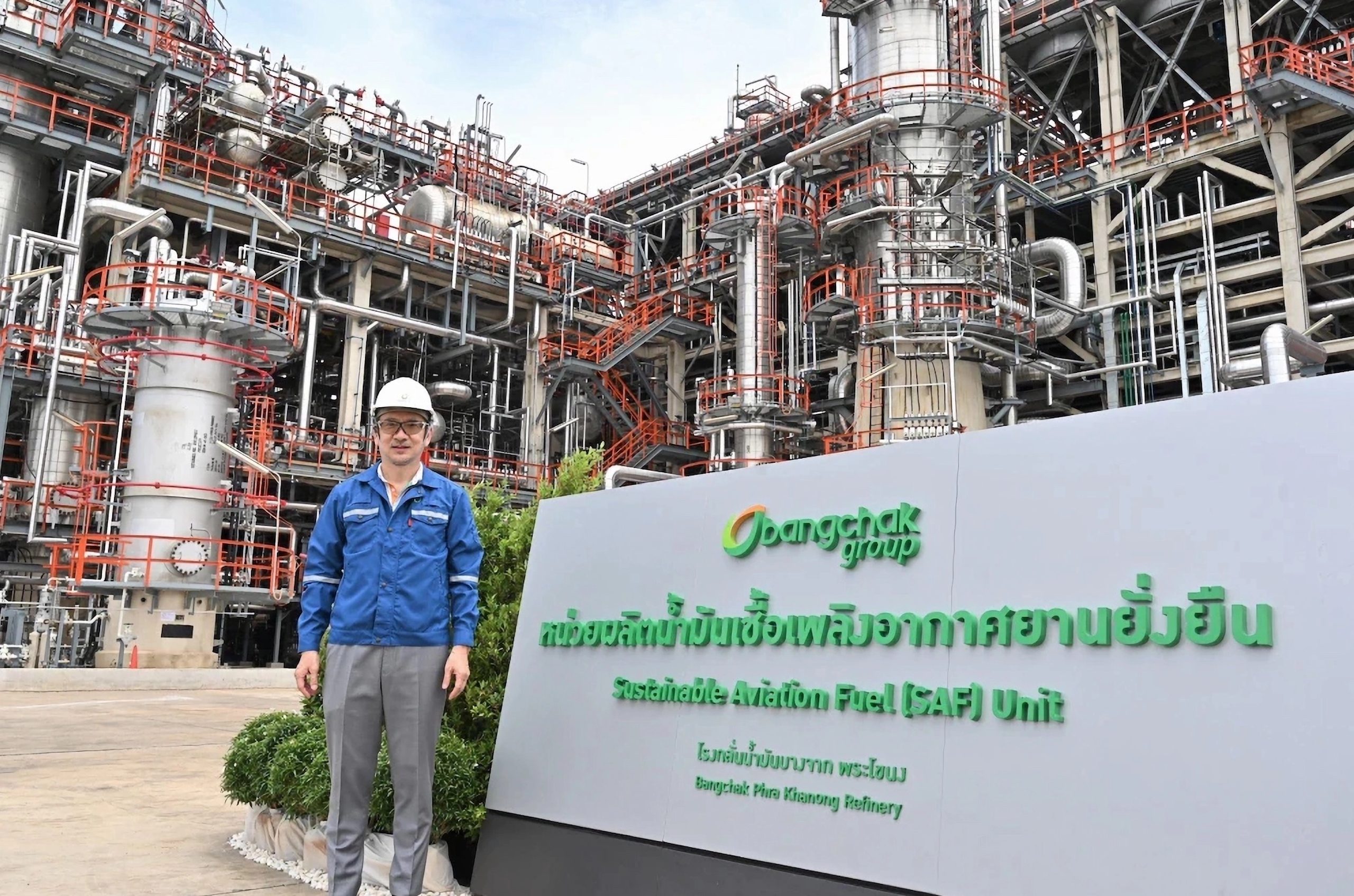
The aviation industry in Asia sees sustainable aviation fuel as its primary decarbonisation tool, yet supply constraints, policy gaps and high costs threaten progress toward net zero. At a recent sustainable investing conference in Singapore, the moderator posed a simple but revealing question to the more than 400 attendees, most of them senior banking professionals. Asked whether they would be willing to pay a higher airfare to help cover the cost of adopting Sustainable Aviation Fuel (SAF), only a handful raised their hands. VIEWPOINT: Net zero by 2050 — Fuhgeddaboudit IATA says SAF tech rollout is ‘main bottleneck’ to net zero The response highlighted a persistent challenge facing the aviation industry’s decarbonisation efforts: while support for SAF and greener air travel remains strong in principle, enthusiasm fades when it comes to paying the additional costs. The episode underscored the real gap between environmental aspirations and consumers’ willingness to pay, a hurdle that continues to complicate SAF scaling. This reality is colliding with a worsening geopolitical landscape. In spite of peace plans, tensions between Iran and the US will likely persist and concerns will remain over prolonged disruption to shipping through the Straits of Hormuz, keeping attention on energy security and fuel costs. For airlines operating on already thin margins, sustainability ambitions can quickly take a back seat when conventional fuel prices surge. The result is a sobering paradox: the case for SAF has never been stronger, yet the commercial conditions needed to accelerate its adoption may be moving further away. In its latest SAF outlook IATA highlighted the slow pace of adoption, projecting global production of just 2.4 million tonnes in 2026, equivalent to only 0.8% of total aviation fuel consumption. Despite the industry’s commitment to net-zero emissions by 2050, with SAF expected to deliver around 65% of the required reductions, progress remains well behind the necessary trajectory. IATA points to poorly sequenced government policies, inadequate production incentives, and limited investment from energy companies as key constraints, alongside challenges in renewable energy supply, infrastructure, and costs. In contrast to my own on the ground snapshot, IATA says its latest passenger survey suggests strong public support for aviation decarbonisation, with most travellers backing continued emissions reductions and according to IATA many say they are willing to pay higher fares to support sustainability initiatives. (PHOTO: Neste) The case for SAF SAF offers one of the most practical pathways for Asia’s rapidly expanding aviation sector to reduce its carbon footprint. With air travel demand forecast to grow strongly across Southeast Asia, China and India, SAF provides a near-term solution that works with existing aircraft and airport infrastructure. Produced from used cooking oil, agricultural residues and other non-food biomass, SAF can reduce lifecycle carbon emissions by up to 80% compared with conventional jet fuel. Governments and companies across Australia, China, Japan, Malaysia and Singapore are investing in production capacity, supply chains and certification, helping to build a regional SAF ecosystem. Beyond emissions cuts, SAF could also strengthen Asia’s energy security by reducing dependence on imported fossil fuels, while creating new opportunities in agriculture, waste management and advanced manufacturing. The case against SAF Yet significant economic and practical challenges remain for SAF adoption. Production costs are substantially higher than conventional jet fuel, raising concerns about increased operating expenses and higher ticket prices in price-sensitive markets such as Indonesia, Vietnam and India. Feedstock availability is another major constraint. Supplies of waste oils and agricultural residues are limited, and large-scale expansion risks competing with land, water and food production in densely populated economies. Questions also persist over the long-term sustainability of certain feedstocks. Infrastructure and policy gaps add further obstacles. Many countries in Asia still lack sufficient refining capacity, logistics networks and regulatory incentives. Critics argue that an excessive focus on SAF may also divert attention and capital from other potentially transformative solutions. Manufacturers like ATR are also stepping up with SAF initiatives. (PHOTO: ATR) Can Asia drive the SAF revolution? Nowhere is momentum for green fuel greater than in Asia. The region has become the fastest-growing SAF market, driven by rising air travel demand, government mandates and a pipeline of commercial projects. Policymakers and industry players from Japan and Singapore to India and Southeast Asia are laying the foundations for a new aviation fuel ecosystem. But ambitions are in danger of running ahead of the infrastructure and policy frameworks needed to support them. Expanding production capacity, developing supply chains and creating harmonised regulations remain critical challenges. Finnish renewable fuels producer Neste is one of the world’s leading SAF suppliers and a key player in the region. The company operates one of the world’s largest renewable fuels refineries in Singapore, serving as its main production and export hub for Asia-Pacific. Asked whether the industry has oversold near-term SAF scalability, Mario Mifsud, vice president, renewable fuels sales and trading EMEA & APAC at Neste, acknowledged that while SAF is not a silver bullet, it remains one of the most effective immediate solutions for reducing aviation emissions at scale. “Production growth has been slower than expected with IATA’s recent revision of its 2025 global SAF output estimate downwards to 1.9 million tonnes. However, this shortfall is not because the technology or physical supply capabilities were oversold,” says Mifsud. “Rather, scaling SAF is fundamentally a challenge of accelerating demand by supporting policies, alignment of the different frameworks across different countries and creating consistent long-term demand signals. Currently SAF supply is bigger than SAF demand and supply growth is expected to outpace SAF demand until at least 2030,” he adds. A recent thought leadership paper by White & Case partners Tim Fourteau (Singapore/Tokyo), Cristian Blumm (Houston) and Jerome Hamilton, head of legal at ChemOne Group in Singapore, back Asia’s domestic SAF production arguing that Indonesia and Malaysia are well positioned to become significant players in the global SAF market. The authors highlighted abundant feedstock resources, government initiatives and growing international demand. However, they noted that success will require broader feedstock supply chains, stronger domestic policies, and better alignment with international sustainability standards. (IMAGE: Shutterstock) SAF in Asia today: Momentum builds Since January this year, Thailand has mandated a 1% blend of SAF in all domestically sold jet fuel. The policy, announced by the Ministry of Transport, aims to kickstart demand, build local production capacity, and establish Thailand as a regional SAF hub in Southeast Asia. The government is collaborating with refiners (including PTT and Bangchak), airlines, and airports to develop infrastructure and secure supply chains. If implemented successfully, Thailand’s modest mandate could serve as a model for balancing aviation growth with climate goals in the region. In Vietnam, the Asia Sustainable Aviation Fuel Association (ASAFA) has partnered with the Da Nang Innovation and Startup Support Centre to advance SAF adoption and green aviation capacity-building. In Japan, Japan Airlines (JAL) recently announced it met its fiscal 2025 carbon emissions target, keeping net CO2 emissions from aircraft operations below 2019 levels through fleet upgrades, operational efficiencies, carbon credits and expanded SAF use. JAL achieved its target of replacing 1% of total fuel consumption with SAF (approximately 40,000 kilolitres) and now plans a 10% emissions reduction by 2030 relative to 2019 levels, with SAF alone expected to deliver a 5% reduction in fuel-combustion emissions. Hong Kong and the city of Dongguan in Guangdong province are collaborating on a major new SAF supply chain project. Hong Kong-based EcoCeres signed an investment letter of intent with the Dongguan Municipal Government to develop the region’s first fully integrated SAF supply chain, with the Dongguan facility planned to produce approximately 450,000 tonnes per year of SAF. The project supports China’s decarbonisation goals and Hong Kong’s target of requiring a specified proportion of SAF on departing flights by 2030. It is not all smooth sailing however, citing ongoing volatility in SAF supply, pricing uncertainty, and limited production capacity, in March, Singapore deferred its planned SAF levy, signalling a flexible and pragmatic approach to decarbonisation. The Civil Aviation Authority of Singapore said it stood the SAF levy down to avoid premature cost burdens on airlines and passengers. Progress is real, but challenges remain News and updates on fresh SAF initiatives and production are almost a daily occurrence in the region. However, as Asia moves from policy ambition to implementation, the success of SAF will depend not only on production capacity and technological innovation, but also on the policy frameworks governing trade and investment. Industry participants with a strong voice such as EcoCeres argue strongly that open and predictable trade regimes will be essential to scaling SAF markets efficiently across borders. Protectionist measures risk fragmenting supply chains, raising costs, and slowing the pace of aviation decarbonisation. With the region expected to emerge as both a major producer and consumer of SAF, governments must quickly align sustainability standards, certification systems, and trade policies. Greater regulatory harmonisation would improve project bankability, facilitate feedstock flows, and help attract the long-term capital required for a competitive SAF industry. Ultimately, Asia’s ability to establish itself as a global SAF hub will depend on sustained collaboration between policymakers, producers, airlines, and investors. Turning ambitious targets into meaningful emissions reductions will require coordinated action to ensure today’s foundations translate into a scalable and commercially viable pathway for aviation decarbonisation in the decades ahead to get anywhere near the industry’s commitment to net-zero emissions by 2050. For Editorial Inquiries Contact: Editor Matt Driskill at [email protected] For Advertising Inquiries Contact: Head of Sales Sally Passey at [email protected]
Previous article
BOC Aviation signs new lease deal with AJet
Comments
Loading comments...