
ICAO News in Brief 30 March 2026
New aircraft will face stricter environmental standards; ICAO strengthens global framework for accident investigations; New border system will enhance security and process travellers faster
By Asian Aviation Staff
•Mar 30, 2026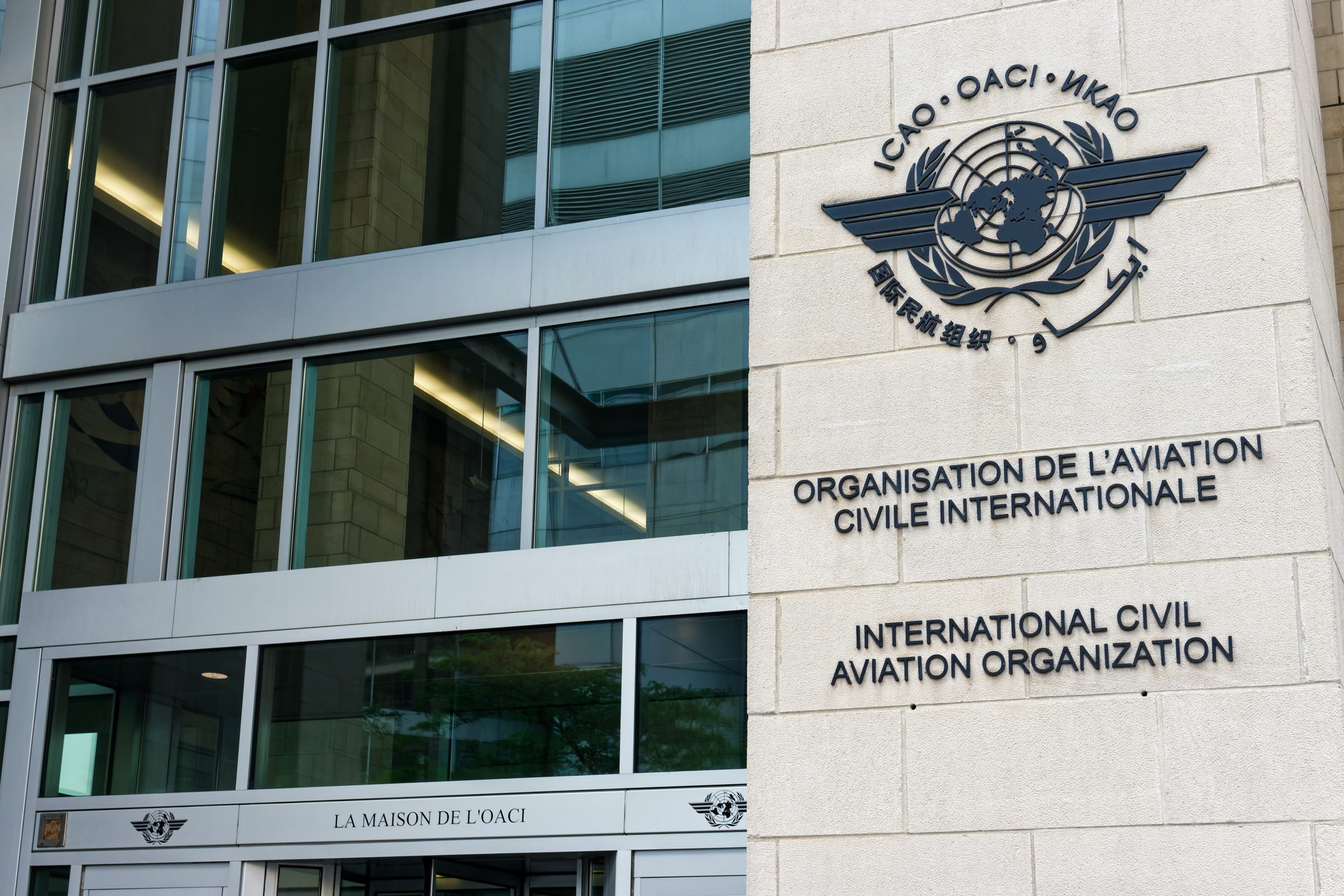
New aircraft will face stricter environmental standards: New aircraft around the world, including next-generation supersonic jets, will soon be required to meet much more demanding environmental rules following the adoption of new technical standards by the International Civil Aviation Organization (ICAO) Council. Regarding subsonic aircraft, these more stringent ICAO standards have been developed to ensure the latest technologies are used in aircraft design to reduce aviation CO2 emissions and aircraft noise globally, directly supporting international climate and sustainability goals while fostering innovation in cleaner, quieter aircraft. The ICAO CO2 emissions standard was made 10% more stringent today and is applicable to new aircraft type designs as of 2031. In addition to this, a complex more stringent CO2 emissions standard was also adopted that will apply to new deliveries of in-production aircraft types from 2035. The new rules further introduce more stringent noise limits for quieter aircraft, raising the bar by six decibels for large aircraft types, and two decibels for smaller ones. This new more stringent noise standard is applicable to new aircraft type designs as of 2029. The new subsonic standards are expected to encourage further worldwide investment in fuel efficiency and noise reduction technologies across the aviation sector, generating benefits for passengers, communities, and the climate alike. ICAO is now beginning preparations for a potential return of supersonic aircraft by addressing their noise impact first. As of 2029, these aircraft will need to comply with the noise limits that apply to today’s subsonic aircraft. With formal adoption of the new standards now complete, the ICAO Council has established 3 August 2026 as the effective date, and set 1 January 2027 as the point from which the new requirements will apply globally. ICAO will accompany the transition to the new standards with detailed implementation guidance and comprehensive documentation on both the environmental benefits and regulatory impacts of the changes. These coordinated steps are designed to ensure that the entire global aviation community is fully prepared for the shift to more stringent environmental standards, reinforcing ICAO’s leadership in alignment with its vision of air transport for all by 2050, and net-zero carbon emissions. ICAO strengthens global framework for accident investigations: New global standards will ensure aircraft accident investigations are not halted or compromised by conflicts of interest, following the landmark decision by the Council of the International Civil Aviation Organization (ICAO). The changes concern Annex 13 – Aircraft Accident and Incident Investigation of the 1944 Convention on International Civil Aviation, and they will reinforce the independence, transparency and credibility of aviation safety findings worldwide. Recent accidents linked to suspected acts of unlawful interference have raised concerns about whether safety investigations were able to proceed independently and comprehensively, or to completion. It is in response to these concerns that ICAO has decided to update the standards in Annex 13. In most circumstances, responsibility for investigating an accident belongs to the country where it has occurred, with the investigation then undertaken by a specialized and independent authority designated by that country. The sole purpose of an Annex 13 investigation is accident and incident prevention. In some instances, however, investigations have been terminated, or transferred entirely to other organizations, resulting in delayed final safety reports, or no report being issued at all. This limits the opportunity to identify lessons critical to preventing future accidents. The amendment to Annex 13 reflects several years of technical work and consultation through ICAO’s Accident Investigation Panel and Safety Management Panel, as well as feedback from a broad range of States and international organizations. The Council took note of the fact that public expectations for transparency and impartiality have increased, particularly in high-profile accidents involving sensitive political or security contexts, and that international standards must evolve accordingly. Central to the amendment is new guidance intended to help States manage investigations where an actual or perceived conflict of interest could undermine confidence in the findings. New measures States may take to enhance transparency and credibility include delegating investigations to another State, or a regional accident investigation organization, inviting ICAO and/or third-party States to observe the investigation, and providing timely, verified factual information to the public. The guidance also underscores the importance of appropriate communication with victims of accidents and their families, directly or through their States, as part of a transparent investigative process. The Council also approved changes clarifying that accident investigation authorities must have unrestricted access to all evidential material without delay, to prevent misinterpretation by authorities regarding allowing restrictions on access. The amendment further aligns Annex 13 with updated provisions in Annex 19 – Safety Management on State safety programmes, reinforcing the crucial role of accident investigation data in proactive safety management. Amendment 20 to Annex 13 will become applicable on 23 November 2028, allowing States time to transpose the revised provisions into national laws, regulations and procedures. New ICAO border system will enhance security and process travellers faster: Travellers, airlines, airports and governments will benefit from more efficient and secure cross-border journeys following tomorrow’s launch of a next-generation “Public Key Directory” (PKD) system by the International Civil Aviation Organization (ICAO). The ICAO PKD is a secure international database that helps border authorities, airlines and other trusted parties confirm whether electronic passports and digital travel documents are genuine. It does this by providing a central place for States to share digital security certificates—known as “public keys”—used to check that a travel document matches what was issued by a government. When a traveller presents an electronic passport or digital ID, officials use the PKD to verify its digital signature, confirming both the authenticity of the document and that its information has not been altered. The PKD does not contain personal information about individuals or the contents of their documents. The updated system will formally launch at 0900 Montréal time on 27 March 2026. The system is designed to help States meet their own legal obligations to process passengers promptly and respectfully while enabling industry players to support a holistic and seamless travel process. Airlines and airports will have new possibilities to offer remote document authentication via smartphones and to access verified biometrics in advance. For those passengers who opt-in, this will streamline boarding, immigration and even commercial services, such as shopping. These enhancements will allow airports, airlines and technology providers to better support State authorities as innovation partners. In addition to the immediate implementation for Member States as the core users, ICAO also plans to use the months following the March launch as a demonstration phase for other private sector stakeholders. This will allow interested organizations to explore the new capabilities of the PKD system. A broader programme for private sector use is scheduled to roll out in September 2026. For Editorial Inquiries Contact: Editor Matt Driskill at [email protected] For Advertising Inquiries Contact: Head of Sales Sally Passey at [email protected]
Previous article
AIX: APAC ‘redefining’ cabin interiors
Asian Aviation staff is comprised of award-winning journalists based throughout the Asia-Pacific region led by Editor Matt Driskill. 《亚洲航空》的编辑团队由主编马特·德里斯基尔 (Matt Driskill) 带领,汇聚了遍布亚太地区的获奖记者。
Comments
Loading comments...