
COVID-19: IATA says air cargo slumps in February
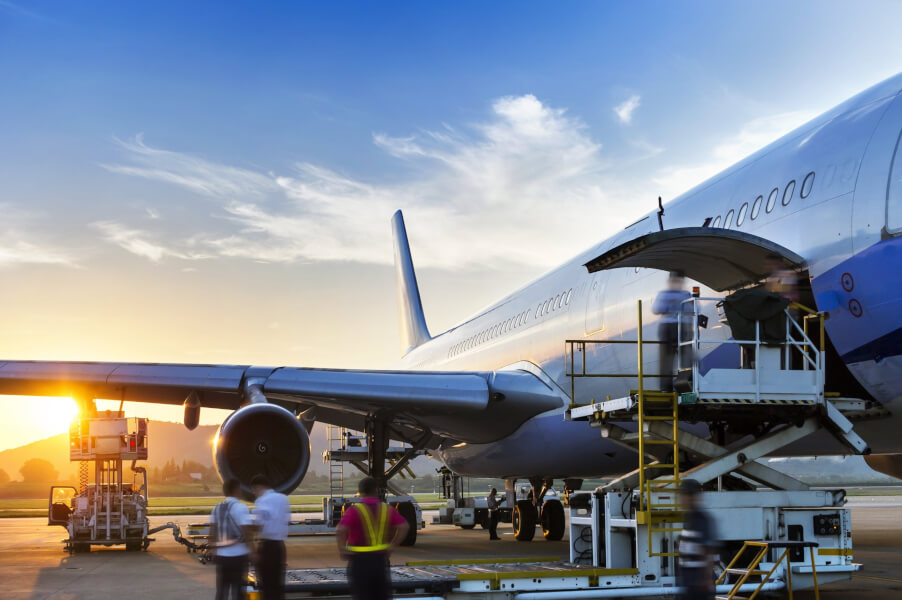
The International Air Transport Association (IATA) released February 2020 data for global air freight markets showing that demand, measured in cargo tonne kilometres (CTKs), decreased by 1.4 percent compared to the same period in 2019. Adjusting the comparison for the impact of the Lunar New Year, which fell in February in 2019, and the leap year in 2020, which meant an additional day of activity, seasonally-adjusted demand was down 9.1 percent month-on-month in February. By February, the negative impacts of the COVID-19 crisis on air cargo demand were becoming visible. (Download the full analysis here.) The month witnessed several significant developments: Manufacturing production in China, one of the world’s largest air cargo markets, dropped sharply due to widespread factory closures and travel restrictions. Global export orders fell to a historically low level. The global Purchasing Managers Index (PMI) is in contraction territory, with all major trading nations reporting falling orders. Significant cargo capacity was lost as a result of airlines reducing passenger operations in response to government travel restrictions due to COVID-19, severely impacting global supply chains. Cargo capacity, measured in available cargo tonne kilometres (ACTKs), dropped by 4.4 percent year-on-year in February 2020. This is subject to the same distortions as the non-seasonally adjusted demand numbers. Alexandre de Juniac, IATA’s director general. (PHOTO: IATA file) “The spread of COVID-19 intensified over the month of February, and with it, the impact on air cargo. Adjusted demand for air cargo fell by 9.1 percent. Asia-Pacific carriers were the most affected with a seasonally-adjusted drop of 15.5 percent,” said Alexandre de Juniac, IATA’s director general and CEO.” What has unfolded since is a story of two halves. The disruption of global supply chains led to a fall in demand. But the dramatic disruption in passenger traffic resulted in even deeper cuts to cargo capacity. And the industry is struggling to serve remaining demand with the limited capacity available. We only got a first glimpse of this in February. Among all the uncertainty in this crisis, one thing is clear—air cargo is vital. It is delivering lifesaving drugs and medical equipment. And it is supporting global supply chains. That’s why it is critical for governments to remove any blockers as the industry does all it can to keep the global air cargo network functioning in the crisis and ready for the recovery.” Regional Performance Airlines in Europe suffered a sizeable decline in year-on-year growth in total air cargo volumes in February 2020, while North American and Asia-Pacific carriers experienced more moderate falls. Middle East, Latin America and Africa were the only regions to record growth in air freight demand compared to February 2019. Asia-Pacific airlines saw demand for air cargo contract by 2.2 percent in February 2020, compared to the year-earlier period. Seasonally-adjusted cargo demand fell by 15.5 percent compared to January 2020, to levels last seen in early 2014. Capacity decreased 17.7 percent – the largest fall since early 2013. Cargo capacity in China dropped sharply driven by the collapse of belly-hold capacity. North American airlines saw demand decrease by 1.8 percent in February 2020, compared to the same period a year earlier. Capacity increased by 4.1 percent. Cargo traffic on the Asia-North America trade lanes decreased by 2.4 percent year-on-year as a result of factory closures in Asia due to the global COVID-19 pandemic. European airlines posted a 4.1 percent decrease in cargo demand in February 2020 compared to a year earlier. European carriers were among the first to cancel flights to and from Asia, contributing to the drop. The Within Europe market decreased by 7.8 percent year-on-year, affected by early COVID-19 containment measures. Capacity decreased by 3.8 percent year-on-year. Middle Eastern airlines’ cargo demand increased 4.3 percent in February 2020 compared to the year-ago period. Capacity increased by 6 percent. However, given the Middle East’s position connecting trade between China and the rest of the world, the region’s carriers have significant exposure to the impact of COVID-19 in the period ahead. Latin American airlines experienced an increase in freight demand in February 2020 of 1.8 percent. Capacity decreased by 2.6 percent year-on-year. The region was relatively unaffected by the COVID‑19 outbreak in February. However, disrupted global supply chains and a fragile economic backdrop in some countries in the region continue to create headwinds for air cargo. African carriers posted the fastest growth of any region for the 12th consecutive month in February 2020, with an increase in demand of 6.2 percent compared to the same period a year earlier. Capacity grew 3 percent year-on-year. The Africa-Asia and Africa-Middle East trade lanes continue to bring robust growth to the region.

Matt Driskill is the Editor of Asian Aviation. He has been an Asia-based journalist and content producer since 1990 for outlets including Reuters and the International Herald Tribune/New York Times and is a former president of the Foreign Correspondents Club of Hong Kong. He appears on international broadcast outlets like Al Jazeera, CNA and the BBC and has taught journalism at Hong Kong University and American University of Paris. In 2022 Driskill received the “Outstanding Achievement Award” from the Aerospace Media Awards Asia organisation for his editorials and in 2024 received a “Special Recognition for Editorial Perspectives” award from the same organisation. Driskill has received awards from the Associated Press for Investigative Reporting and Business Writing and in 1989 was named the John J. McCloy Fellow by the Graduate School of Journalism at Columbia University in New York where he earned his Master's Degree.
马特·德里斯基尔(Matt Driskill)是《亚洲航空》(Asian Aviation)的主编。他自1990年起,担任驻亚洲的记者和内容制作人,曾为路透社、国际先驱论坛报/纽约时报等媒体工作,并曾任香港外国记者协会会长。他也曾多次在半岛电视台、新加坡广播公司(CNA)和BBC等国际媒体担任嘉宾,并在香港大学和巴黎美国大学教授新闻学。2022年,德里斯基尔因其评论获得了航空媒体奖(Aerospace Media Awards Asia)颁发的“杰出成就奖”,2024年又因其编辑观点获得同一组织颁发的“特别表彰”。他曾获得美联社的调查报道和商务写作奖,并于1989年被纽约哥伦比亚大学研究生新闻学院授予约翰·J·麦克劳伊学者(John J. McCloy Fellow)称号,获得硕士学位。
Comments
Loading comments...