
COVID-19: Asia airports warn travel has hit ‘rock bottom’; global coordination needed for restart
Some signs of comebacks in China, South Korea, but ACI APAC says ‘full operational status will not happen overnight’.
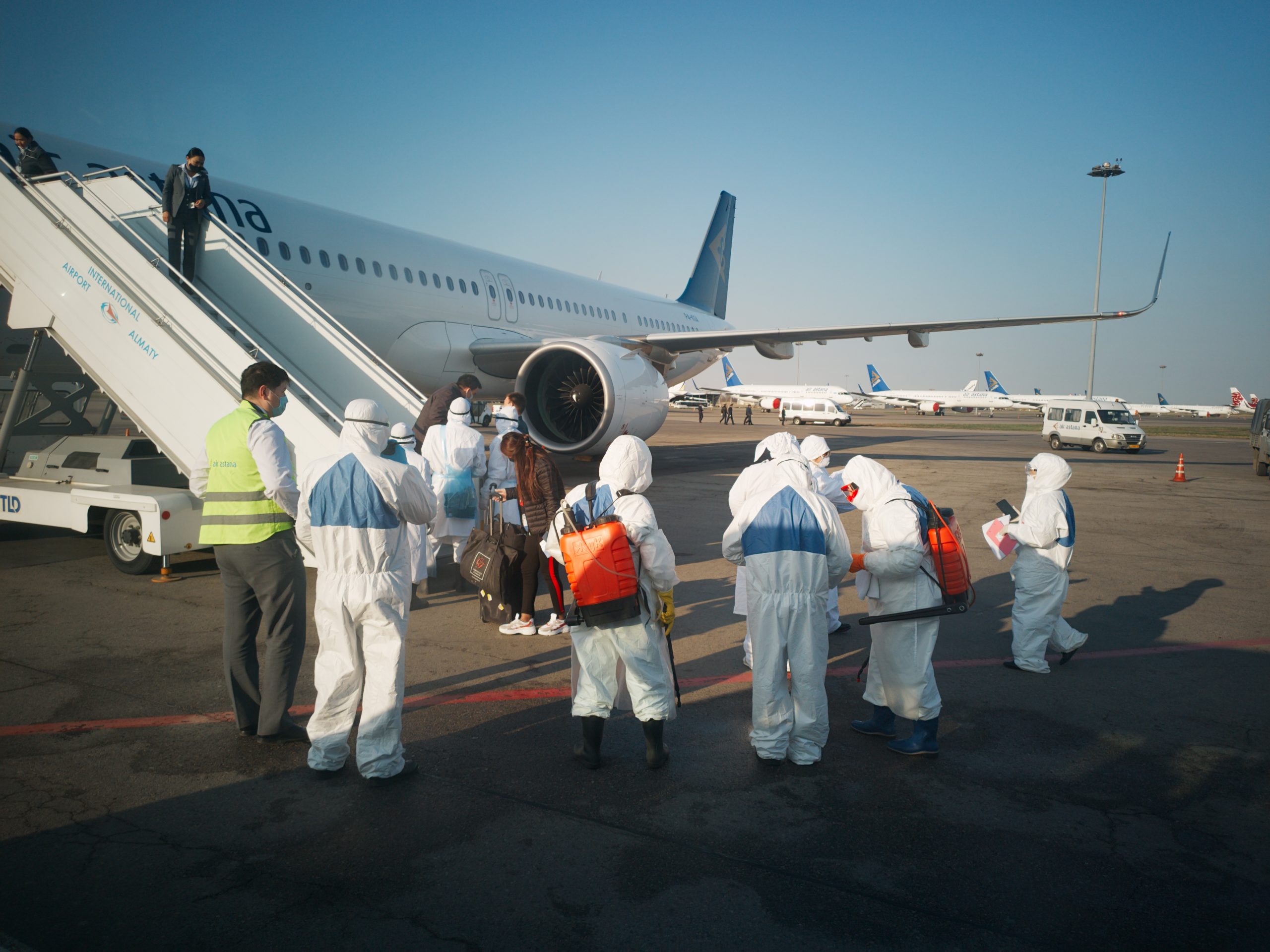
The main trade group representing Asia-Pacific’s airports, Airports Council International (ACI) Asia-Pacific, said preliminary traffic data from 18 airports in major aviation markets in Asia-Pacific and the Middle East showed year-on-year passenger traffic fell by 95 percent by the middle of April as the world’s aviation business continues to crater due to the global spread of the COVID-19 pandemic. Global air capacity has collapsed as the COVID-19 pandemic has spread across the world. (SOURCE: CAPA/OAG) ACI said there were encouraging “initial signals of recovery” in China and South Korea and that airports globally have made “significant adjustments to operations to manage the impact” of the virus and have made “cautious preparations for resumption of services”, but there is no clear indication when aviation will be able to resume as nations around the world continue to keep their borders closed as a way to combat the spread of COVID-19. A screenshot taken on 21 April of the Johns Hopkins University COVID-19 virus tracking site. To access the live site, click on the image. (PHOTO: Matt Driskill) IATA coronavirus resource centre ICAO coronavirus resource centre Johns Hopkins University Virus Tracking Site Air Cargo COVID-19 Action Page IATA TACT COVID-19 Operational Impact Portal IATA Quick Reference for Ground Handling During COVID-19 IATA Guidance on the Safe Carriage of Cargo in the Passenger Cabin Stefano Baronci, director general of ACI Asia-Pacific. (PHOTO: ACI) “Passenger traffic in Asia-Pacific region has reached rock bottom. Airports have been forced to make difficult operational decisions including full or partial closure of terminals and runways and reduction of front-line employees,” said Stefano Baronci, director general, ACI Asia-Pacific. “These drastic measures take time to reverse. Returning to full operational status will not happen overnight.” ACI, as well as other organisations like the International Air Transport Association (IATA), have called on governments around the world to “coordinate” their efforts to restart the aviation industry. ACI said such coordination was necessary “so that airports can prepare the appropriate infrastructure, facilities and processes in support of health measures.” “The freedom of movement will have to co-exist with the virus, until a vaccine against COVID-19 is available at a global scale,” Baronci added. “Airport operators will need to balance a safe travel experience for passengers with recovering connectivity to boost the economy. This cannot be done in isolation and requires the engagement of all aviation stakeholders.” Airports around the world are starting to suffer from a steep drop in passenger traffic. (PHOTO: Shutterstock) The resumption of the industry couldn’t come soon enough for some airports. Singapore’s Changi Airport handled 1.65 million passenger movements in March 2020, a decrease of 70.7 percent compared to the same period last year. Aircraft movements declined by 49.9 percent to 16,200 landings and take-offs, while airfreight throughput dropped 19.1 percent to 149,000 tonnes for the month. For the first quarter of the year, Changi Airport registered 11.0 million passenger movements, a decrease of 32.7 percent year-on-year. Aircraft movements declined 20.1 percent to 75,900 while airfreight throughput fell 8 percent to 453,000 tonnes. The South China Morning Post reported Hong Kong International Airport, which handled 71.5 million passengers in 2019, is on course for a 99.5 percent erosion in passenger volumes in April, based on daily Immigration Department data of entries and exits through the airport. No transits are allowed through the airport and non-residents have not been permitted to enter Hong Kong since 25 March. Up to 19 April, Hong Kong’s airport saw 19,454 people enter and exit via immigration control points. In April last year, that figure was 6.46 million. Meanwhile, Sydney Airport said the first 16 days of this month showed international passenger traffic had collapsed by 96.1 percent, while domestic volumes tumbled 97.4 percent.
Previous article
Aviation News in Brief 21 April 2020
Matt Driskill is the Editor of Asian Aviation. He has been an Asia-based journalist and content producer since 1990 for outlets including Reuters and the International Herald Tribune/New York Times and is a former president of the Foreign Correspondents Club of Hong Kong. He appears on international broadcast outlets like Al Jazeera, CNA and the BBC and has taught journalism at Hong Kong University and American University of Paris. In 2022 Driskill received the “Outstanding Achievement Award” from the Aerospace Media Awards Asia organisation for his editorials and in 2024 received a “Special Recognition for Editorial Perspectives” award from the same organisation. Driskill has received awards from the Associated Press for Investigative Reporting and Business Writing and in 1989 was named the John J. McCloy Fellow by the Graduate School of Journalism at Columbia University in New York where he earned his Master's Degree.
马特·德里斯基尔(Matt Driskill)是《亚洲航空》(Asian Aviation)的主编。他自1990年起,担任驻亚洲的记者和内容制作人,曾为路透社、国际先驱论坛报/纽约时报等媒体工作,并曾任香港外国记者协会会长。他也曾多次在半岛电视台、新加坡广播公司(CNA)和BBC等国际媒体担任嘉宾,并在香港大学和巴黎美国大学教授新闻学。2022年,德里斯基尔因其评论获得了航空媒体奖(Aerospace Media Awards Asia)颁发的“杰出成就奖”,2024年又因其编辑观点获得同一组织颁发的“特别表彰”。他曾获得美联社的调查报道和商务写作奖,并于1989年被纽约哥伦比亚大学研究生新闻学院授予约翰·J·麦克劳伊学者(John J. McCloy Fellow)称号,获得硕士学位。
Comments
Loading comments...