
Home › Industry News
CORONAVIRUS: IATA takes subtle swipe at Trump’s travel restrictions
Flight bans only effective at beginning of outbreaks, not when virus is already present and spreading
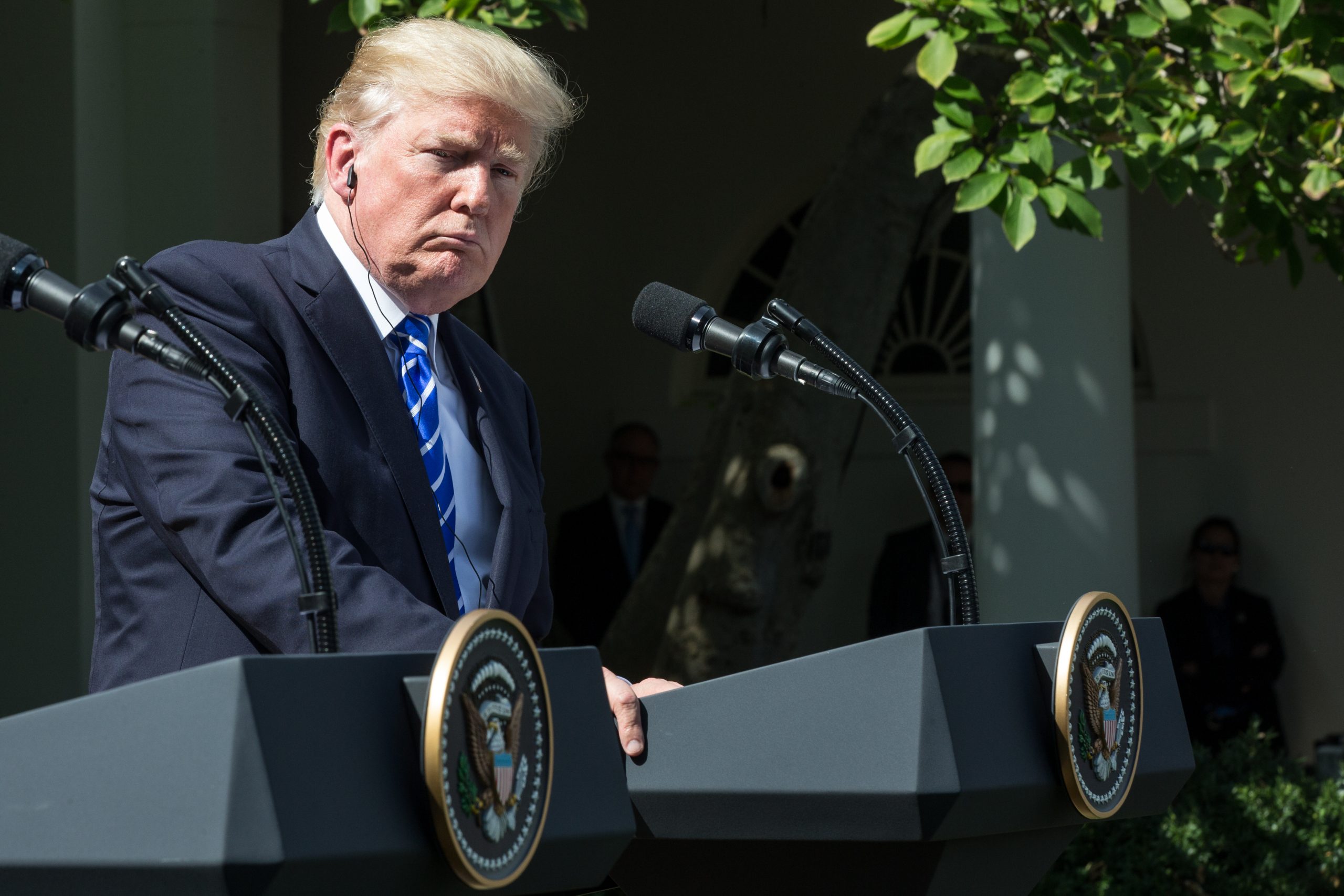
The head of the International Air Transport Association (IATA), the lead trade group representing airlines worldwide, took a subtle dig at US President Donald Trump after Trump banned most passenger travel from 26 European countries because of the continuing spread of the COVID-19 coronavirus that has infected hundreds of thousands and killed more than 4,700 people. In only his second Oval Office address since he became president, Trump said only US citizens and legal residents would be allowed to fly to the US from Europe. In his speech, Trump took a swipe at the EU suggesting part of the reason was it had not done enough when it came to combatting COVID-19, which he also called a “foreign virus”. “The European Union failed to take the same precautions and restrict travel from China and other hot spots. As a result, a large number of new clusters in the United States were seeded by travellers from Europe,” he said in announcing the ban, which he had not discussed with his European counterparts. Trump, who has a demonstrated disdain for science, claimed a travel ban on China was effective in slowing the disease’s progress. That doesn’t square with a recent report in Science Magazine that showed travel restrictions will have “modest effects” in reducing the spread of COVID-19. A screenshot of the virus tracking site at Johns Hopkins University taken on 13 March. To access the live site click on the image. (PHOTO: Matt Driskill) His exemption of the UK has sparked lots of rumours. His company, the Trump Organisation, owns golf resorts and hotels in the UK as Politico pointed out in an article. It may be more likely that the UK never signed up to the Schengen Agreement that allowed for basically unrestricted travel within the so-called Schengen Zone. Europeans travelling to the UK however, still had to pass through customs and immigration checks. IATA: “Extended scenario” for coronavirus could see US$113 billion wiped off airline revenues globally ACI APAC says Q1 regional traffic may drop 24% Airlines increasingly reliant on ‘ghost flights’ during coronavirus outbreak Singapore Airlines extends flight cuts to Australia, US, Europe Coronavirus adds hurdle for air cargo industry saddled with demand slump IATA calls for worldwide suspension of slot rules IATA, as well as other aviation trade groups like the Association of Asia-Pacific Airlines (AAPA), have been vocal in calling for an end to travel bans, saying they hurt not only the aviation industry, but other industries as well and have been shown to be only “modestly” effective in slowing a virus at the beginning of an outbreak and are not effective once a virus has spread widely as this one has done. AAPA earlier said travel bans, while “well-intentioned, seem to lack any proper public health justification, whilst causing significant and widespread disruption to travel and trade activities across the world”. IATA said in its statement that the World Health Organisation (WHO) “continues to advise against the application of travel or trade restrictions to countries experiencing outbreaks. The WHO said in February that “travel measures that significantly interfere with international traffic may only be justified at the beginning of an outbreak, as they may allow countries to gain time, even if only a few days, to rapidly implement effective preparedness measures. Such restrictions must be based on a careful risk assessment, be proportionate to the public health risk, be short in duration, and be reconsidered regularly as the situation evolves.” IATA Director General Alexandre du Juniac at the 2018 Aviation Leadership Summit. (PHOTO: Experia Events) “We urge the US and other governments that have placed travel restrictions to follow the WHO guidance. This is fast evolving. Health and safety are the top priorities for governments and the air transport sector. But the effectiveness and necessity of travel restrictions must be continuously reviewed,” said Alexandre de Juniac, IATA’s director general and CEO. “These are extraordinary times and governments are taking unprecedented measures. Safety—including public health—is always a top priority. Airlines are complying with these requirements. Governments must also recognise that airlines—employing some 2.7 million people—are under extreme financial and operational pressures. They need support,” de Juniac added. IATA urged governments to prepare for the adverse economic impact that they will cause and earlier had said the cost to airlines globally could range from US$63 billion to US$113 billion in lost revenues. Those earlier projections did not include more recent measures put in place by the US and other governments. The US measures will add to this financial pressure, IATA said. The total value of the US-Schengen market in 2019 is about US$20.6 billion. The markets facing the heaviest impact are US-Germany (US$4 billion), US-France (US$3.5 billion) and US-Italy (US$2.9 billion), according to IATA data. Data from OAG shows the steep decline in flights from Asia and Europe. (CHART: OAG) The US ban, which has hammered the stocks of US airlines, could affect up to 550 flights and 125,000 passengers per day, IATA said. “This will create enormous cash-flow pressures for airlines. We have already seen Flybe go under. And this latest blow could push others in the same direction. Airlines will need emergency measures to get through this crisis. Governments should be looking at all possible means to assist the industry through these extreme circumstances. Extending lines of credit, reducing infrastructure costs, lightening the tax burden are all measures that governments will need to explore. Air transport is vital, but without a lifeline from governments we will have a sectoral financial crisis piled on top of the public health emergency,’ said de Juniac. Prior to IATA’s statement, the AAPA had also called on governments to lift travel restrictions and to follow WHO guidelines. Airbus employee tested positive for COVID-19 Airbus has confirmed that an employee at its Madrid (Getafe) site in Spain has tested positive for COVID-19 and is now receiving medical attention. As a precautionary measure, all co-workers who have been in direct contact with this employee have been asked to self-quarantine by staying at home for the next 14 days.
TAGSAAPAAsia-PacificAsian AviationcoronavirusIATAtravel bans
Previous article
CORONAVIRUS: AAPA calls for travel bans to be lifted as Trump axes all travel from mainland Europe
Matt Driskillhttp://www.matt-driskill.com
Matt Driskill is the Editor of Asian Aviation. He has been an Asia-based journalist and content producer since 1990 for outlets including Reuters and the International Herald Tribune/New York Times and is a former president of the Foreign Correspondents Club of Hong Kong. He appears on international broadcast outlets like Al Jazeera, CNA and the BBC and has taught journalism at Hong Kong University and American University of Paris. In 2022 Driskill received the “Outstanding Achievement Award” from the Aerospace Media Awards Asia organisation for his editorials and in 2024 received a “Special Recognition for Editorial Perspectives” award from the same organisation. Driskill has received awards from the Associated Press for Investigative Reporting and Business Writing and in 1989 was named the John J. McCloy Fellow by the Graduate School of Journalism at Columbia University in New York where he earned his Master's Degree.
马特·德里斯基尔(Matt Driskill)是《亚洲航空》(Asian Aviation)的主编。他自1990年起,担任驻亚洲的记者和内容制作人,曾为路透社、国际先驱论坛报/纽约时报等媒体工作,并曾任香港外国记者协会会长。他也曾多次在半岛电视台、新加坡广播公司(CNA)和BBC等国际媒体担任嘉宾,并在香港大学和巴黎美国大学教授新闻学。2022年,德里斯基尔因其评论获得了航空媒体奖(Aerospace Media Awards Asia)颁发的“杰出成就奖”,2024年又因其编辑观点获得同一组织颁发的“特别表彰”。他曾获得美联社的调查报道和商务写作奖,并于1989年被纽约哥伦比亚大学研究生新闻学院授予约翰·J·麦克劳伊学者(John J. McCloy Fellow)称号,获得硕士学位。