
Changi rolls out airside autonomous tractors
By Asian Aviation Staff
•Jan 21, 2026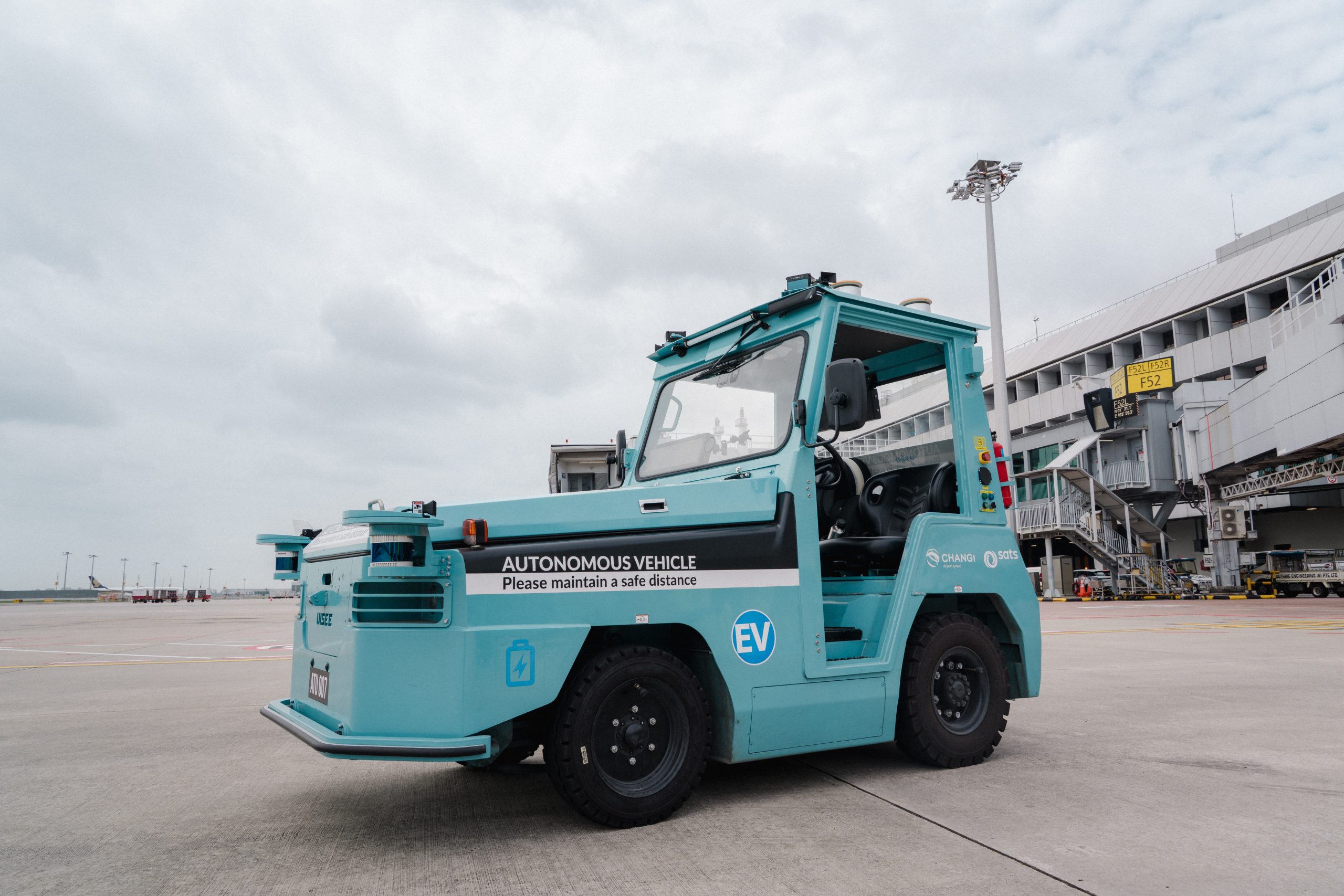
Changi Airport has deployed its first fleet of fully driverless autonomous tractors for airside operations after nearly a year of trials covering more than 5,000 test trips. Two autonomous tractors are now deployed in live operations in Changi’s airside to transfer passenger bags between Terminal 1 and Terminal 4’s baggage handling areas. VIEWPOINT: There is no dignity in AI or automation More than 10 sensors and cameras on each of these tractors work together to enable the vehicles to safely navigate the complex airside environment in all conditions – day, night and rain. The autonomous tractors are also monitored in a control centre during operations where a remote operator can step in immediately, should human intervention be required. Another six autonomous tractors will be deployed to a different route between Terminal 2’s baggage handling area and aircraft stands later this year to support baggage operations under a CAG-SATS collaboration. The autonomous tractor fleet will be expanded to 24 vehicles by year 2027. Going forward, more autonomous tractors will be deployed to tow cargo and equipment, in addition to baggage. This project, co-funded by the Civil Aviation Authority of Singapore (CAAS), aligns with Changi Airport’s broader innovation strategy, which includes the integration of autonomous technology into airside operations, the use of AI in initiatives such as “Aircraft 360”, as well as automation and robotics to increase manpower productivity. Autonomous tractors free up airside workers from driving tasks, enabling them to focus on last mile operations, which are more difficult to automate. To ensure that the autonomous tractors operate safely alongside workers, clear autonomous vehicles (AV) zone markings have been painted in the airside. Clear labels have also been attached to all AVs. As Changi scales up to meet the operational requirements of Terminal 5 by the mid-2030s, such innovations will enable CAG and its partners to redesign and upgrade the job scopes of airside workers, to improve their productivity. Such productivity improvements and upgrading of airside roles are critical to grow the Singapore air hub to meet the future demands of air travel. Liu Yanling, CAG’s Senior Vice President, Airport Operations Strategy & Transformation, said: “The operationalisation of our autonomous tractors today represents a huge step forward for Changi Airport, as we move towards our vision of the airside of the future. Through collaborating with our airport partners to redesign work processes and infrastructural policies, we are shaping a future-proofed working environment where autonomous vehicles can function safely and seamlessly with other human-driven vehicles, with workers focusing on last mile operations.” Angela Ng, Director of Aviation Industry, CAAS, said: “In July 2025, CAAS published the Aviation Jobs Transformation Report which indicates that the Singapore aviation sector will continue to create good jobs and up to 30% of the existing workforce could experience job redesign and transformation over the next five years, majority of them in the ground handling sector. The scaled deployment of autonomous tractors allows CAAS, CAG, SATS and our unions to work together to implement the technology, develop new systems and protocols and set up job redesign programmes to help our workers adopt technology and transition to higher-value work. Lessons learnt here will be useful for the sector’s wider technology adoption and job transformation efforts.” Kuah Boon Kiam, Senior Vice President, SATS Apron Services, said: “We are pleased to work with CAG and CAAS in trialling autonomous tractors as part of our efforts to redesign jobs and ensure our employees remain future-ready while providing a safe working environment for our people. This initiative supports SATS’ Hub Handler of the Future programme, where the integration of automation into our airside operations is a core focus to enhance safety, boost turnaround efficiency, and uplift service quality. For travellers, this translates into more reliable baggage handling and smoother aircraft turnarounds, supporting on-time departures and a seamless airport experience.” For Editorial Inquiries Contact: Editor Matt Driskill at [email protected] For Advertising Inquiries Contact: Head of Sales Sally Passey at [email protected]
Previous article
Ethiopian Airlines orders nine 787 Dreamliners
Asian Aviation staff is comprised of award-winning journalists based throughout the Asia-Pacific region led by Editor Matt Driskill. 《亚洲航空》的编辑团队由主编马特·德里斯基尔 (Matt Driskill) 带领,汇聚了遍布亚太地区的获奖记者。
Comments
Loading comments...