
Home › Manufacturers
Boeing, Embraer call it quits on US$4.2 billion commercial deal as each side blames the other
Embraer says American company backed out because of its ‘financial condition and 737 MAX and other business and reputational problems’; Work on C-390 Millennium military aircraft will continue.
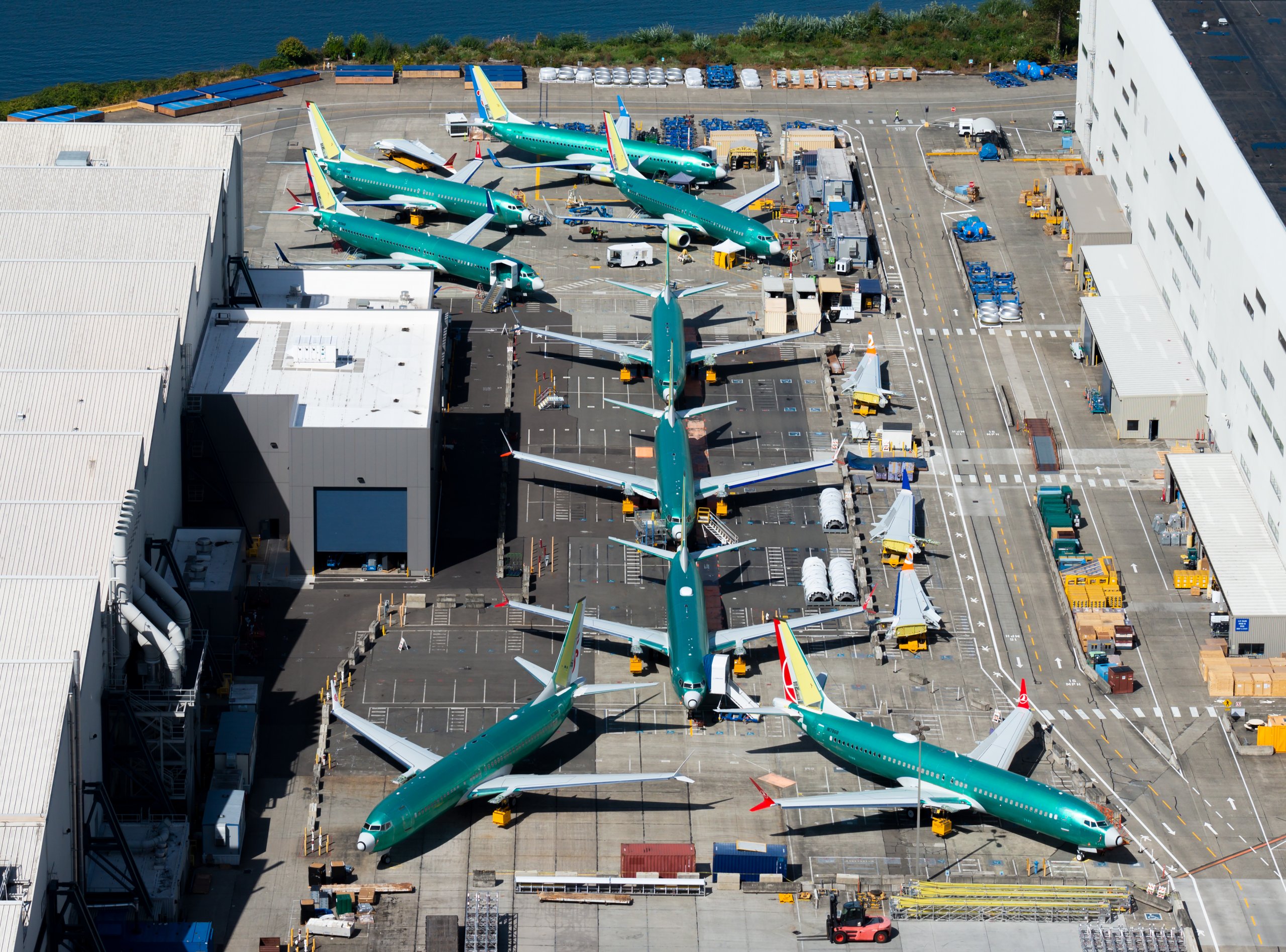
Troubled American plane maker Boeing and Brazil’s Embraer both announced Saturday (25 April) that their plan to marry the commercial airplane divisions of the companies to compete with the Airbus-Bombardier coupling was coming to an end with side accusing the other of failing to meet the terms of the deal. The deal had been rumoured for the last week to be on the rocks given the state of the commercial aviation industry in which thousands of passenger planes have been grounded due to the COVID-19 pandemic that has now killed more than 200,000 around the world and shows little sign of abating. A screenshot of the Johns Hopkins University virus tracking site taken on 26 April. Click on the image to access the live site. (PHOTO: Matt Driskill) Boeing has been facing almost insurmountable challenges to its own business since two crashes of its mainstay and best-selling 737 MAX narrowbody killed 346 people. Those crashes and the subsequent ground of the MAX have already cost the company billions in lost sales and compensation to carriers who had ordered the plane but not received their orders. Boeing also replaced its former CEO Dennis Muilenburg with David Calhoun and made other moves at the top of the executive food chain last week to give more power to the company’s CFO, Greg Smith. Boeing is expected to report its first-quarter results on 29 April and analysts are saying the picture won’t be pretty. The deal between Boeing and Embraer was supposed to be the answer to a similar one done by Airbus in which the European plan maker bought a controlling stake in Canada’s Bombardier, which makes commercial plans that compete directly with Embraer. (PHOTO: Embraer) In its statement announcing the split from Embraer, Boeing said it was terminating the “Master Transaction Agreement” (MTA) for the commercial aviation business and the C-390 Millennium medium airlift and air mobility aircraft because as of the initial termination date of 24 April, “Embraer did not satisfy the necessary conditions” to continue with the deal. Marc Allen, senior vice president of Boeing and president of Embraer Partnership and Group Operations. (PHOTO: Boeing) “Boeing has worked diligently over more than two years to finalise its transaction with Embraer. Over the past several months, we had productive but ultimately unsuccessful negotiations about unsatisfied MTA conditions. We all aimed to resolve those by the initial termination date, but it didn’t happen,” said Marc Allen, president of Embraer Partnership & Group Operations. “It is deeply disappointing. But we have reached a point where continued negotiation within the framework of the MTA is not going to resolve the outstanding issues.” ‘Flying Coffins’: US Senate panel rips Boeing’s Muilenburg over MAX and too close ties to regulators Boeing, FAA ‘jeopardised the safety of the flying public’ with 737 MAX actions COVID-19: The shape of aviation to come COVID-19: IATA warns of airline revenue losses at US$314 billion for 2020 due to pandemic COVID-19: AAPA says Asia-Pacific traffic down 93% in first week of April as borders remain closed COVID-19: IATA says 25 million jobs at risk as air travel shuts down COVID-19: Airbus cuts production by one-third COVID-19: Airlines in danger of losing ‘brand value’ COVID-19: Boeing to reopen additional plants, activates airlift for PPE mission from China Boeing says it will resume commercial plane production in Washington’s Puget Sound area The planned partnership between Boeing and Embraer had received approval from all necessary regulatory authorities, with the exception of the European Commission. Boeing and Embraer will maintain their existing Master Teaming Agreement, originally signed in 2012 and expanded in 2016, to jointly market and support the C-390 Millennium military aircraft, Boeing said. Boeing and Embraer said they would continue to work together on the C-390 military cargo plane. (PHOTO: Embraer) For its part, Embraer is laying the fault for the split with Boeing squarely at the feet of the Chicago-based plane maker. “Embraer believes strongly that Boeing has wrongfully terminated the MTA, that it has manufactured false claims as a pretext to seek to avoid its commitments to close the transaction and pay Embraer the US$4.2 billion purchase price. We believe Boeing has engaged in a systematic pattern of delay and repeated violations of the MTA, because of its unwillingness to complete the transaction in light of its own financial condition and 737 MAX and other business and reputational problems.” Embraer was referring to internal Boeing emails that came to light during US congressional hearings in which Boeing employees severely criticised the design of the 737 MAX and made fun of Boeing customers and US regulators. Embraer said it “believes it is in full compliance with its obligations under the MTA and that it has satisfied all conditions required to be accomplished by 24 April…Embraer will pursue all remedies against Boeing for the damages incurred by Embraer as a result of Boeing’s wrongful termination and violation of the MTA”. An empty departure hall of Suvarnabhumi Airport in Thailand due to COVID-19. The aviation world will be changed by the pandemic and plane makers face a starly different market ahead. (PHOTO: Shutterstock) Neither company specified what conditions weren’t met. Boeing doesn’t expect to have to pay a break fee, which varied from US$75 million to US$100 million in the original deal terms, according to media reports. Boeing had agreed to pay US$4.2 billion in cash for an 80 percent stake in Embraer’s commercial business, which focused on small regional jetliners, as well as a 49 percent stake in a unit producing the new military cargo jet. Both Boeing and Embraer, as well as other plane makers around the world, will face a starkly different aviation market when, or if, the current lockdown on commercial international flights is lifted. There could be massive changes to airport infrastructure as well as changes to the design of planes themselves in order to accommodate the “social distancing” now in place to prevent the further spread of the virus and to handle future viral outbreaks that are sure to occur. Download the latest issue of Asian Aviation here. For editorial inquiries, contact Editor Matt Driskill at [email protected] To advertise contact Head of Sales Kay Rolland at [email protected]
TAGSBoeingcommercial aircraftcoronavirusCOVID-19Embraerregional aircraft
Previous article
COVID-19: IATA warns APAC aviation in danger as global halt to passenger traffic continues
Matt Driskillhttp://www.matt-driskill.com
Matt Driskill is the Editor of Asian Aviation. He has been an Asia-based journalist and content producer since 1990 for outlets including Reuters and the International Herald Tribune/New York Times and is a former president of the Foreign Correspondents Club of Hong Kong. He appears on international broadcast outlets like Al Jazeera, CNA and the BBC and has taught journalism at Hong Kong University and American University of Paris. In 2022 Driskill received the “Outstanding Achievement Award” from the Aerospace Media Awards Asia organisation for his editorials and in 2024 received a “Special Recognition for Editorial Perspectives” award from the same organisation. Driskill has received awards from the Associated Press for Investigative Reporting and Business Writing and in 1989 was named the John J. McCloy Fellow by the Graduate School of Journalism at Columbia University in New York where he earned his Master's Degree.
马特·德里斯基尔(Matt Driskill)是《亚洲航空》(Asian Aviation)的主编。他自1990年起,担任驻亚洲的记者和内容制作人,曾为路透社、国际先驱论坛报/纽约时报等媒体工作,并曾任香港外国记者协会会长。他也曾多次在半岛电视台、新加坡广播公司(CNA)和BBC等国际媒体担任嘉宾,并在香港大学和巴黎美国大学教授新闻学。2022年,德里斯基尔因其评论获得了航空媒体奖(Aerospace Media Awards Asia)颁发的“杰出成就奖”,2024年又因其编辑观点获得同一组织颁发的“特别表彰”。他曾获得美联社的调查报道和商务写作奖,并于1989年被纽约哥伦比亚大学研究生新闻学院授予约翰·J·麦克劳伊学者(John J. McCloy Fellow)称号,获得硕士学位。