
Biometric block
Biometric trials abound, but work remains to make paperless travel a reality
By Emma Kelly
•Jul 14, 2026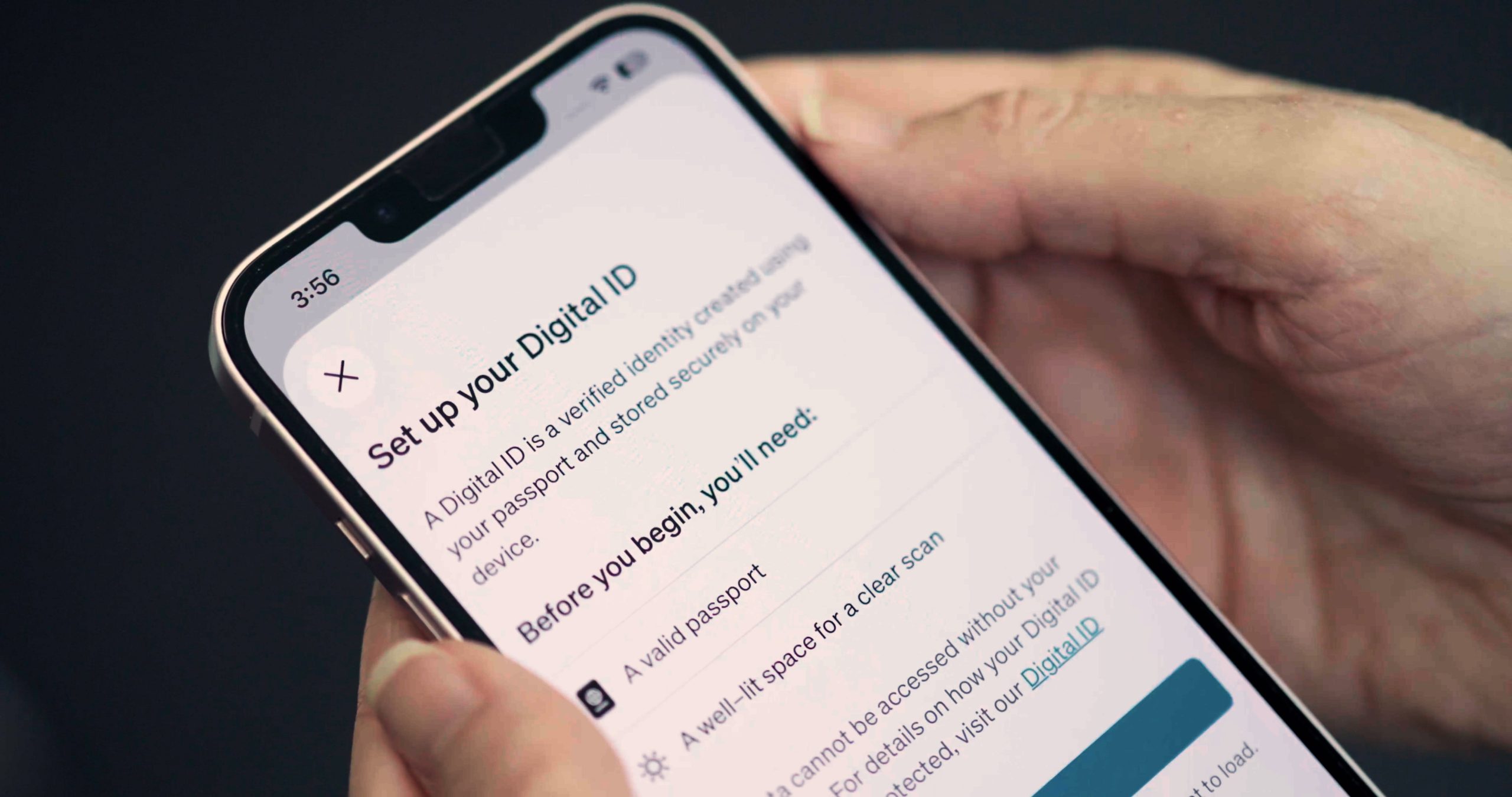
Trials of biometrics have been successfully conducted worldwide for more than a decade. While elements of the travel process have been successfully delivered by biometrics, the biometric-enabled journey from start to finish still appears some way off. In the latest demonstration, earlier this year, multiple airlines at multiple airports using different digital identity (DI) mobile wallets showed that the technology is ready and able. The IATA-led proofs of concept (PoC) demonstrated that contactless, biometric-enabled international travel is already achievable, with DI successfully replacing paper document checks throughout the process. (PHOTO: Idemia) The three PoC tested complementary aspects of DI integration. One PoC tested connecting international journeys including a transfer, involving Japan Airlines, Tokyo Haneda Airport, Hong Kong International Airport and London Heathrow. In this trial, passengers shared identity data in advance using digital wallets, enabling biometric processing at departure and transfer. At Heathrow, a tap-and-go solution was used instead of sharing biometrics in advance. Identity data was re-used across multiple airports and airlines, eliminating repeated document checks and demonstrating interoperability across providers. JAL tells Asian Aviation that passengers did not participate, but instead its employees were the testers. “We received very positive feedback,” says JAL. It highlights participants’ comments, including: “This will significantly improve convenience, especially for frequent flyers and repeat passengers, so we have high expectations.” In addition: “The experience of not having to take anything out at airport security and boarding gates felt entirely new. I feel that travel would become much easier if this becomes the standard.” JAL says many of the comments from participants were highly encouraging and it looks forward to “continuing our contributions to promoting technical standardisation”. With the number of travellers expected to double by 2035, JAL says “transforming the customer experience and reforming airline operations are essential to prepare for growth”. It acknowledges that collaboration is required among various stakeholders involved in the journey. “Moving forward, we aim to deepen our cooperation with a wide range of partners,” it adds. The second PoC tested an airline-managed identity for Air New Zealand return flights between Auckland and Hong Kong. Passengers used the Air NZ app to share identity during booking and check-in, enabling remote biometric enrolment and contactless processing at airport and customs touchpoints. The passport information securely stored in the airline app allowed verified identity information to be shared at online check-in, with that information used to support biometric verification at selected touchpoints. The PoC also supported the use of Apple Wallet’s Digital ID and included integration with the New Zealand Traveller Declaration. Air New Zealand says the technology is designed to make travel easier from the outset, including supporting prefilling passport details, helping passengers understand what documents they need for their trip and enabling verified information to be used across multiple journey touchpoints. At the airport, participants didn’t need to repeatedly present their passport, replaced with a live facial scan matching the passport image securely shared from the passenger’s digital wallet. “Our ambition is to make travel easier from start to finish. That means fewer document checks, less time queueing and a smoother experience overall,” says Jeremy O’Brien, Air New Zealand’s Chief Customer and Digital Officer. “This trial shows how DI could help create a more seamless journey, while also improving security through encrypted data and customer-controlled information sharing,” he adds. Air New Zealand says it is working with government agencies and industry partners to further develop the solution. It is hoping to run a broader pilot, testing the technology across different ports, with Australia a key focus. The third PoC tested interoperability across DI solutions from different providers, involving IndiGo at Bengaluru’s Kempegowda International Airport and participants using international wallets as well as India’s biometric airport solution Digi Yatra. IndiGo and Digi Yatra Foundation had earlier successfully implemented a self-sovereign identity-based system using biometric technology for contactless passenger processing and app-to-app integration designed to allow seamless sharing of boarding passes. The PoC at Bengaluru took this further, demonstrating the technology for international travel. “We enabled a seamless, end-to-end digital journey where a passenger’s identity is securely established in advance and verified across airport touchpoints using only their face. Built on Digi Yatra’s privacy-first, consent-led framework, this approach ensures minimal, purpose-bound data usage. By aligning with IATA’s One ID standards, we have also demonstrated true interoperability with other global travel ecosystems, paving the way for faster, more secure and globally trusted travel experiences at scale,” says Suresh Khadakbhavi, CEO Digi Yatra Foundation. IATA says the PoCs proved that wallet-based DI solutions work; DI data can be securely shared ahead of travel; biometric verification can replace manual paper document checks; a single DI can be reused across the journey; and interoperability can be achieved across borders. Such trials are all well and good, but countless demonstrations have been conducted worldwide to prove the technology and yet worldwide implementation is stalled. Valour Consultancy highlights the issues going from trials to implementation in its recently published, Biometrics and Digital Identity in Aviation – From Trials to Scalable Passenger Journeys. Biometric-enabled passenger processing is no longer experimental, with trials undertaken across the passenger journey for years, but few have successfully progressed to scalable, interoperable operating models, it says. “Most biometric programmes stall after the trial phase, not before it. Not because the underlying technology doesn’t work, but because the surrounding decisions and the required inter-entity agreements haven’t been made,” Valour says. “Organisations are being overwhelmed by the rapid change in technology as well as the lack of standards that enable full interoperability across the entire journey,” it adds. Valour believes the industry is now at an inflection point, with biometric identity being an emerging component of core passenger processing infrastructure. Seamless, identity-enabled journeys are now needed more than ever in the face of growing passenger volumes. Among the challenges are the fact that biometric and DI regulations vary significantly across countries and regions, including what data can be captured, how it is stored and how consent must be managed, thus complicating standardisation efforts. Fundamental questions around governance, liability, funding or ownership have not been resolved, resulting in implementation left largely to individual airports, airlines and border authorities. “The current biometric and DI landscape is highly fragmented. Operating models, levels of ambition and progress vary widely by region, airport size and governance structure,” says Valour. (PHOTO: SITA) Regional variation is particularly significant, with the Asia-Pacific displaying faster adoption, often through government-enabled models, while the Middle East has integrated, infrastructure-led approaches at major hubs. In contrast, North America has strong government involvement, but uneven airport adoption and fragmented delivery, while Europe has had a cautious, fragmented deployment due to privacy-led regulation. The European Union had its fair share of problems with the introduction of the Entry/Exit System (EES) across all Schengen countries in April. EES has replaced passport stamps for non-EU passengers with digital records through biometric enrolment, including facial and fingerprint scans. The introduction caused delays and passenger frustration at airports, with long queues, biometric kiosk failures and passenger confusion. The EU has been working on the system for a decade. The next phase of evolution in the biometric journey will have to centre on strategic alignment, governance and interoperability, according to Valour. “The implementation of biometric-enabled journey has many advantages for passengers, airports, airlines and governments alike. To maximise the potential, it requires implementation at a strategic level within each organisation with all parties involved in the decision-making process,” it suggests. Valour calls for sustained executive attention on clear short-, mid- and long-term objectives; architecture-first planning; governance models that reflect shared ownership; supplier strategies aligned to long-term outcomes; capability to operate globally while testing locally; and constant communication with passengers and stakeholders. IATA Director General Willie Walsh says while the industry has proven that DI for international travel works securely and efficiently, it’s now up to governments to accelerate efforts to issue and accept Digital Travel Credentials (DTC), secure digital versions of passports. “Government-issued DTC directly to a traveller’s device are the next step in scaling secure, interoperable DI for global travel,” says IATA. But don’t worry, paper-based alternatives will remain available to ensure accessibility for all. For Editorial Inquiries Contact: Editor Matt Driskill at [email protected] For Advertising Inquiries Contact: Head of Sales Sally Passey at [email protected]

Comments
Loading comments...