
Home › Industry News
China’s aviation industry looks to the next five years
By Roetta Wang
•Nov 19, 2026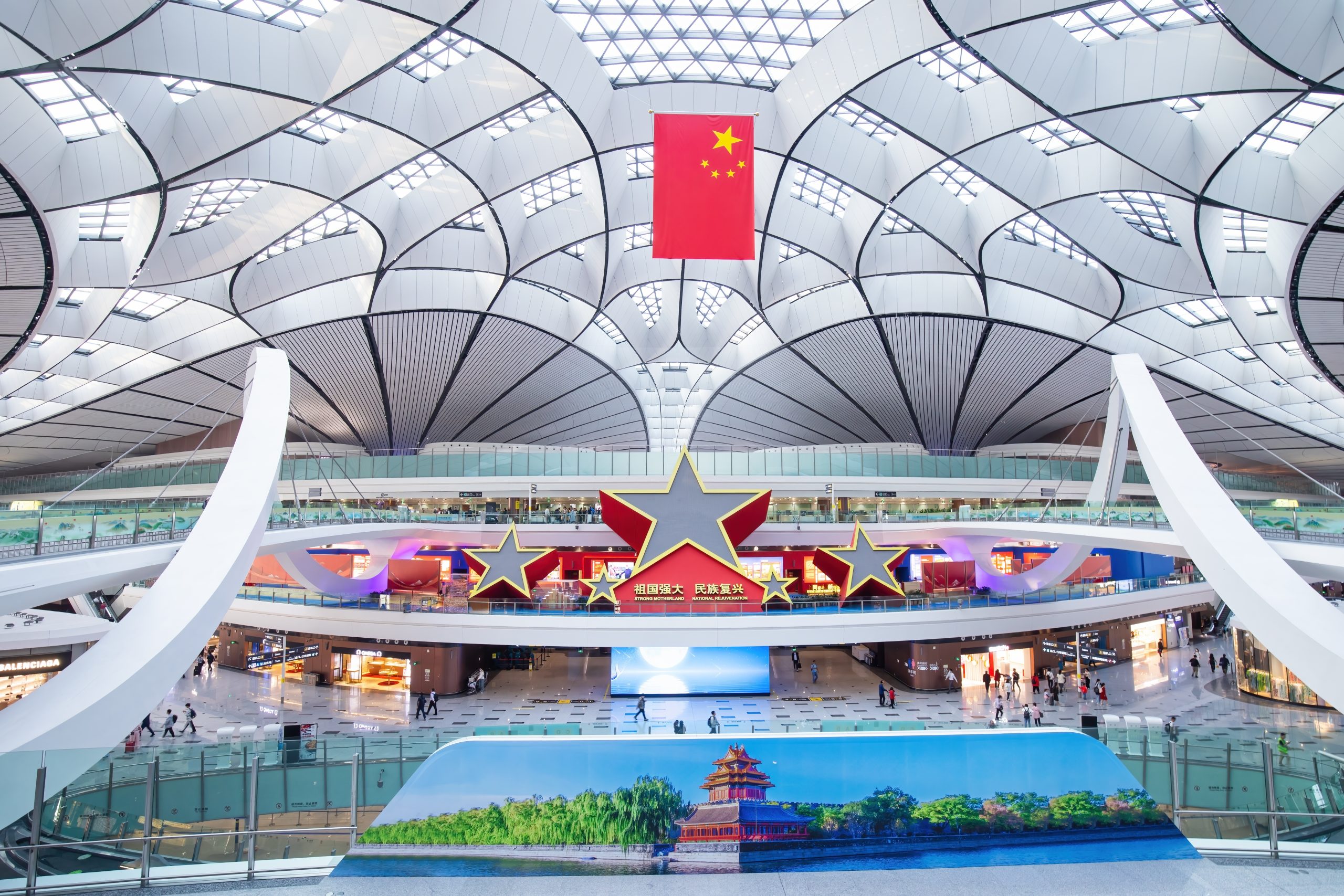
China’s aviation industry has entered a new five-year development cycle with the 15th Five-Year Plan for Civil Aviation Development setting out the sector’s priorities for 2026–2030. Jointly issued in August by the Civil Aviation Administration of China (CAAC), the National Development and Reform Commission (NDRC) and the Ministry of Transport, the plan aims to bring the industry’s safety standards, service capabilities and infrastructure to world-class levels by 2030, while making major advances in technological innovation, green development and governance. “During the 15th Five-Year Plan period, the sector will pursue intelligent, green and integrated development, with safety as the bottom line, improvements in quality and efficiency as the main focus, and reform and innovation as the fundamental driving forces,” said Han Jun, deputy head of the CAAC. The plan outlines six areas of development: aviation safety, air transport services, infrastructure, independent innovation, sustainable green development and industry governance. As an industry-specific blueprint under China’s national 15th Five-Year Plan, it aligns the sector with broader national priorities, including fostering new quality productive forces and building a modern industrial system. An industry at a turning point The new plan follows a five-year period marked by significant disruption as well as continued expansion. The Covid-19 pandemic pushed the industry into substantial financial losses, while the fatal China Eastern Airlines crash in 2022 ended the country’s decade-long record of safe commercial aviation operations. Passenger traffic also fell short of the previous plan’s target. China handled 770 million passenger trips in 2025, up from 420 million in 2020, but below the 930 million target set under the 14th Five-Year Plan. The industry nevertheless continued to expand its capacity and reach. Air cargo and mail traffic reached 10.17 million tonnes in 2024, up from 6.77 million tonnes in 2020. Its international network grew to cover 263 cities in 90 countries and regions, compared with 62 countries in 2020. Infrastructure was another major area of investment. The sector spent more than 100 billion yuan annually on infrastructure during the previous five-year period, according to CAAC head Song Zhiyong. New airports, including Chengdu Tianfu and Qingdao Jiaodong, entered operation, while four major airport clusters — in Beijing-Tianjin-Hebei, the Yangtze River Delta, the Greater Bay Area and Chengdu-Chongqing — began to take shape. By 2025, China had 270 civil transport airports, 29 more than in 2020. A more measured pace of expansion The 15th Five-Year Plan signals a more measured approach to infrastructure development. It calls for capacity to be built “moderately ahead of demand, but not excessively so”, while giving equal emphasis to upgrading existing facilities and optimising new capacity. Although the CAAC has not published a specific airport-number target in its public summary, a copy of the plan reviewed by Asian Aviation sets an indicative target of 285 civil transport airports by 2035. With 270 airports at the end of 2025, the projected increase of 15 over the next decade would represent a much slower pace of growth than the 29 added during the previous five years. The emphasis is shifting towards improving the capacity and efficiency of existing airports through runway upgrades and digitalisation, rather than relying primarily on new construction. New projects will still support the development of the four major airport clusters. Guangzhou’s new airport and the planned Nantong airport, for example, are expected to expand regional aviation capacity. The more measured approach is also reflected in other indicators. According to non-public planning information reviewed by AAV, targets for passenger traffic, aircraft movements and the number of countries connected by air routes are lower than those set for the 14th Five-Year Plan. This points to a greater emphasis on the quality and efficiency of growth rather than rapid expansion in headline volumes. China’s EHang is working to develop the country’s ‘low altitude economy’. (IMAGE: EHang) New growth drivers Alongside a more measured approach to traditional infrastructure, the plan identifies the low-altitude economy, technological self-reliance and the green transition as key areas for future growth. A report by China Securities also highlighted these priorities, including efforts to replace imported technologies and products with domestic alternatives. The low-altitude economy is among the most prominent. Chinese policymakers have called for healthy and orderly development of the sector, which is expected to achieve medium-to-high growth during the 15th Five-Year Plan. Introduced as a policy concept by the Chinese government in 2021, the low-altitude economy refers to economic activities involving manned and unmanned aircraft operating in airspace generally within 1,000 metres above ground level. The CAAC expects annual flight hours by civil low-altitude aircraft to rise from about 45.3 million in 2025 to more than 80 million by 2030, an increase of over 70 percent. Planning details reviewed by Asian Aviation also show that, for the first time, the plan introduces safety indicators for low-altitude aviation, including a target of no more than eight fatal accidents per million flight hours for manned low-altitude flights. Technological self-reliance is another priority. The plan calls for an independent and self-reliant innovation system, continued expansion of commercial operations of the C919 and C909, and support for the development of a domestically developed widebody aircraft. It also aims to strengthen domestic supply chains for aircraft engines, onboard systems and maintenance services, reducing reliance on imported technologies and key components. Digitalisation is another focus, with the plan seeking to expand its use across airports, air traffic management and airline operations. Further details reviewed by AAV point to support for emerging technologies such as electric vertical take-off and landing (eVTOL) aircraft, drone logistics, integrated space-air-ground communications and artificial intelligence in aviation. Green development forms the other major priority. The plan seeks to reduce carbon emissions and pollution across civil aviation, while placing greater emphasis on sustainable aviation fuel (SAF). Figures obtained by AAV indicate that China aims to increase annual SAF production capacity from 1.3 million tonnes in 2026 to more than 2.4 million tonnes by 2030. Planning details also point to efforts to build a domestic supply chain covering production, storage, transportation and refuelling, alongside requirements for airlines to gradually increase their use of SAF. (PHOTO: China Eastern) Challenges ahead The plan is also intended to support China’s broader national priorities, including the Belt and Road Initiative, expanding domestic demand and further opening-up to international markets. Li Hanming, an aviation analyst in China, said the CAAC continues to expect the air transport industry to align its development with the broader strategic goals set out in the national 15th Five-Year Plan. However, he also pointed to mounting pressures on airlines, including competition from China’s expanding high-speed rail network on short- and medium-haul routes. Geopolitical instability and rising fuel prices are adding to operating costs and squeezing airline margins, Li said. These pressures will test the industry’s ability to translate the policy blueprint into tangible progress and sustainable business growth. For Editorial Inquiries Contact: Editor Matt Driskill at [email protected] For Advertising Inquiries Contact: Head of Sales Sally Passey at [email protected]
TAGSChinaCivil Aviation Administration of ChinaRoetta Wang
Previous article
Air India Express names new CEO
Roetta Wang
Roetta Wang is a regular contributor to Asian Aviation and is based in Hong Kong.