
Home › Industry News
VIEWPOINT: Single-pilot Operations: Just Say No
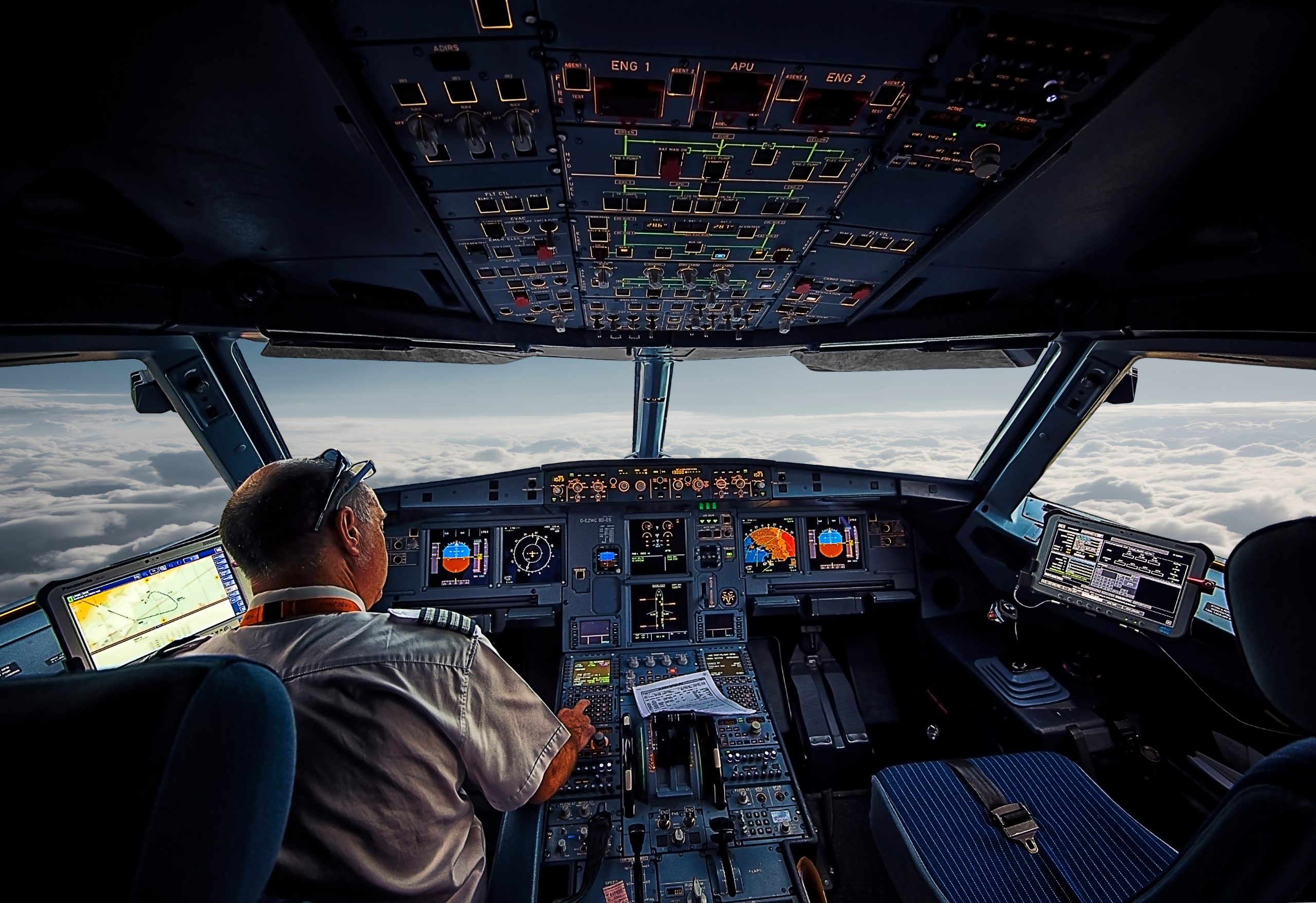
Thanks to the crack reporting of my former colleagues at Reuters, we learned on 16 June that Cathay Pacific in Hong Kong is working with Airbus to develop a plan for so-called “reduced crew” long-haul flights with a sole pilot in the cockpit much of the time. This has ‘bad idea’ written all over it and should be immediately abandoned for a number of reasons. As Reuters reported, the programme is known within Airbus as “Project Connect” and the manufacturer aims to certify its A350 jet for single-pilot operations during high-altitude cruise, starting in 2025 on Cathay passenger flights. In essence, long international flights would have two pilots alternating rest breaks instead of the three or four currently required to maintain two in the cockpit at any one time. Cathay Pacific confirmed its involvement to Reuters but said no decision had been made on eventual deployment. Airlines obviously love the idea because it would allow them to save money. Pilots, obviously, hate the idea because they will lose jobs and are already suffering from layoffs and furloughs that have occurred because of the COVID-19 pandemic. Airbus and the airlines point to the “latest technology” in cockpits and the fact that once at cruising altitude, pilots basically baby-sit “George”, as the autopilot is known, and do little else for much of the flight until preparing for landing. As mentioned above, there are multiple reasons this is a bad idea that should die a quick death before any passengers die. It’s all about the money: Putting a single pilot in the cockpit is simply a way for airlines to cut costs. This is a solution in search of a problem. All of us in the industry know the pain the airlines have gone through since COVID-19 began, but cutting seasoned pilots to save costs by having only one in the cockpit at a time beggars belief. I lived in Hong Kong for 10 years and have regularly flown on Cathay…but I’ll certainly give up my Marco Polo card and never fly them again if they go through with this and will encourage anyone and everyone I know to do the same. As for Airbus, it’s a selling point. Single-pilot capability would add an A350 sales argument, experts say according to the Reuters report, and rival Boeing lacks an equivalent model with sufficient automation. Filippo Tomasello, a former EASA official, said the payroll and accommodation savings for long-haul crew would not be lost on airlines. “COVID may end up accelerating this evolution because it’s putting tremendous economic pressure on aviation,” Tomasello predicted. “If EASA certifies this solution, airlines will use it.” Safety will suffer: Even with the HAL 9000 computer of 2001 film infamy flying an A350 over the Pacific, relying on technology alone for a safe flight is foolish. Me, I want Captain Sully behind the controls who, with his co-pilot, landed on the Hudson River in New York. And even though “nothing much happens” at 40,000 feet six hours into a long flight, flying solo for hours is a “completely different story”, according to the Reuters report, which cited the 2009 Air France flight AF447 disaster as an example of malfunctions occurring in cruise. The Air France A330’s co-pilots lost control after its speed sensors failed over the Atlantic – while the captain was resting. “Airbus would have had to make sure every situation can be handled autonomously without any pilot input for 15 minutes,” the source told Reuters. “And that couldn’t be guaranteed.” And don’t forget what happened when the HAL 9000 malfunctioned…people died. There’s already too much technology in the cockpit: More than a little ink has been spilled about the rise of automation in aviation and the decline of the “flying skills” of pilots. But don’t just take my word for it. Read the Harvard Business Review article here that deals with the crash of Air France AF447. The authors of that article wrote: “Our research…examines how automation can limit pilots’ abilities to respond to such incidents, as becoming more dependent on technology can erode basic cognitive skills. By reviewing expert analyses of the disaster and analysing data from AF447’s cockpit and flight data recorders, we found that AF447, and commercial aviation more generally, reveal how automation may have unanticipated, catastrophic consequences that, while unlikely, can emerge in extreme conditions”. Sometimes pilots “fail”: Proponents of single-pilot operations say “safe deployment” will require constant monitoring of the solo pilot’s alertness and vital signs by on-board systems. If the pilot flying is incapacitated, the resting co-pilot can be summoned within minutes so there won’t be any unsafe conditions. The problem is, when it comes to aviation safety, seconds count…not minutes. A lot of bad things can happen at 40,000 feet and waiting minutes for another pilot to punch in the code – under stress – to access the cockpit is inviting disaster. How many times have you punched the wrong access code trying to unlock your iPhone? And banking on technology to alert you to a problem with an incapacitated pilot is another disaster waiting to happen. How many times have millions of lines of software code had to be tweaked by both Airbus and Boeing because of mistakes programmers made that were only discovered after a crash? Sometimes pilots go bad: Remember Germanwings Flight 9525? It crashed when co-pilot Andreas Lubitz – who was alone in the cockpit – deliberately flew it into the ground, killing 144 passengers. Lubitz had been declared “unfit to work” by his doctor, but he kept the information from his employer. And there’s still the “bad pilot” theory surrounding the disappearance of Malaysian Airlines Flight MH370. We all know 99 percent of pilots are good professionals, but there’s always one out there under incredible stress, personal or professional, who finally cracks. And the above items are not just my opinion. “We struggle to understand the rationale,” Otjan de Bruijn, head of the European Cockpit Association representing EU pilots, told Reuters in its report. Invoking the 737 MAX crisis, de Bruijn said the single-pilot programme’s cost-cutting approach “could lead to higher risks”. In aviation, two heads are better than one, and sometimes even two are not enough. To borrow a phrase from former US First Lady Nancy Reagan, when it comes to single-pilot operations on commercial aircraft, Just Say No. For Editorial Inquiries Contact: Editor Matt Driskill at [email protected] For Advertising Inquiries Contact: Head of Sales Kay Rolland at [email protected]
TAGSAirbusCathay Pacificsingle-pilot operations
Previous article
Singapore’s Affinidi partners with Commons Project, TrustAssure on COVID-19 digital health pass
Matt Driskillhttp://www.matt-driskill.com
Matt Driskill is the Editor of Asian Aviation. He has been an Asia-based journalist and content producer since 1990 for outlets including Reuters and the International Herald Tribune/New York Times and is a former president of the Foreign Correspondents Club of Hong Kong. He appears on international broadcast outlets like Al Jazeera, CNA and the BBC and has taught journalism at Hong Kong University and American University of Paris. In 2022 Driskill received the “Outstanding Achievement Award” from the Aerospace Media Awards Asia organisation for his editorials and in 2024 received a “Special Recognition for Editorial Perspectives” award from the same organisation. Driskill has received awards from the Associated Press for Investigative Reporting and Business Writing and in 1989 was named the John J. McCloy Fellow by the Graduate School of Journalism at Columbia University in New York where he earned his Master's Degree.
马特·德里斯基尔(Matt Driskill)是《亚洲航空》(Asian Aviation)的主编。他自1990年起,担任驻亚洲的记者和内容制作人,曾为路透社、国际先驱论坛报/纽约时报等媒体工作,并曾任香港外国记者协会会长。他也曾多次在半岛电视台、新加坡广播公司(CNA)和BBC等国际媒体担任嘉宾,并在香港大学和巴黎美国大学教授新闻学。2022年,德里斯基尔因其评论获得了航空媒体奖(Aerospace Media Awards Asia)颁发的“杰出成就奖”,2024年又因其编辑观点获得同一组织颁发的“特别表彰”。他曾获得美联社的调查报道和商务写作奖,并于1989年被纽约哥伦比亚大学研究生新闻学院授予约翰·J·麦克劳伊学者(John J. McCloy Fellow)称号,获得硕士学位。