
Qantas slammed for price gouging passengers
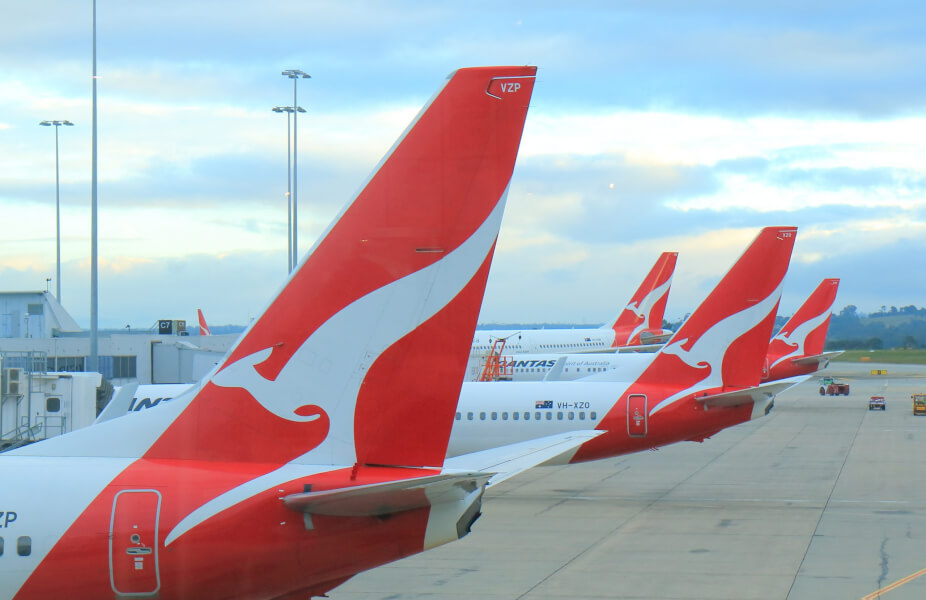
Australian carrier Qantas Airways has misused its top position in the country’s aviation sector to charge exorbitant ticket prices, according to the former head of the Australian Competition and Consumer Commission (ACCC). Allan Fels said in his report that was released Wednesday (7 February) that the country’s biggest airline was price gouging consumers and said in late 2022, the airline’s fare increases were so large that a quarter of the country’s inflation was mainly caused by the airline. Download the full report here. The government should remove “unnecessary restrictions on competition on international and domestic aviation”, Fels said in his report, which was commissioned by the Australian Council of Trade Unions. He said the government’s decision last year to block more Qatar Airways flights into Australia was “clearly” in the interests of Qantas. The findings add further fuel to the arguments that Qantas is no longer the “national carrier” because of a string of missteps that have hurt the airline’s brand. Qantas’ service delivery returning from the pandemic shut down became so derided the term ‘Joyced’ (referring to former CEO Alan Joyce) entered into popular Australian usage to ‘describe being severely inconvenienced at an airport by flight cancellations or luggage going astray’, Fels said in his report. Internal documents published by the Australian Financial Review showed that the percentage of consumers who said they trusted Qantas had fallen from 70 percent in August to just 49 percent, the report added. Despite the damage to its reputation, during 2022 Qantas reduced capacity on its domestic services. In June 2022 it announced to the ASX that it was “adjusting its domestic capacity levels for much of FY23 to assist with the recovery of sustained high fuel prices”. In May Qantas cut capacity by 10 percent. During July and August, it expected to reduce capacity a further 5 percentage points and then planned a cut of 10 percentage points in October, Fels said in his report. Qantas’ said at the time that “The customer impacts from these schedule changes are expected to be minimal, with capacity being removed mostly from high frequency routes. Those affected will be contacted directly with alternatives as close as possible to their original timing, usually within 1-2 hours.” This assessment is not credible, Fels said. During this time Qantas was also cancelling flights at a higher rate and frustrating customers. Qantas has been accused of making cancellations as part of a deliberate strategy of “slot hoarding”. Slots give a specific airline a specific slot or time to access an airport and airlines can lose those slots if they don’t use them for a prescribed period of time or fall below a certain percentage of use. The report also addressed planes by Qatar Airways to boost flights to Australia, a move that was strongly opposed by Qantas. In his report, Fels said “in essence Qatar offered a solution to the extremely high prices that were being charged for international travel. Qatar offered to add heavily to capacity by making available multiple planes and multiple seats. The likely effect could have seen 40 percent off the price…However, this proposal was blocked by the Australian government. Quite clearly it was acting in the interests of Qantas”. Fels also said that “increased competition within routes dramatically affects airfares. With a second airline reducing fares by 29 percent and a third operating airline reduces prices again by 31 percent. Consumers would be paying less than half of the monopoly price on a given route if three airlines were competing against one another”. Fels added that the Australian government “should use the opportunity of its current aviation review to remove international and domestic restrictions on competition”. For Editorial Inquiries Contact: Editor Matt Driskill at [email protected] For Advertising Inquiries Contact: Head of Sales Kay Rolland at [email protected]
Previous article
VIEWPOINT: Emerging airline retail trends in Asia-Pacific
Matt Driskill is the Editor of Asian Aviation. He has been an Asia-based journalist and content producer since 1990 for outlets including Reuters and the International Herald Tribune/New York Times and is a former president of the Foreign Correspondents Club of Hong Kong. He appears on international broadcast outlets like Al Jazeera, CNA and the BBC and has taught journalism at Hong Kong University and American University of Paris. In 2022 Driskill received the “Outstanding Achievement Award” from the Aerospace Media Awards Asia organisation for his editorials and in 2024 received a “Special Recognition for Editorial Perspectives” award from the same organisation. Driskill has received awards from the Associated Press for Investigative Reporting and Business Writing and in 1989 was named the John J. McCloy Fellow by the Graduate School of Journalism at Columbia University in New York where he earned his Master's Degree.
马特·德里斯基尔(Matt Driskill)是《亚洲航空》(Asian Aviation)的主编。他自1990年起,担任驻亚洲的记者和内容制作人,曾为路透社、国际先驱论坛报/纽约时报等媒体工作,并曾任香港外国记者协会会长。他也曾多次在半岛电视台、新加坡广播公司(CNA)和BBC等国际媒体担任嘉宾,并在香港大学和巴黎美国大学教授新闻学。2022年,德里斯基尔因其评论获得了航空媒体奖(Aerospace Media Awards Asia)颁发的“杰出成就奖”,2024年又因其编辑观点获得同一组织颁发的“特别表彰”。他曾获得美联社的调查报道和商务写作奖,并于1989年被纽约哥伦比亚大学研究生新闻学院授予约翰·J·麦克劳伊学者(John J. McCloy Fellow)称号,获得硕士学位。
Comments
Loading comments...