
Home › Technology
Inmarsat joins plan for zero carbon regional network
Project HEART will provide integrated aviation system to make regional travel on small aircraft greener, automated and more cost-effective
By Asian Aviation Staff
•Jan 26, 2021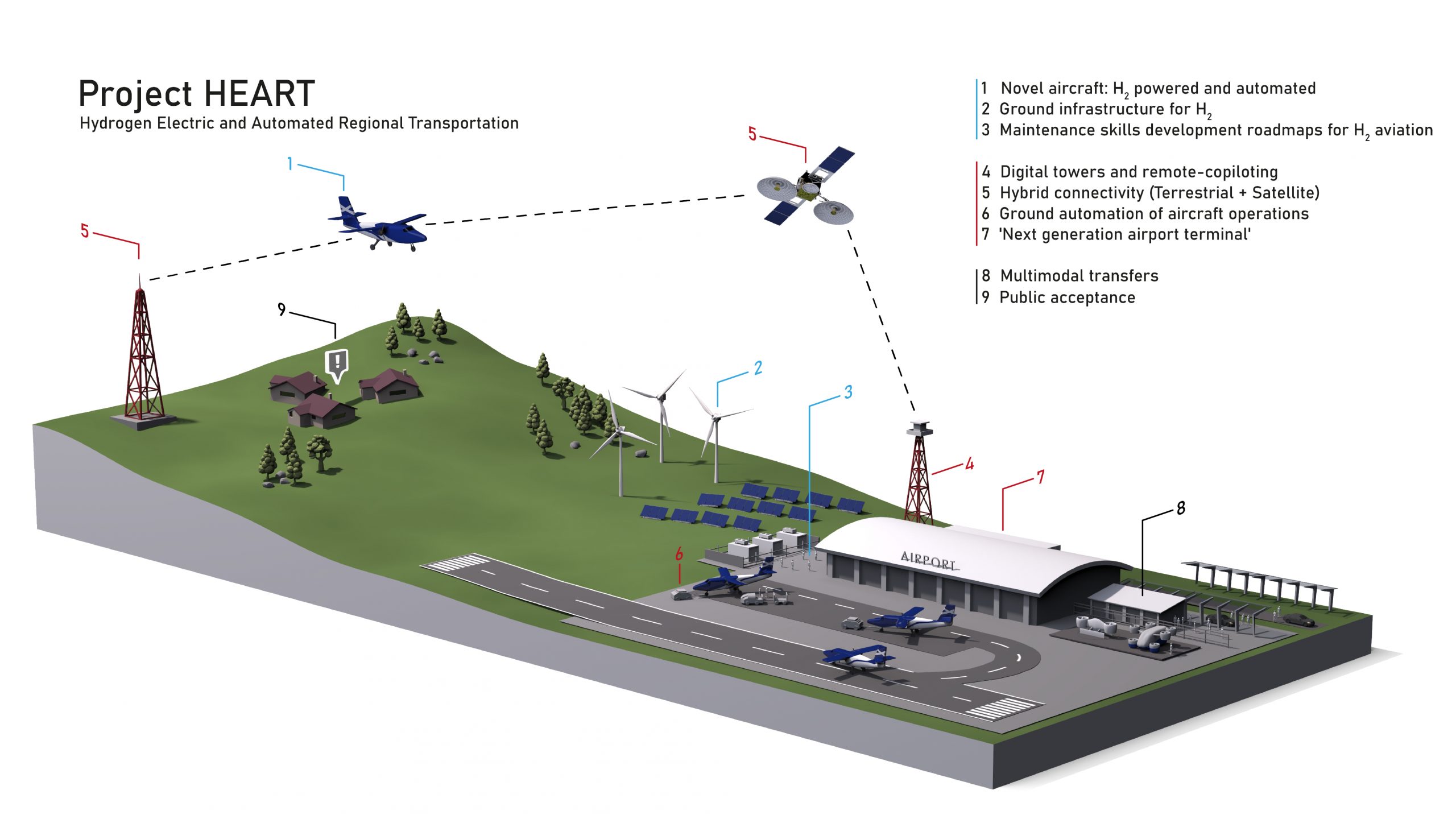
Satellite communications provider Inmarsat said it will join a new initiative funded by the UK government to develop the country’s first automated, zero carbon regional air transportation network. Project HEART (Hydrogen Electric and Automated Regional Transportation) will develop hydrogen powered, automated and remote piloting solutions for small aircraft carrying between nine and 19 passengers, travelling short hops of fewer than 500 nautical miles. In addition to its environmental credentials, the convenient zero-carbon travel option aims to enable scalability and lead to reductions in operating costs, door-to-door travel times and ticket prices. Up to 100 licensed airfields throughout the UK will be made available as part of the initiative, which is expected to enter service in 2025. Existing short hop air travel is economically unsustainable and reliant on government subsidies to cover high maintenance and running costs. Current operations, which require two onboard pilots, depend upon expensive and polluting gas turbine powertrains. Project HEART offers an affordable alternative that address these deficiencies with next generation technology and a system-of-systems approach, bringing together a network of experts to re-develop the entire aviation ecosystem. As part of this approach, Inmarsat will help to power a hybrid connectivity solution that seamlessly combines its satellite communications with terrestrial networks, enabling remote digital co-piloting and journey critical communication in the cockpit. This allows the human pilot and the digital co-pilot functions, designed by Blue Bear Systems Research, to work together effectively and operations to be managed remotely. The technology will be evaluated on Britten-Norman aircraft. Project HEART is led by the Department for Business, Energy & Industrial Strategy (BEIS) and is funded by the Industrial Strategy Challenge Fund (ISCF) Future Flight Challenge (FFC). The consortium comprises of leading UK technology companies that will contribute resources in the areas of technology, operations, infrastructure and think tank experience. Other innovations in development for the project include hydrogen fuel cell powertrains for aircraft (led by ZeroAvia), hydrogen refuelling solutions (led by Protium), and a Mobility as a Service (MaaS) platform, with integrated sub regional flight travel mode (led by Fleetondemand), with acceptance testing headed by The Transport Research Institute of Edinburgh Napier University. In addition, architects Weston Williamson + Partners will lead on new airport infrastructure design, while the airline Loganair and Highland and Island Airports Limited will lead on accommodation of automation and hydrogen fuelled aircraft operations. For Editorial Inquiries Contact: Editor Matt Driskill at [email protected] For Advertising Inquiries Contact: Head of Sales Kay Rolland at [email protected]
TAGShydrogenInmarsatUnited Kingdomzero emissions
Previous article
Aviation News in Brief 27 January 2021
Asian Aviation Staffhttps://asianaviation.com/
Asian Aviation staff is comprised of award-winning journalists based throughout the Asia-Pacific region led by Editor Matt Driskill. 《亚洲航空》的编辑团队由主编马特·德里斯基尔 (Matt Driskill) 带领,汇聚了遍布亚太地区的获奖记者。