
UPDATED: IATA calls for worldwide suspension of slot rules
European regulators say move is not necessary and European Commission needs "solid data" before any decision can be made
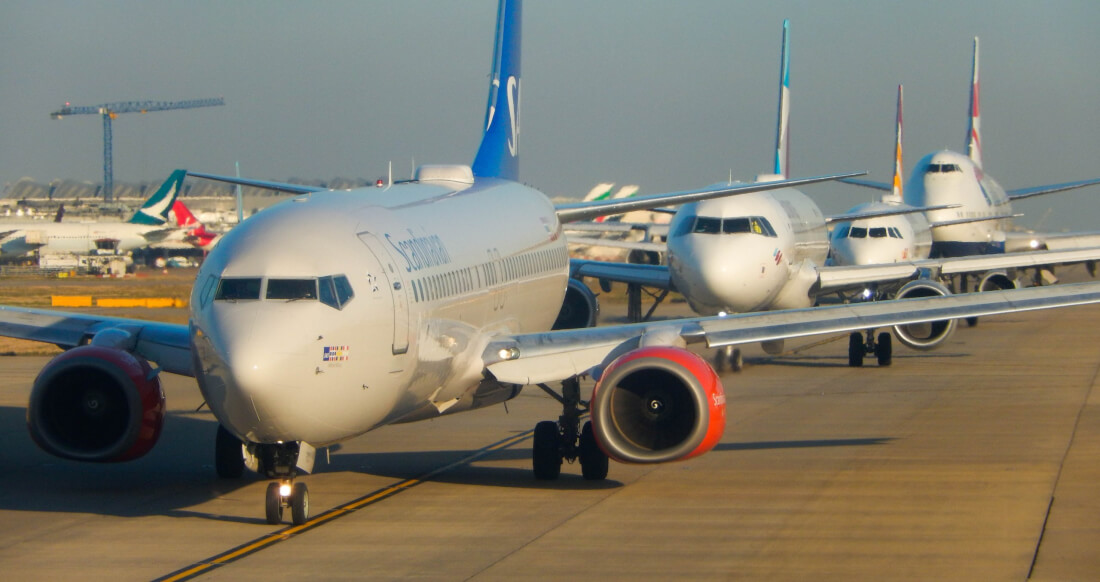
The lead trade body of international air carriers, the International Air Transport Association (IATA), is calling on global regulators to immediately suspend rules governing the use of airport slots worldwide because of the COVID-19 coronavirus. Henrik Hololei, director general at the European Commission’s Directorate-General for Mobility and Transport. (PHOTO: File) The move was met with skepticism in Europe where media reports from Brussels say the European Commission is for now rejecting any change in slot assignments and blame a lack of data in their decision not to allow any change in the slot assignment process. “We need solid data,” said Henrik Hololei, director general at the commission’s Directorate-General for Mobility and Transport. He was speaking on the sidelines of the Airlines for Europe (A4E) Aviation Summit in Brussels. “At this point, IATA has only sent me 10 colourful graphs (showing examples of traffic declines). But that is not solid data,” Hololei said, according to the report. Hololei said there is no immediate pressure on regulators to act because airlines are not at risk of losing access next winter to regulated airports even with the slot rule in place. IATA Director General Alexandre de Juniac (centre) and other IATA officials address reporters in Geneva at IATA’s Media Day in December 2019. (PHOTO: IATA) “IATA research has shown that traffic has collapsed on key Asian routes and that this is rippling throughout the air transport network globally, even between countries without major outbreaks of COVID-19,” said Alexandre de Juniac, IATA’s director general and CEO. “There are precedents for previous suspension of the slot use rules and we believe the circumstances again calls for a suspension to be granted. We are calling for regulators worldwide to help the industry plan for today’s emergency, and the future recovery of the network, by suspending the slot use rules on a temporary basis.” A screenshot of the virus tracker at Johns Hopkins University. Click on the photo to access the live site. (PHOTO: Matt Driskill) IATA officials explained that current rules for slot allocations mean that airlines must operate at least 80 percent of their allocated slots under “normal circumstances” and if they don’t then the airline loses its right to the slot the next equivalent season like a summer travel season or winter travel season. In exceptional circumstances, regulators can relax this requirement. The COVID-19 virus has already caused massive disruption in the aviation industry with thousands of flights between Asia, Europe and the US cancelled or postponed, empty airports and whole cities cut off from the outside world. Airlines have turned to unpaid leave for executives and front-line staff, others like Cathay Pacific have parked dozens of planes and pilots and flight crews are balking at flying into areas that have seen viral infections. “The world is facing a huge challenge to prevent the spread of COVID-19 while enabling the global economy to continue functioning,” de Juniac added. “Airlines are on the front line of that challenge and it’s essential that the regulatory community work with us to ensure airlines are able to operate in the most sustainable manner, both economically and environmentally, to alleviate the worst impacts of the crisis,” he said. De Juniac said the “collective view of the airline industry is that the application the 80 percent rule during the upcoming season is inappropriate”. While regulators have already been waiving the rule mainly for operations to China and Hong Kong, IATA said that was not enough because the virus has spread globally. “Without certainty that these waivers will continue for the summer season or winter season in the Southern hemisphere, airlines are unable to plan ahead sufficiently to ensure efficient rostering of crew or deployment of aircraft,” de Juniac said. “Suspending the requirement for the entire season to October 2020 will mean that airlines can respond to market conditions with appropriate capacity levels, avoiding any need to run empty services in order to maintain slots. Aircraft can be reallocated to other routes or parked, crew can have certainty on their schedules.”
Previous article
Aviation News in Brief 3 March 2020
Matt Driskill is the Editor of Asian Aviation. He has been an Asia-based journalist and content producer since 1990 for outlets including Reuters and the International Herald Tribune/New York Times and is a former president of the Foreign Correspondents Club of Hong Kong. He appears on international broadcast outlets like Al Jazeera, CNA and the BBC and has taught journalism at Hong Kong University and American University of Paris. In 2022 Driskill received the “Outstanding Achievement Award” from the Aerospace Media Awards Asia organisation for his editorials and in 2024 received a “Special Recognition for Editorial Perspectives” award from the same organisation. Driskill has received awards from the Associated Press for Investigative Reporting and Business Writing and in 1989 was named the John J. McCloy Fellow by the Graduate School of Journalism at Columbia University in New York where he earned his Master's Degree.
马特·德里斯基尔(Matt Driskill)是《亚洲航空》(Asian Aviation)的主编。他自1990年起,担任驻亚洲的记者和内容制作人,曾为路透社、国际先驱论坛报/纽约时报等媒体工作,并曾任香港外国记者协会会长。他也曾多次在半岛电视台、新加坡广播公司(CNA)和BBC等国际媒体担任嘉宾,并在香港大学和巴黎美国大学教授新闻学。2022年,德里斯基尔因其评论获得了航空媒体奖(Aerospace Media Awards Asia)颁发的“杰出成就奖”,2024年又因其编辑观点获得同一组织颁发的“特别表彰”。他曾获得美联社的调查报道和商务写作奖,并于1989年被纽约哥伦比亚大学研究生新闻学院授予约翰·J·麦克劳伊学者(John J. McCloy Fellow)称号,获得硕士学位。
Comments
Loading comments...