
IATA backs biometric ‘contactless travel’
By Asian Aviation Staff
•Apr 9, 2026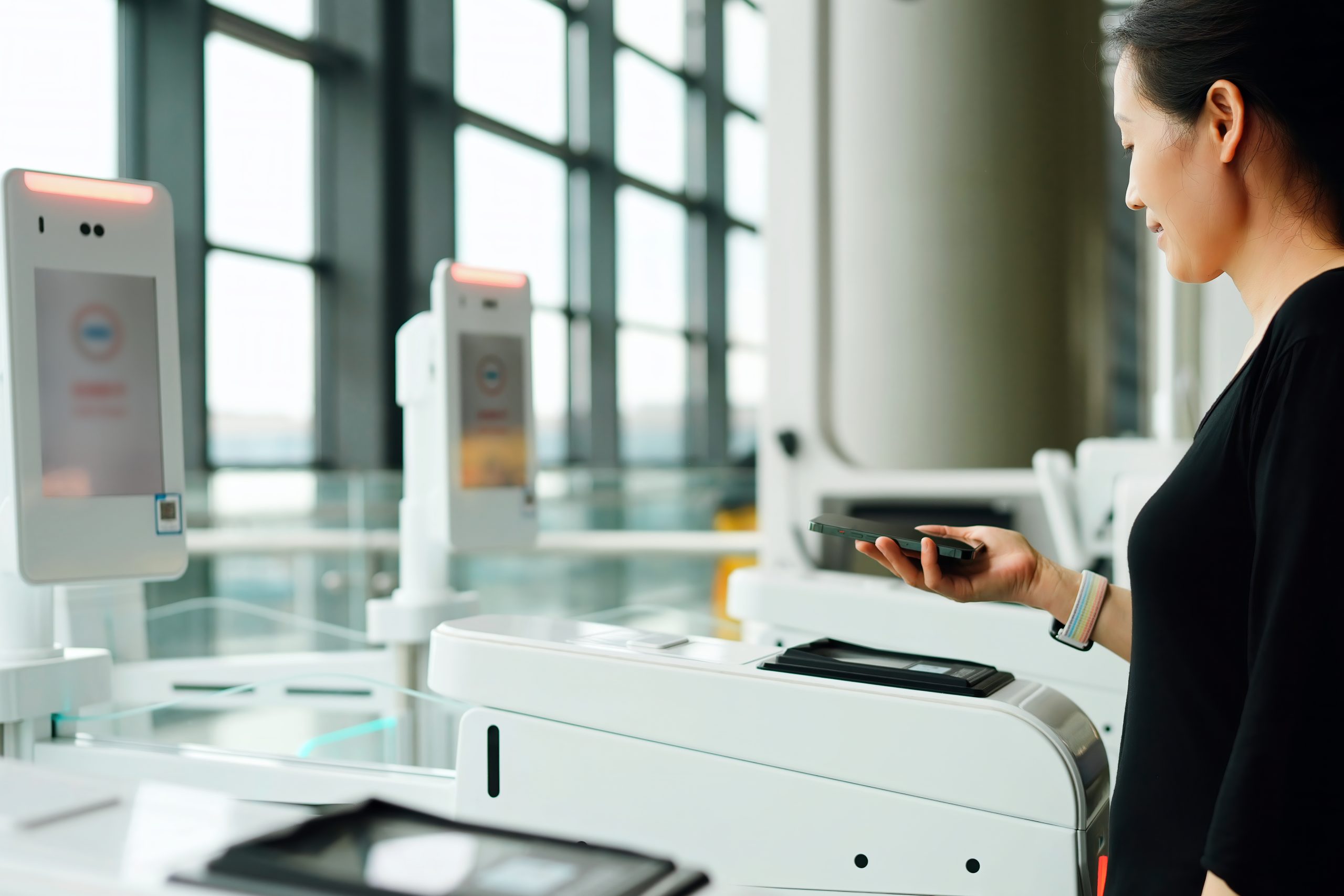
The International Air Transport Association (IATA) announced a recent study showed contactless, biometric-enabled international travel is already achievable with digital identity replacing paper documentation. The study was done in association with airlines, airports, technology providers, and governments across Europe and Asia-Pacific. Working together as part of the IATA Strategic Partnerships Program, the partners tested how digital identity stored in mobile wallets and biometric verification can support seamless passenger journeys without repeated paper document checks. The day might even come when travellers can simply have their eyes scanned like in the scene below from the film Minority Report. The PoCs demonstrated that interoperability of systems is sufficiently advanced to support contactless journeys involving multiple carriers and using different digital identity wallets (including Digital ID in Apple Wallet for US Passport holders, and Google ID Pass for UK and US passport holders) as well as national digital identity programs such as India’s Digi Yatra, according to the IATA report. This includes enabling passengers to securely share identity data in advance to facilitate their travel. The PoCs were designed using the IATA Contactless Travel Directory, IATA’s One ID standards and ISO, OpenID, and W3C international standards. “We have proven that digital identity for international travel works securely and efficiently. For travelers to benefit from this important modernisation, governments must accelerate efforts to issue and accept Digital Travel Credentials (DTCs)—secure digital versions of passports. The result will be stronger security, smoother journeys, and greater efficiency,” said Willie Walsh, IATA’s Director General. What the PoCs Proved: Wallet-based digital identity solutions work, including global and national wallets, were successfully used in live airline environments. Digital identity data can be securely shared ahead of travel, with user consent, enabling pre-travel checks and reducing repeated document handling. Biometric verification can replace manual paper document checks at airport touchpoints, allowing passengers to move through checkpoints securely and seamlessly. A single digital identity can be reused across the journey, enabling a seamless, contactless “tap-and-go” experience. Interoperability can be achieved across borders, enabling systems operated by airlines, airports, and governments to work seamlessly together. These PoCs demonstrated travelers can use a secure digital identity to share only the data required for travel, enrol remotely in a digital identity system, and verify themselves biometrically at airport touch-points to complete their journey without presenting a physical passport or boarding pass. Achieving this on a global scale will require coordinated action by governments in three critical areas: Prepare to issue: Establish the legal, operational and technical foundations to issue Digital Travel Credentials (DTCs)—secure digital versions of passports—as part of national digital identity programs. Be Ready to accept: Ensure border, visa and travel-authorisation systems are ready to accept and verify DTCs issued by other states. Plan for scale: Work with industry, other governments and international organisations to enable the interoperable use of DTCs at a global scale. Willie Walsh, director General of IATA. (PHOTO: IATA) “Secure digital versions of passports—Digital Travel Credentials (DTCs)—will make travel more secure and more efficient. By sharing identity data in advance, checks can be completed earlier, reducing the need for document checks at airports and cutting queues. Industry collaboration has shown digital identity works in practice. The next step is for governments to put the frameworks in place to integrate digital identity into global travel processes,” said Walsh. To come to these conclusions three PoCs trialled complementary aspects of digital identity integration into passenger travel processes: Connecting international journeys with a transfer (Japan Airlines – Tokyo Haneda – Hong Kong – European Airport): Passengers shared identity data in advance using digital wallets, enabling biometric processing at departure and transfer points. For the European airport and airline an interoperable ”tap-and-go” solution was used instead of sharing biometrics in advance. Identity data was re-used across multiple airports and airlines, eliminating repeated document checks and demonstrating interoperability across providers. Airline-managed digital identity (Air New Zealand – Auckland – Hong Kong): Passengers used an airline digital wallet to share identity data during booking and check-in, enabling remote biometric enrolment and contactless processing at airport and customs touchpoints. Interoperability across providers (IndiGo – Bengaluru): Demonstrated that digital identity solutions from different providers—including national programs such as Digi Yatra and international wallet credentials—can work together within a single journey, enabling seamless processing from airport entry to boarding. In addition to the airlines and airports noted above, these PoCs involved the use of several digital wallets (Air New Zealand Wallet, Apple Wallet, Digi Yatra, Face Express by NEC, Google Wallet, Multipaz (open-source) and SITA Wallet) and technology providers including Amadeus, Branchspace, Hopae, NEC, SICPA, and SITA; supported by the IATA Contactless Travel Directory. The digital identity solutions tested in these PoCs aim to align with the International Civil Aviation Organization’s (ICAO) DTC framework. The PoCs used an approach where a traveler’s passport data is securely captured from the physical document, stored in a mobile wallet, and linked to the traveler using biometric verification. Government-issued DTCs issued directly to a traveler’s device are the next step in scaling secure, interoperable digital identity for global travel. Paper-based alternatives will remain available to ensure accessibility for all travelers. For Editorial Inquiries Contact: Editor Matt Driskill at [email protected] For Advertising Inquiries Contact: Head of Sales Sally Passey at [email protected]
Previous article
Jetstar rolls out Burrana RISE Power + PSS
Asian Aviation staff is comprised of award-winning journalists based throughout the Asia-Pacific region led by Editor Matt Driskill. 《亚洲航空》的编辑团队由主编马特·德里斯基尔 (Matt Driskill) 带领,汇聚了遍布亚太地区的获奖记者。
Comments
Loading comments...