
Home › Airlines
COVID-19: Singapore Airlines March traffic drops 60% as global pax fleet remains grounded
Group calls Q4 2019-2020 the ‘greatest challenge’; SIA may extend capacity cuts if border controls and travel restrictions remain in place and travel demand continues to be low; company is ‘over-hedged’ on fuel.
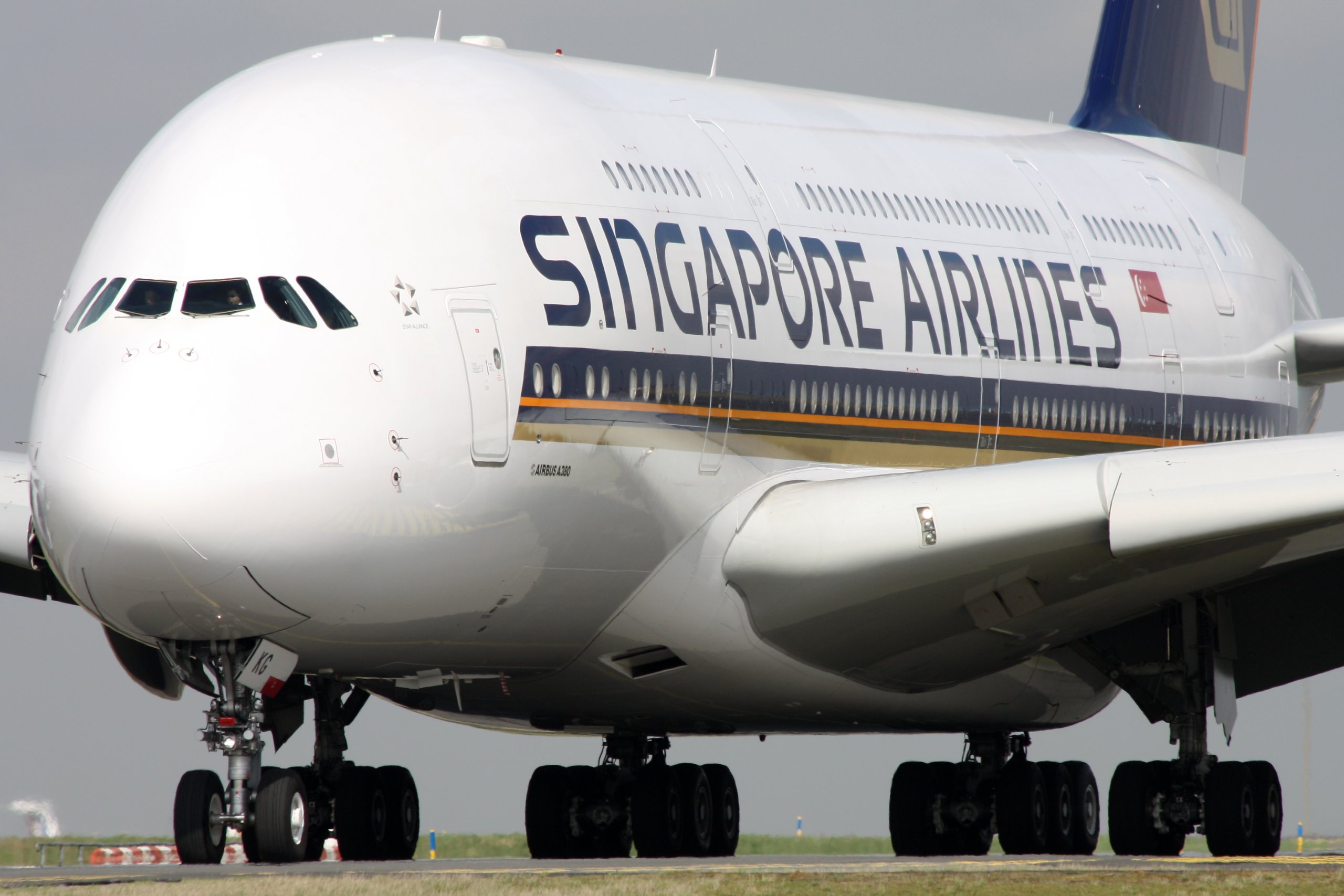
Singapore Airlines said Wednesday (15 April) that its passenger traffic in March fell 60.4 percent (measured in revenue passenger-kilometres) because of the virtual halt in global air traffic as a result of the COVID-19 coronavirus pandemic that has killed more than 100,000 people and infected almost 2 million people across the globe. Singapore’s flag carrier said capacity cuts in March resulted in an overall reduction of 43.8 percent (measured in available seat kilometres) during the month, leading to a 24.1 percentage point reduction in passenger load factor (PLF) to 57.4 percent. The airline said passenger carriage declined by 57.2 percent compared to a year before, against a 37.8 percent cut in capacity. Consequently, PLF decreased by 25.3 percentage points to 55.7 percent and fell across all route regions, with North Asia especially affected. SilkAir’s passenger carriage decreased by 71.1 percent against a 58.5 percent cut in capacity. This led to a 23 percentage point decline in PLF to 52.4 percent. Scoot’s passenger carriage declined 68.3 percent against a contraction in capacity of 61 percent, which led to a 16.0 percentage point decrease in PLF to 69.5 percent. Very few flights are leaving these days from Singapore’s Changi Airport. (PHOTO: Shutterstock) COVID-19: IATA warns of airline revenue losses at US$314 billion for 2020 due to pandemic COVID-19: AAPA says Asia-Pacific traffic down 93% in first week of April as borders remain closed COVID-19: The shape of aviation to come COVID-19: IATA says 25 million jobs at risk as air travel shuts down COVID-19: Airbus cuts production by one-third COVID-19: The quiet skies over India COVID-19: Airlines in danger of losing ‘brand value’ IATA coronavirus resource centre ICAO coronavirus resource centre Johns Hopkins University Virus Tracking Site Cargo load factor (CLF) was 5.7 percentage points higher as the capacity contraction of 34.7 percent outpaced the 28.8 percent decline in cargo traffic (measured in freight tonne-kilometres). The East Asia, Americas and Southwest Pacific regions registered improvements in CLF. “In the fourth quarter of the financial year 2019-20, the SIA group confronted the greatest challenge in its history due to the global COVID-19 outbreak, which had an unprecedented impact on its business. Since February 2020, the group has progressively announced flight cuts across its network as it adjusted capacity to match falling demand for air travel,” the company said in a statement announcing the results. The company said “market conditions deteriorated rapidly in March” as the virus spread and as border controls and travel restrictions became widespread across the globe. From 24 March all short-term visitors were not allowed to enter or transit through Singapore. Singapore Airlines, like others around the globe, have parked their planes as traffic remains grounded. (PHOTO: Shutterstock) The airline said capacity was “further rationalised in response. By the end of March 2020, SIA had announced a 96 percent cut in SIA and SilkAir’s combined capacity, while Scoot had also suspended 98 percent of its network, in both cases compared to their original schedules to end April 2020. Out of the SIA Group’s fleet of approximately 200 aircraft, only about 10 were in operation to serve a limited passenger network”. The company said it may need to extend capacity cuts if border controls and travel restrictions remain in place and travel demand continues to fall from its already desperate levels. A screenshot of the Johns Hopkins University virus tracking site. To access the live site, click on the image. (PHOTO: Matt Driskill) SIA said its cargo operations had been holding up but the reduction in belly-hold cargo on passenger planes that are not flying impacted operations, “significantly” reducing the airlines overall cargo capacity. “As a result, SIA has also been selectively deploying passenger aircraft on cargo-only flights to meet the demand from global supply chains,” the company said. “The collapse in passenger traffic has had a severe impact on the SIA Group’s revenues,” SIA said in its statement, adding that “while the capacity cuts and other cost-management measures that SIA has implemented have helped to reduce expenditures, many costs are unavoidable regardless of the number of flights mounted. That means these measures will not fully offset the contraction in passenger revenue.” SIA is also over-hedged on its fuel purchases and surplus hedges will need to be marked to market by 31 March 2020, a date on which the Brent oil price was close to its 10-year low, and are expected to generate substantial losses. Download the latest issue of Asian Aviation here.
TAGSCargocoronavirusfuelpassenger trafficSingapore Airlines
Previous article
COVID-19: Airlines look to keep some planes flying by pivoting from passengers to cargo
Matt Driskillhttp://www.matt-driskill.com
Matt Driskill is the Editor of Asian Aviation. He has been an Asia-based journalist and content producer since 1990 for outlets including Reuters and the International Herald Tribune/New York Times and is a former president of the Foreign Correspondents Club of Hong Kong. He appears on international broadcast outlets like Al Jazeera, CNA and the BBC and has taught journalism at Hong Kong University and American University of Paris. In 2022 Driskill received the “Outstanding Achievement Award” from the Aerospace Media Awards Asia organisation for his editorials and in 2024 received a “Special Recognition for Editorial Perspectives” award from the same organisation. Driskill has received awards from the Associated Press for Investigative Reporting and Business Writing and in 1989 was named the John J. McCloy Fellow by the Graduate School of Journalism at Columbia University in New York where he earned his Master's Degree.
马特·德里斯基尔(Matt Driskill)是《亚洲航空》(Asian Aviation)的主编。他自1990年起,担任驻亚洲的记者和内容制作人,曾为路透社、国际先驱论坛报/纽约时报等媒体工作,并曾任香港外国记者协会会长。他也曾多次在半岛电视台、新加坡广播公司(CNA)和BBC等国际媒体担任嘉宾,并在香港大学和巴黎美国大学教授新闻学。2022年,德里斯基尔因其评论获得了航空媒体奖(Aerospace Media Awards Asia)颁发的“杰出成就奖”,2024年又因其编辑观点获得同一组织颁发的“特别表彰”。他曾获得美联社的调查报道和商务写作奖,并于1989年被纽约哥伦比亚大学研究生新闻学院授予约翰·J·麦克劳伊学者(John J. McCloy Fellow)称号,获得硕士学位。