
CORONAVIRUS: Asia-Pacific airlines increase capacity cuts as global death toll surpasses 4,000
Qantas grounds some A380s, Korean Air says survival at stake, Cathay makes further cuts on Japan services
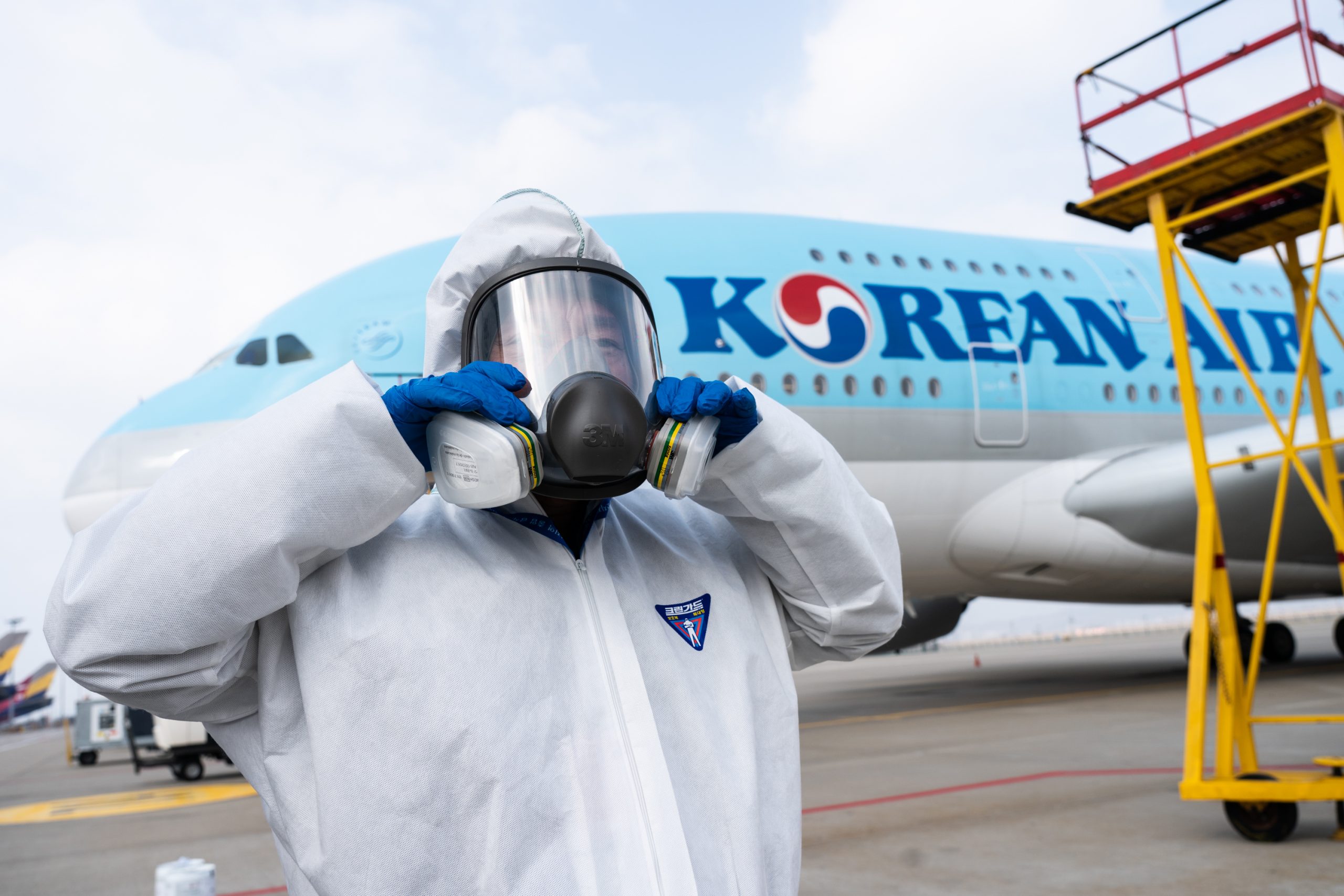
Airlines in the Asia-Pacific region, which have already been pummelled by the COVID-19 coronavirus that has sickened hundreds of thousands and killed more than 4,000 people, are increasing their capacity cuts, grounding planes, and using smaller planes on some routes to save money. The International Air Transport Association (IATA) has warned that airlines around the globe could lose between US$63 billion to US$113 billion in revenues as a result of the virus and its effects on the aviation industry. Airlines in Asia-Pacific could lose almost US$30 billion alone. The airline data company OAG said China will see some 8.6 million scheduled seats operated this week of which 8.3 million or 97 percent are domestic seats. The country’s current weekly capacity is running at just over 52 percent compared to the week of 20 January and international capacity is at 14 percent of the levels reported eight weeks ago. “With Chinese capacity well reported, we have taken a look at the market excluding all Chinese airlines to determine the impact on capacity across these carriers,” OAG said. “In the last week, Asiana Airlines, Korean Air, Japan Air Lines and Peach Aviation have all made significant reductions in capacity with Korean Air in particular (-62 percent) having dramatically adjusted their production. Cathay Pacific, for many a flagship regional carrier has now moved from the 45th largest airline in the world eight weeks ago to 116th with some 440,000 fewer seats being operated this week.” ACI APAC says Q1 regional traffic may drop 24% Airlines increasingly reliant on ‘ghost flights’ during coronavirus outbreak Singapore Airlines extends flight cuts to Australia, US, Europe Coronavirus adds hurdle for air cargo industry saddled with demand slump IATA calls for worldwide suspension of slot rules Qantas cuts capacity further and grounds some A380s A Qantas A380. The airline will only have two of the super jumbo jets flying after it grounds eight. (PHOTO: Shutterstock) Australia’s Qantas Group on Tuesday (10 March) said it will add to cuts it already has implemented, reducing capacity by almost a 25 percent for the next six months. The latest cuts follow the spread of the coronavirus into Europe and North America over the past two weeks as well as its continued spread through Asia, which has resulted in a sudden and significant drop in forward travel demand, Qantas said in a statement. “These additional changes will bring the total international capacity reduction for Qantas and Jetstar from 5 percent to 23 percent versus the same time last year and extend these cuts until mid-September 2020,” Qantas said. “The biggest reductions remain focussed on Asia (now down 31 percent compared with the same period last year). Capacity reductions to the United States (down 19 percent), the UK (down 17 percent) and trans-Tasman (down 10 percent) will also be made in line with forward booking trends.” A screenshot of the coronavirus tracking site at Johns Hopkins University taken on 10 March. Click on the image to go to the live site. (PHOTO: Matt Driskill-Asian Aviation) Qantas said it will use smaller aircraft and reduce the frequency of flights to maintain overall connectivity and its access to slot rights. The group also said it will ground eight of its A380s while two others are already grounded and undergoing heavy maintenance, leaving the group with only two remaining A380s flying. The start of Qantas’ new Brisbane-Chicago route will be delayed from 15 April to mid-September, the group said, adding that its Jetstar unit will make “significant cuts” to its international network, including suspending flights to Bangkok and reducing flights from Australia to Vietnam and Japan by almost half. Jetstar’s daily Gold Coast to Seoul flight was suspended earlier. Qantas said the virus has made it impossible to provide financial guidance for the rest of the year and it was working to cut costs and conserve cash. The group said it has low debt levels and a long debt maturity profile, A$1.9 billion in cash plus a further A$1 billion in undrawn facilities and A$4.9 billion in unencumbered assets. The group said it will cancel its plan to buy back shares that it announced in February, which will preserve A$150 million in cash. The company also said it was cutting all annual management bonuses, the chairman will take no fees, the CEO will forego his salary, group executive management will take a 30 percent pay cut and all Qantas and Jetstar employees are being asked to take paid or unpaid leave. Qantas CEO Alan Joyce. (PHOTO: Shutterstock) Qantas Group CEO Alan Joyce, said: “In the past fortnight we’ve seen a sharp drop in bookings on our international network as the global coronavirus spread continues. We expect lower demand to continue for the next several months, so rather than taking a piecemeal approach we’re cutting capacity out to mid-September. This improves our ability to reduce costs as well as giving more certainty to the market, customers and our people…When revenue falls you need to cut costs, and reducing the amount of flying we do is the best way for us to do that. Less flying means less work for our people, but we know coronavirus will pass and we want to avoid job losses wherever possible. We’re asking our people to use their paid leave and, if they can, consider taking some unpaid leave given we’re flying a lot less.” Korean Air warns of survival threat Workers cleaning and disinfecting a Korean Air plane as part of its fight against the coronavirus. (PHOTO: Korean Air) News reports from South Korea said Korean Air Lines said the coronavirus outbreak could threaten its survival after more than half of the world restricted passengers entering from South Korea. Woo Kee-hong, Korean Air’s president, said more than 80 percent of the airline’s international capacity had been cut as a result of travel restrictions globally, compared with an 18 percent cut made during the 1997-1998 Asian financial crisis. “We can easily imagine the severity of the crisis we are facing in comparison. And what is more daunting is that the situation can get worse at any time and we cannot even predict how long it will last,” he said in a memo to employees, according to media reports. Woo said Korean Air had grounded about 100 of 145 its passenger aircraft, deferred investments, cut down on operational expenses and was encouraging employees to take voluntary leave. “But if the situation continues for a longer period, we may reach the threshold where we cannot guarantee the company’s survival,” he said in the memo. Japan joined a number of countries to impose curbs on travelers from South Korea on Thursday, adding to the woes of Korean airlines, which have been among the hit hardest by flight cancellations worldwide. Cathay Pacific makes further cuts Cathay has been suffering through the double whammy of anti-government protests for much of 2019 and now the coronavirus. (PHOTO: Shutterstock) Hong Kong flag carrier Cathay Pacific will suspend flights between Hong Kong and Japan as a result of travel restrictions between the two destinations, the airline said in a travel alert on its website. All flights between Hong Kong and Fukuoka, Nagoya, Sapporo, and Tokyo Haneda will be suspended starting from 9 March until 28 March this year. From 13 March until 28 March, all Cathay flights between Hong Kong and Tokyo Narita and Osaka Kansai, as well as between Taipei and Tokyo Narita and Osaka Kansai, will also be suspended. The travel restriction refers to Japan’s announcement last week that it will impose a 14-day quarantine period on all travellers from China and suspend visa-free arrangements for Hong Kong passport holders starting 9 March. The quarantine policy also applies to travellers from South Korea. Cathay had earlier issued a profit warning and said that it had cut passenger capacity by 40 percent for February and March. The airline said cuts to flight capacity were “likely” in April as well. Cathay Pacific said it “may” fly only freight to Japan, and no passengers, if it retains some services. “Although we do expect our passenger belly cargo operations to be impacted, we are currently evaluating how to continue serving our cargo customers to and from Japan,” Cathay said. The airline, at any one time, has 120 planes sitting on the tarmac, which account for about half its total fleet, due to the capacity cuts.
Previous article
Bad day for Boeing
Matt Driskill is the Editor of Asian Aviation. He has been an Asia-based journalist and content producer since 1990 for outlets including Reuters and the International Herald Tribune/New York Times and is a former president of the Foreign Correspondents Club of Hong Kong. He appears on international broadcast outlets like Al Jazeera, CNA and the BBC and has taught journalism at Hong Kong University and American University of Paris. In 2022 Driskill received the “Outstanding Achievement Award” from the Aerospace Media Awards Asia organisation for his editorials and in 2024 received a “Special Recognition for Editorial Perspectives” award from the same organisation. Driskill has received awards from the Associated Press for Investigative Reporting and Business Writing and in 1989 was named the John J. McCloy Fellow by the Graduate School of Journalism at Columbia University in New York where he earned his Master's Degree.
马特·德里斯基尔(Matt Driskill)是《亚洲航空》(Asian Aviation)的主编。他自1990年起,担任驻亚洲的记者和内容制作人,曾为路透社、国际先驱论坛报/纽约时报等媒体工作,并曾任香港外国记者协会会长。他也曾多次在半岛电视台、新加坡广播公司(CNA)和BBC等国际媒体担任嘉宾,并在香港大学和巴黎美国大学教授新闻学。2022年,德里斯基尔因其评论获得了航空媒体奖(Aerospace Media Awards Asia)颁发的“杰出成就奖”,2024年又因其编辑观点获得同一组织颁发的“特别表彰”。他曾获得美联社的调查报道和商务写作奖,并于1989年被纽约哥伦比亚大学研究生新闻学院授予约翰·J·麦克劳伊学者(John J. McCloy Fellow)称号,获得硕士学位。
Comments
Loading comments...