
ACCC: Strong demand, reduced domestic competition boost Qantas, Virgin Australia
By Asian Aviation Staff
•May 20, 2025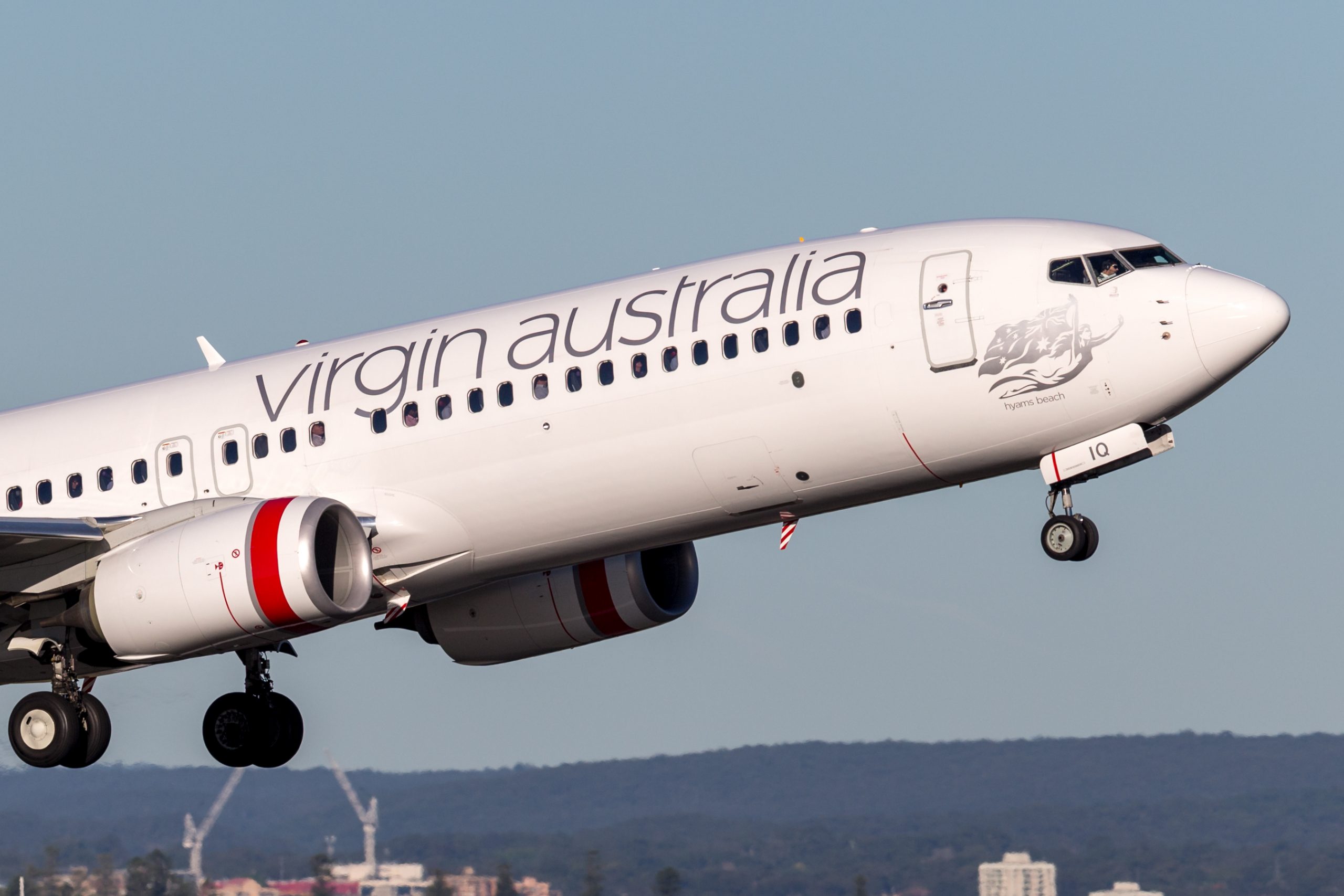
Australia’s two largest airline groups have both recorded strong financial results for the first half of 2024-25, reflecting a number of factors including strong ongoing demand for flying and limited domestic competition, the ACCC’s latest Domestic Airline Competition report has found. Qantas Group reported earnings before interest and taxes of $1.5 billion for the first half of 2024-25, with $916 million coming from its domestic operations across both Qantas and Jetstar. Of the Qantas Group’s total earnings, Qantas Domestic, including Qantaslink, contributed the highest share of the group’s earnings at $647 million. Much of this result can be attributed to the airline’s dominance in the corporate travel market – Qantas Group had an 80 per cent share of the corporate travel market over the reporting period, coinciding with a resurgence in demand. “The high half-yearly earnings reported by Qantas Group reflect its dominance of the domestic airline sector, with Qantas and Jetstar accounting for over 60 percent of passengers,” ACCC Commissioner Anna Brakey said. The domestic operations of Jetstar recorded the biggest increase in earnings across the Qantas Group, increasing by 53.7 percent between the first half 2023-24 and 2024-25, to $269 million. Jetstar Domestic became the sole low-cost carrier in Australia after the exit of Tigerair in 2020, and again when Bonza collapsed in April 2024. “Jetstar has been able to capitalise on the continued absence of competitive pressure from another low-cost carrier in the domestic market to increase its market share and operating margin,” Brakey said. While Virgin Australia does not publicly report half-year results, its then CEO, Jayne Hrdlicka, said in February that the airline group had achieved record profits in the first half of the current financial year, following its post-administration restructure under Bain Capital. After the withdrawal of Rex from routes connecting capital cities, Virgin Australia has increased its share of passengers to 34.4 per cent in March 2025, up from 31.3 per cent from a year prior. Virgin Australia also secured three of Rex’s Boeing 737 aircraft leases, which has facilitated its ability to add seat capacity and improve network resilience. Record passenger volumes in April Although the data was not yet available for this report, airlines and airports were expecting a significant increase in travellers in April with school holidays, Easter and ANZAC day all condensed into a three-week period. Airservices Australia noted that 17 April 2025 (the Thursday before Good Friday) was the busiest day for domestic travel in the past five years. This follows disruptions to travel in March, when passenger levels declined by 4.9 per cent compared to March 2024, which can be attributed to Ex-Tropical Cyclone Alfred and associated severe weather events along the east coast of Australia. Flights operating between Brisbane-Sydney and Brisbane-Melbourne experienced a 9.9 per cent and 9 per cent reduction in passengers in March 2025 respectively. Meanwhile, Gold Coast and Maroochydore airports experienced the biggest decline in passengers over this period by 30.2 percent and 25.1 percent respectively. The weather disruptions also contributed to the average industry flight cancellation rate increasing significantly in March 2025 to 5 percent, compared to the long-term industry average of 2.2 percent. Despite the disruptions caused by Ex-Tropical Cyclone Alfred, the on-time arrival rate has improved over the past six months to levels just below the long-term industry average of 80.7 percent. The average industry on-time arrival rate was 80.2 percent in March 2025, an improvement from 74.5 percent in October 2024. “It is encouraging to see the on-time arrival rate improving as this means travellers can have more confidence that their flight will arrive at the time they booked,” Brakey said. Seasonal patterns driving recent movements in airfares Following a peak in October 2024, the average airfare fell by 16.1 percent in the three months to January 2025, before increasing again by 9.6 percent by March 2025. “The trends observed in average airfares since January reflect seasonal factors and are broadly consistent with those observed in previous years,” Brakey said. “Average airfares have come down from their peak in October 2024.” Demand for domestic air travel in the first quarter of 2025 was lower than 12 months prior. However, 2024 was a particularly unusual year by comparison due to significant events that led to unprecedented demand for flights to Melbourne and Sydney, such as the Taylor Swift concerts in February 2024, which in turn led to higher airfares as demand outstripped supply. The Easter long weekend also fell in March last year which contributed to the increase in demand for travel during this time. For Editorial Inquiries Contact: Editor Matt Driskill at [email protected] For Advertising Inquiries Contact: Head of Sales Kay Rolland at [email protected]
Previous article
Nok Air joins Agoda platform
Asian Aviation staff is comprised of award-winning journalists based throughout the Asia-Pacific region led by Editor Matt Driskill. 《亚洲航空》的编辑团队由主编马特·德里斯基尔 (Matt Driskill) 带领,汇聚了遍布亚太地区的获奖记者。
Comments
Loading comments...