
Home › Cargo
Lödige Industries completes ‘Smart Terminal’ transformation for Korean Air at Incheon
By Asian Aviation Staff
•Nov 29, 2026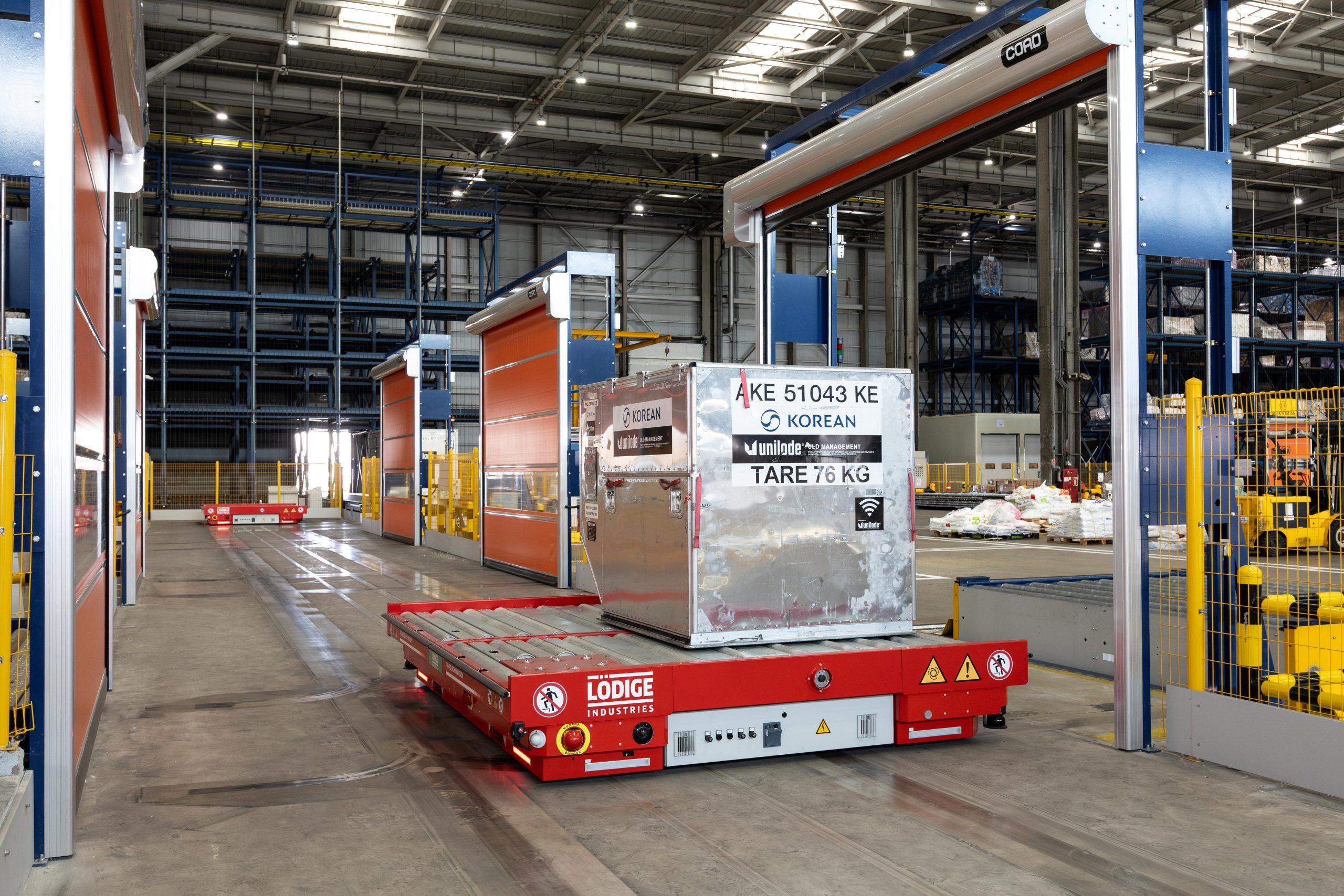
Korean Air has completed a major modernisation of its cargo terminal at Incheon International Airport in cooperation with Lödige Industries, transforming the facility into a fully integrated “Smart Terminal” with upgraded automated handling infrastructure. The project was completed in September 2026 without interrupting ongoing cargo operations. The modernisation has increased hourly ULD processing capacity from 18 to 30 units, while the terminal’s overall cargo handling capacity is expected to increase by more than 25 percent. (PHOTO: Korean Air) Originally commissioned 25 years ago, the facility has been upgraded while remaining fully operational. This was a complex retrofit requiring meticulous planning and phased execution. Lödige Industries was selected for its expertise in complex retrofits and its ability to integrate advanced automation into legacy infrastructure while maintaining throughput during the transition. “To manage increasing cargo volumes while consistently delivering high service quality, we are actively advancing modernisation and automation,” said JD Eum, Executive Vice President and Head of Cargo Business Division at Korean Air. “This renovation is an essential step to proactively respond to the rapidly changing global logistics environment by upgrading equipment and integrating smart technologies. Our cooperation with Lödige Industries throughout the project enabled us to impl,ement the modernisation step by step while maintaining the terminal operations.” The upgrade was rolled out over several carefully orchestrated phases to avoid disruption to cargo handling capacity. The new systems incorporated enhanced workplace safety standards and further improved working conditions for employees. An early stage of the modernisation included the installation of a key bypass lane and extensive conveyor systems within the cool storage area, creating alternative cargo routes for subsequent works. Existing handling equipment was then progressively replaced with new automated systems. At the core of the upgraded system are three fully automated Elevating Transfer Vehicles (ETVs) from Lödige Industries, supporting the increased ULD processing capacity of 30 units per hour, compared with 18 units previously. Two Automated Guided Vehicles (AGVs) add flexible transport capacity, automatically moving ULDs between import and export zones, build-up and breakdown areas, and storage locations. “Projects of this scale depend on close coordination, particularly when modernisation must take place without interrupting daily cargo operations,” said Nicholas Tripptree, Managing Director for Asia-Pacific at Lödige Industries. “The successful completion of this project reflects the strong partnership and trust between Korean Air and Lödige Industries. Together, we navigated the complexities of upgrading an existing facility. We value Korean Air’s continued trust and look forward to supporting the system’s long-term performance.” In addition to the ETVs and AGVs, the comprehensive modernisation also includes truck docks, decks and extensive conveyor systems. The upgrade included Lödige’s Cargo Professional Suite, the company’s self-developed central terminal management system for air cargo operations. Together, these elements form an integrated infrastructure designed to streamline cargo flow and maximise terminal efficiency. Following the successful handover in September, Korean Air officially marked the completion of the project with a ceremony on 20 October 2026, at which Nicholas Tripptree represented Lödige. During the ceremony, Korean Air presented Lödige Industries with a Plaque of Appreciation, recognising the company’s expertise and dedication throughout the cargo terminal renovation project. The recognition highlighted Lödige’s contribution to implementing advanced logistics automation systems within a complex operational environment. Korean Air introduces smartphone-based digital sleep testing for crew health Korean Air has introduced smartphone-based digital sleep testing to strengthen sleep health management for its employees, including pilots and cabin crew. The airline is the first in the aviation industry to adopt a smartphone-based sleep apnea screening medical device approved by Korea’s Ministry of Food and Drug Safety (MFDS) for crew healthcare. Since September, Korean Air’s Aviation Health and Medical Center has been conducting digital sleep assessments for employees at higher risk of sleep disorders. Developed in partnership with sleep-tech firm Asleep, the two-part program covers both sleep apnea screening and sleep rhythm management. For sleep apnea screening, the airline uses Apnotrack. Employees place a smartphone next to their bed while sleeping, and the app analyzes breathing sounds over a seven-day period. Medical staff review the results and refer employees to specialized sleep clinics if further evaluation or treatment is needed. For sleep rhythm management, ChronoTrack records sleep and wake times as well as sleep regularity over 14 days to assess insomnia and circadian rhythm disruptions. Pilots and cabin crew are particularly susceptible to disrupted sleep patterns due to long-haul flights, night operations and time zone changes, while maintenance personnel face similar challenges from shift work. Because sleep apnea occurs during sleep, it is difficult to detect without screening and, if left untreated, can increase the risk of hypertension and cardiovascular disease—making early detection essential. Korean Air has long operated job-specific sleep education, sleep evaluations and medical consultations during pilot aviation medical exams, and sleep health programs for night-shift workers. With the new digital platform, employees can now monitor their sleep at home without visiting a hospital or wearing specialized equipment. Korean Air plans to incorporate sleep testing into routine employee health checkups and strengthen referral pathways to specialized medical institutions. The airline will also establish sleep health management standards suited to aviation work environments to support employee health and uphold aviation safety. “Aviation safety begins with the health of our employees, and healthy sleep is a critical part of that,” said Yoon Young Choi, Head of Korean Air’s Aviation Health and Medical Center. “We will continue to strengthen our healthcare framework so employees can monitor their sleep in their daily routines and receive timely medical care when needed.” For Editorial Inquiries Contact: Editor Matt Driskill at [email protected] For Advertising Inquiries Contact: Head of Sales Sally Passey at [email protected]
TAGSair cargoKorean AirLödige Industries

Asian Aviation Staffhttps://asianaviation.com/
Asian Aviation staff is comprised of award-winning journalists based throughout the Asia-Pacific region led by Editor Matt Driskill. 《亚洲航空》的编辑团队由主编马特·德里斯基尔 (Matt Driskill) 带领,汇聚了遍布亚太地区的获奖记者。