
Home › Manufacturers
Embraer sees demand for 1,050 aircraft up to 150 seats across APAC over next 20 years
By Asian Aviation Staff
•Nov 16, 2026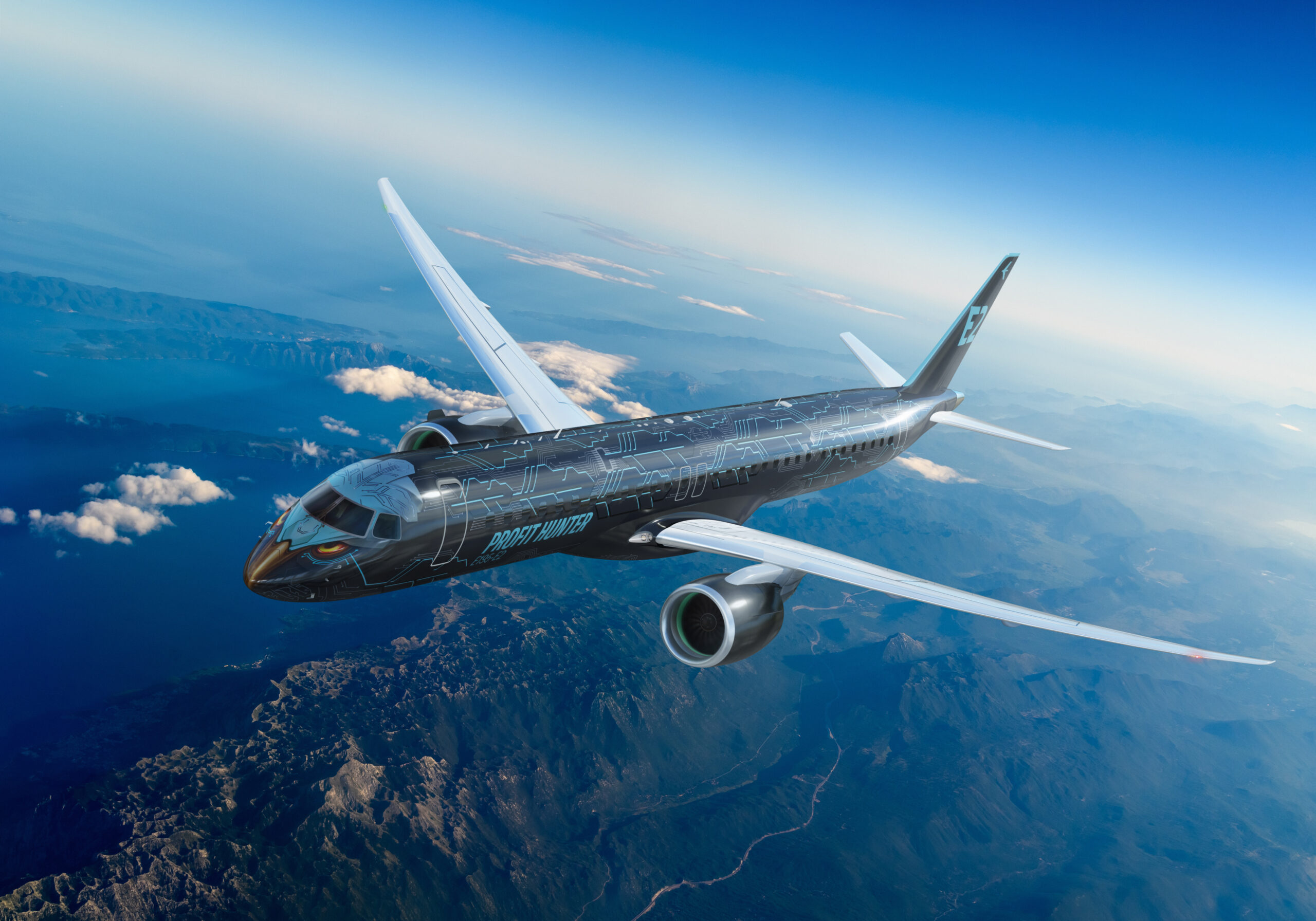
Embraer presented its Asia Pacific market outlook at the 70th Assembly of Presidents of the Association of Asia Pacific Airlines (AAPA) in Kuala Lumpur, highlighting the role of small narrowbody jets in helping airlines capitalise on the region’s next growth phase amid the rise of regionalization, new tourism frontiers and value-over-volume network. Access Embraer’s Market Outlook 2026 here. Asia Pacific, excluding China, is expected to demand 1,050 jets of up to 150 seats over the next two decades as passenger traffic (RPK) grows 4.1% a year. The current in-service fleet of up-to-150-seat jets stands at 295 aircraft this year. Including China, the region’s demand rises to 2,520 aircraft over 20 years, about 30% of global demand. Globally, Embraer forecasts a market demand for 8,500 jets of up to 150 seats over the next two decades, valued at US$650 billion. Regionalisation: Growing intra-regional trade, investment and business activity are driving demand for stronger connectivity between cities across Asia Pacific. One indication of this opportunity is that more than 60% of capacity in Southeast Asia is concentrated on just 10% of routes, leaving many markets underserved. New Tourism Frontiers: Travellers are increasingly seeking unique and less crowded destinations, creating opportunities for airlines to connect emerging tourism markets. Value-over-Volume: Airlines are prioritising profitability and premium demand over capacity growth, using mixed aircraft fleets to optimise frequencies, expand network reach and better serve markets of different sizes. K-shaped economy: The economic environment is evolving where higher-income consumers remain relatively resilient, while more price-sensitive travellers face growing pressure on their disposable income. This is driving full service and low-cost carriers to re-think their fleet strategies to achieve sustainable growth. With around 40% of the world’s turboprop fleet operating in Asia Pacific, the region also represents a significant upgrade opportunity as airlines are looking to establish routes beyond the saturated turboprop routes and seek faster, longer-range and more comfortable aircraft to support growing demand as infrastructure across regional airports improve. “Asia Pacific remains one of the world’s most dynamic aviation markets, and the next phase of growth will be driven by greater fleet flexibility, resilience and regional connectivity,” said Raul Villaron, Vice-President and Head of Asia Pacific, Embraer Commercial Aviation. “As full-service and low-cost carriers look beyond major trunk routes as their network evolves, small narrowbodies are becoming essential for developing underserved or unserved markets, increasing frequencies and strengthening regional networks. The E-Jets family, with its outstanding fuel efficiency and low noise emissions is uniquely positioned to help airlines capture these opportunities and support sustainable long-term growth.” The E-Jet family already has a solid footprint across Asia Pacific, demonstrating the growing demand for right-sized small narrowbody aircraft. 16 airlines across six countries operate the E-Jets in Asia Pacific. In Southeast Asia, Scoot’s E190-E2 fleet serves 26 destinations across the region, half of which are new destinations for the airline, helping expand network connectivity. In Japan, around 50 E-Jets are in operation today, while All Nippon Airways and Japan Airlines have selected the E190-E2 to strengthen domestic connectivity and modernise their regional fleets. In Australia, nearly 70 E-Jets support regional passenger and resource-sector FIFO operations, highlighting the value of right-sized aircraft in connecting dispersed communities and replacing ageing fleets with more efficient aircraft. Operators include Virgin Australia, Alliance Airlines and QantasLink. Embraer has been in APAC for nearly five decades since the first aircraft operated in the region in 1978. Singapore serves as the hub for Embraer’s Asia Pacific operations, including a Regional Distribution Centre that houses a significant value of parts, and an E2 simulator that provides essential pilot training for airlines across the region. This in addition to the Company’s presence in China. For Editorial Inquiries Contact: Editor Matt Driskill at [email protected] For Advertising Inquiries Contact: Head of Sales Sally Passey at [email protected]
TAGSEmbraer

Asian Aviation Staffhttps://asianaviation.com/
Asian Aviation staff is comprised of award-winning journalists based throughout the Asia-Pacific region led by Editor Matt Driskill. 《亚洲航空》的编辑团队由主编马特·德里斯基尔 (Matt Driskill) 带领,汇聚了遍布亚太地区的获奖记者。